. 2014 Jun 5;9(6):e97903.
doi: 10.1371/journal.pone.0097903. eCollection 2014.

Crystal structure of the Neisseria gonorrhoeae MtrD inner membrane multidrug efflux pump

Affiliations

Crystal structure of the Neisseria gonorrhoeae MtrD inner membrane multidrug efflux pump

Jani Reddy Bolla et al. PLoS One. .

Abstract

Neisseria gonorrhoeae is an obligate human pathogen and the causative agent of the sexually-transmitted disease gonorrhea. The control of this disease has been compromised by the increasing proportion of infections due to antibiotic-resistant strains, which are growing at an alarming rate. The MtrCDE tripartite multidrug efflux pump, belonging to the hydrophobic and amphiphilic efflux resistance-nodulation-cell division (HAE-RND) family, spans both the inner and outer membranes of N. gonorrhoeae and confers resistance to a variety of antibiotics and toxic compounds. We here report the crystal structure of the inner membrane MtrD multidrug efflux pump, which reveals a novel structural feature that is not found in other RND efflux pumps.


Conflict of interest statement

Competing Interests: The authors have declared that no competing interests exist.

Figures

Figure 1
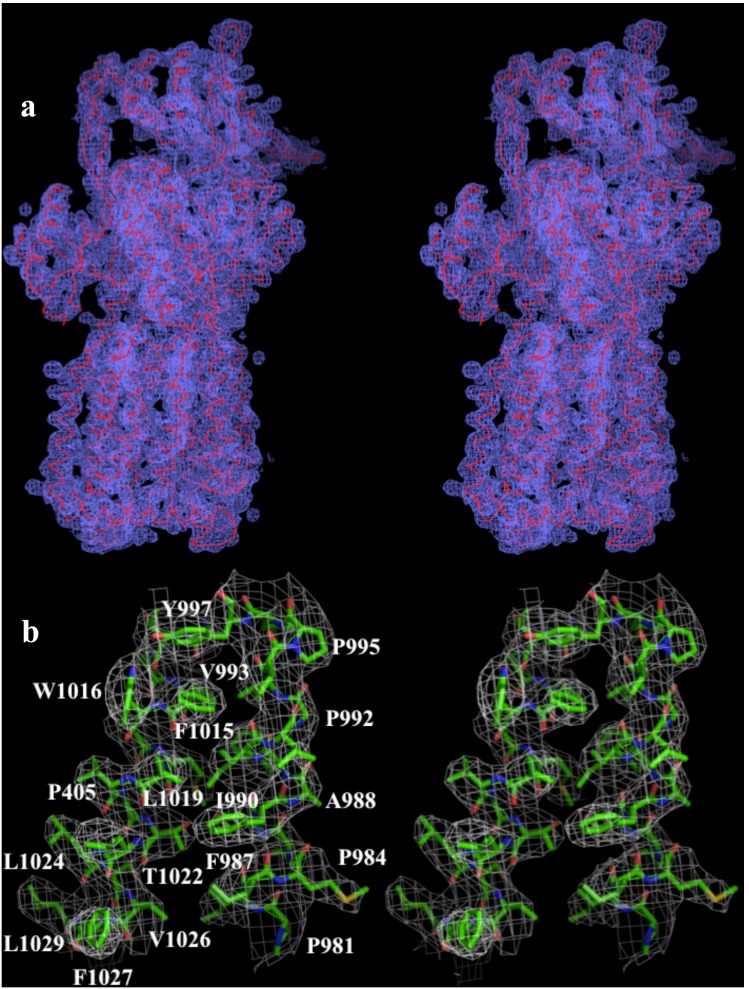
Figure 1. Stereo view of the electron density map of the MtrD efflux pump at a resolution of 3.53 Å.
(a) The electron density map contoured at 1.2 σ is in blue. The Cα traces of MtrD are in red. (b) Representative section of the electron density at the interface between TM11 and TM12 of MtrD. The electron density (colored white) is contoured at the 1.2 σ level and superimposed with the final refined model (green, carbon; red, oxygen; blue, nitrogen).
Figure 2
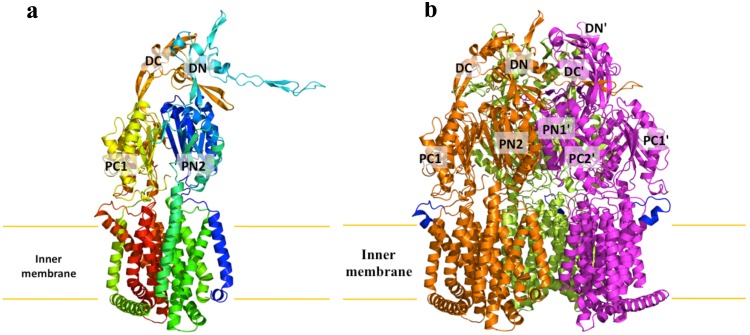
Figure 2. Structure of the N. gonorrhoeae MtrD efflux pump.
(a) Ribbon diagram of a protomer of MtrD viewed in the membrane plane. The molecule is colored using a rainbow gradient from the N-terminus (blue) to the C-terminus (red). Sub-domains DN, DC, PN2, PC1 and PC2 are labeled. The location of PN1 is behind PN2, PC1 and PC2. (b) Ribbon diagram of the MtrD trimer viewed in the membrane plane. Each subunit of MtrD is labeled with a different color. Residues 917–927 (only found in MtrD) forming the upper portion of TM9 and the loop connecting TM9 and TM10 are in blue color.
Figure 3
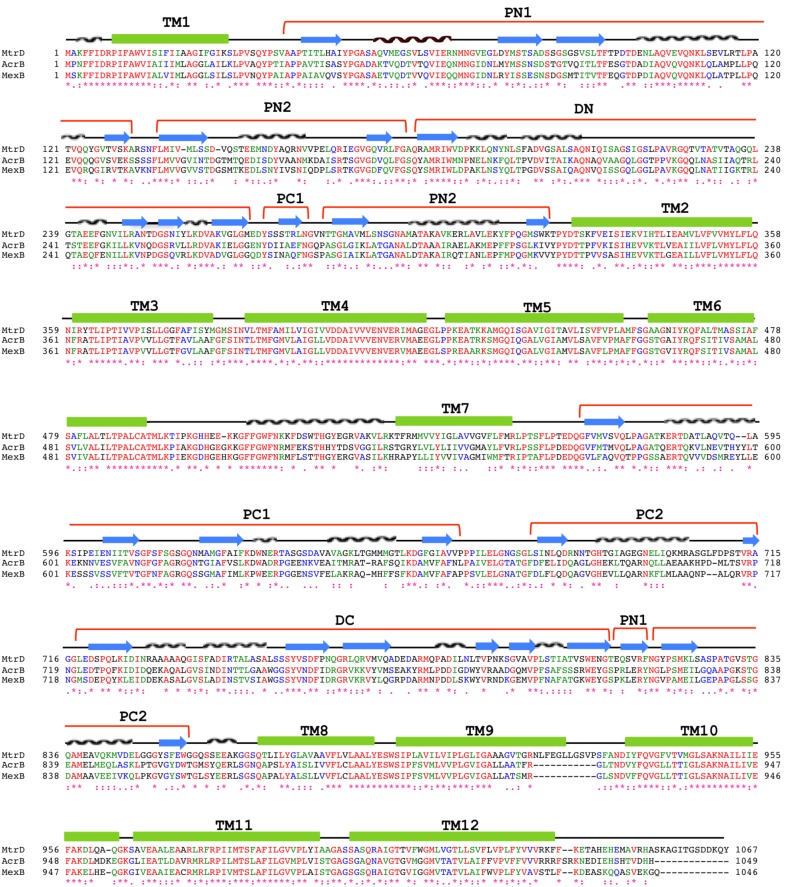
Figure 3. Sequence and topology of MtrD, AcrB and MexB.
Alignment of the amino acid sequences of MtrD, AcrB and MexB were done using CLUSTAL W (*, identical residues; :, >60% homologous residues). Secondary structural elements are indicated: TM, transmembrane helix; Nα and Nβ, helix and strand, respectively, in the N-terminal half; Cα and Cβ, helix and strand, respectively, in the C-terminal half. The MtrE docking domain is divided into two sub-domains, DN and DC; whereas the pore domain is divided into four sub-domains, PN1, PN2, PC1 and PC2. The sequence and topology of MtrD are shown at the top.
Figure 4
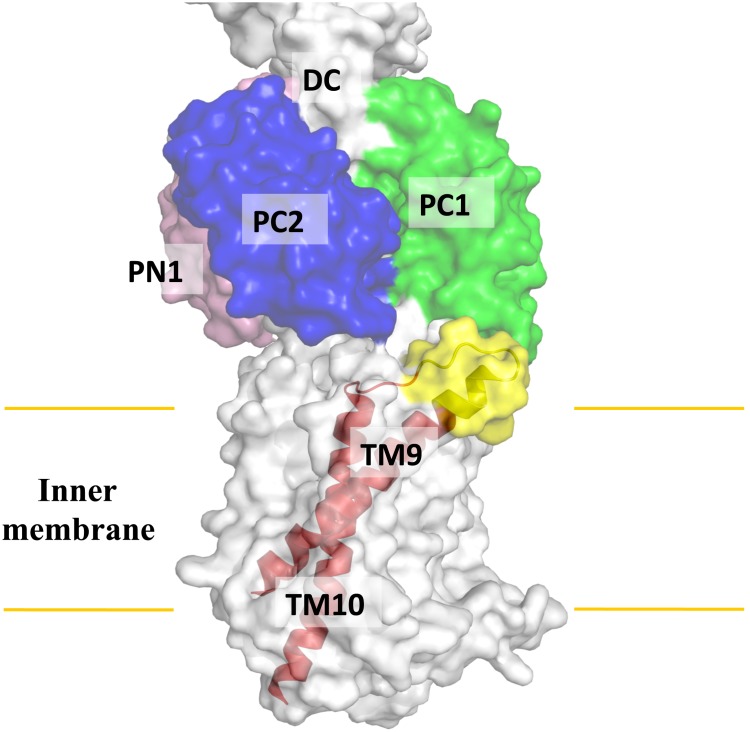
Figure 4. Spatial arrangement between TM9 and the periplasmic cleft.
TM9 is inclined from the horizontal membrane plane by 54°. The extra feature (yellow), which is only found in the MtrD pump within the family, is located right next the cleft formed by subdomains PC1 and PC2.
Figure 5
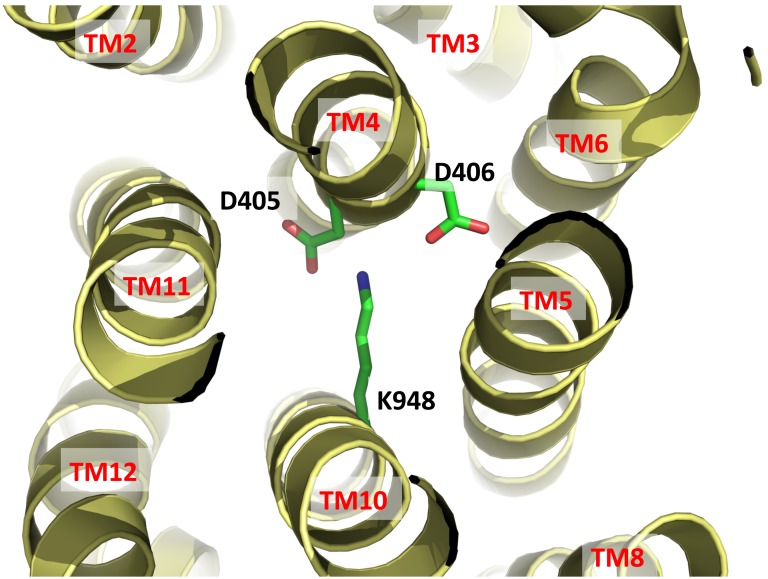
Figure 5. Ion pairs in the transmembrane domain viewed from the cytoplasmic side.
Residues D405 and D406 of TM4 and K948 of TM10 that form ion pairs, which may play an important role in proton translocation, are in green sticks.

References

    1. Tapsall J (2006) Antibiotic resistance in Neisseria gonorrhoeae is diminishing available treatment options for gonorrhea: some possible remedies. Expert Review of Anti-infective Therapy 4: 619–628. - PubMed
    1. Stern A, Brown M, Nickel P, Meyer TF (1986) Opacity genes in Neisseria gonorrhoeae: Control of phase and antigenic variation. Cell 47: 61–71. - PubMed
    1. Piddock LJ (2006) Multidrug-resistance efflux pumps? not just for resistance. Clin Microbiol Rev 19: 382–402. - PMC - PubMed
    1. Warner DM, Shafer WM, Jerse AE (2008) Clinically relevant mutations that cause derepression of the Neisseria gonorrhoeae MtrC-MtrD-MtrE efflux pump system confer different levels of antimicrobial resistance and in vivo fitness. Mol Microbiol 70: 462–478. - PMC - PubMed
    1. Hagman KE, Lucas CE, Balthazar JT, Snyder LA, Nilles M, et al. (1997) The MtrD protein of Neisseria gonorrhoeae is a member of resistance/nodulation/division protein family constituting part of an efflux system. Microbiology 143: 2117–2125. - PubMed

Publication types

Substances

Associated data

LinkOut - more resources