


Mechanisms of change in adolescent substance use treatment: how does treatment work?
- PMID: 24901750
- PMCID: PMC4257904
- DOI: 10.1080/08897077.2014.925029
Mechanisms of change in adolescent substance use treatment: how does treatment work?
Abstract
Background: Adolescent substance use treatment outcome research generally shows small to moderate effects in reducing substance use, with no specific "brand" of treatment emerging as clearly superior to any other, and treatment gains that fade over time. The relatively weak and temporary effects of treatment call for improving the potency and durability of intervention effects. In response to this call, this critical narrative review summarizes research on mechanisms of change for both adults and adolescents in substance use treatment, with a particular focus on reviewing what is known regarding "how" adolescent substance use treatment works.
Methods: A comprehensive review of the adolescent (aged 11-18) substance use treatment literature was conducted to identify empirical studies that examined mediators of intervention effects. Relevant databases (e.g., PsychINFO, MEDLINE) were searched using key words (e.g., "mediator"), and relevant articles from reference sections of identified studies and review papers were considered.
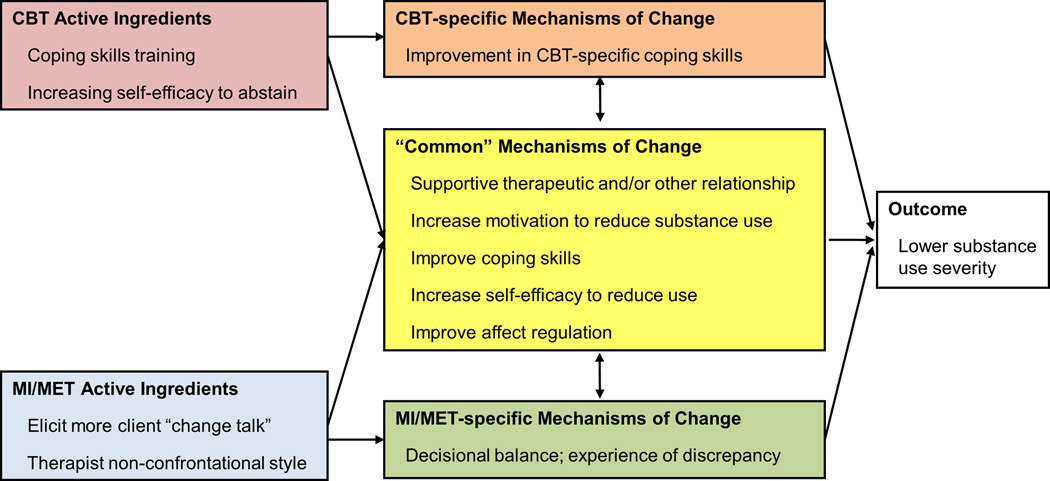
Results: Studies of mechanisms of psychotherapy change are rare in the adult, and particularly adolescent, substance use treatment outcome literature. The 4 adolescent studies that examined substance use treatment mechanisms found that positive social support, motivation to abstain, and positive parenting behaviors mediated treatment effects. To date, research has not supported therapy-specific mechanisms of change, finding instead that "common" processes of change largely account for improvements in outcome across distinct "brands" of treatment.
Conclusions: The lack of empirical support for treatment-specific mechanisms of change may be due to the need for greater precision in defining and measuring treatment-specific causal chains. Future directions include neuroscience approaches to examining changes in brain functioning that are associated with treatment response and recovery and examining mechanisms in adaptive treatment designs, which can accommodate individual differences in targets for intervention and response to treatment.
Keywords: Adolescent; mechanisms of change; substance use treatment; treatment outcome.
Figures
References
-
- SAMHSA. Substance Abuse and Mental Health Services Administration, Results from the 2012 National Survey on Drug Use and Health: Summary of National Findings. Rockville, MD: Substance Abuse and Mental Health Services Administration; 2013.
-
- PIRE. Underage drinking costs. [Accessed Nov 27, 2013];2013 http://www.udetc.org/UnderageDrinkingCosts.asp.
-
- Miller WR, Wilbourne PL. Mesa Grande: a methodological analysis of clinical trials of treatments for alcohol use disorders. Addiction. 2002;97:265–277. - PubMed
-
- Waldron HB, Turner CW. Evidence-based psychosocial treatments for adolescent substance abuse. J Clin Child Adolesc. 2008;37:238–261. - PubMed
-
- Jensen CD, Cushing CC, Aylward BS, Craig JT, Sorell DM, Steele RG. Effectiveness of motivational interviewing interventions for adolescent substance use behavior change: a meta-analytic review. J Consult Clin Psychol. 2011;79:433–440. - PubMed
Publication types
MeSH terms
Grants and funding
LinkOut - more resources
Full Text Sources
Other Literature Sources
Medical
Miscellaneous
