. 2014 Jun;8(2):157-63.
doi: 10.1007/s12079-014-0232-z. Epub 2014 Jun 6.

Direct interaction between CCN family protein 2 and fibroblast growth factor 1

Affiliations

Direct interaction between CCN family protein 2 and fibroblast growth factor 1

Tarek Abd El Kader et al. J Cell Commun Signal. 2014 Jun.

Abstract

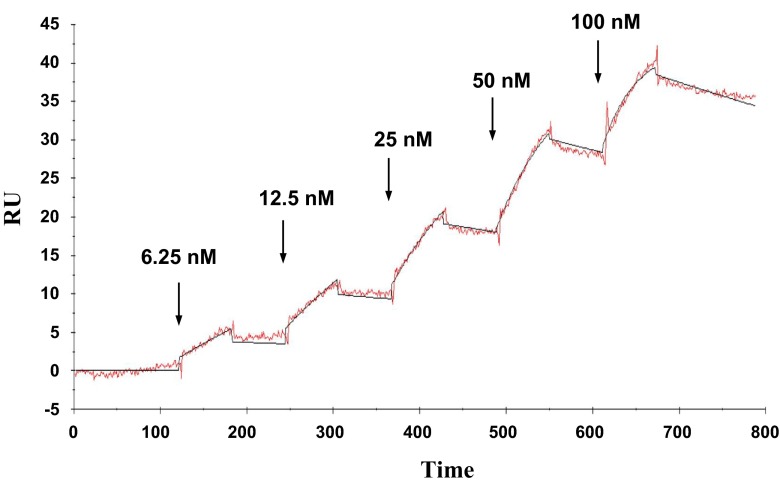
In an attempt to find out a new molecular counterpart of CCN family protein 2 (CCN2), a matricellular protein with multiple functions, we performed an interactome analysis and found fibroblast growth factor (FGF) -1 as one of the candidates. Solid-phase binding assay indicated specific binding between CCN2 and FGF-1. This binding was also confirmed by surface plasmon resonance (SPR) analysis that revealed a dissociation constant (Kd) of 3.98 nM indicating strong molecular interaction between the two. RNA analysis suggested that both FGF-1 and CCN2 could be produced by chondrocytes and thus their interaction in the cartilage is possible. These findings for the first time indicate the direct interaction of CCN2 and FGF-1 and suggest the co-presence of these molecules in the cartilage microenvironment. CCN2 is a well-known promoter of cartilage development and regeneration, whereas the physiological and pathological role of FGF-1 in cartilage mostly remains unclear. Biological role of FGF-1 itself in cartilage is also suspected.


Figures
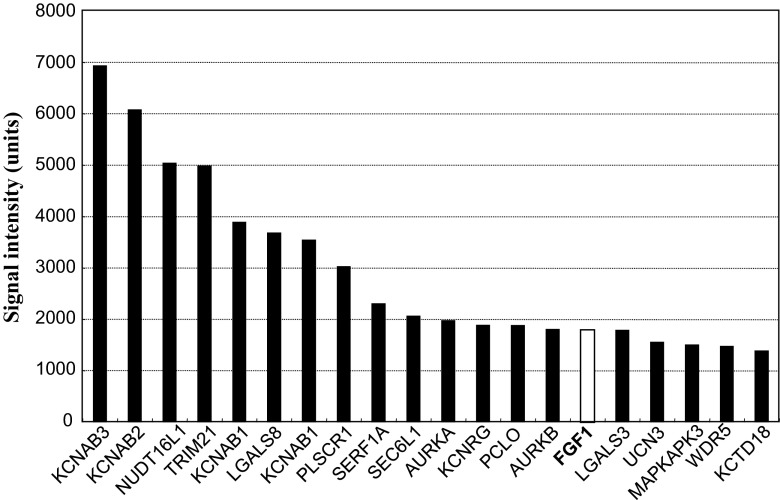
Fig. 1
Fig. 1
Twenty candidates for CCN2 cofactors that may be related to cell signaling. Interactomic analysis with a protein array revealed more than 100 proteins that may directly bind to human CCN2. Among them, 20 proteins related to cellular signaling are shown as gene symbols with mean signal intensities from 2 independent spots. FGF-1 is highlighted in bold letters with an open column
Fig. 2
Fig. 2
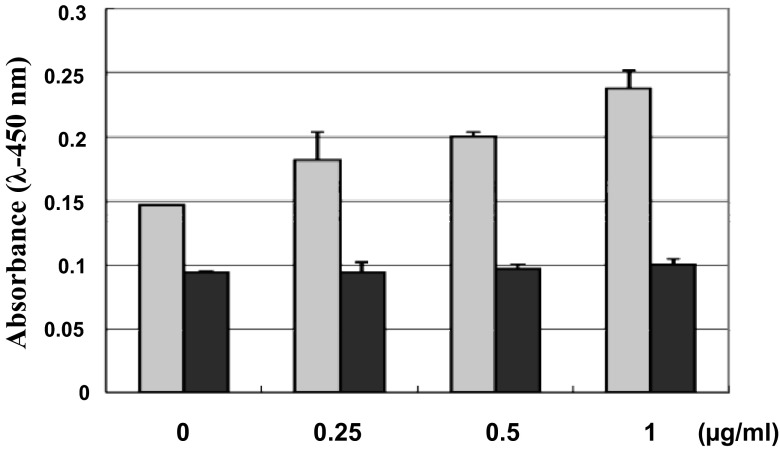
Direct binding of FGF-1 to CCN2 as evaluated by solid phase binding assay. Binding of FGF-1 to CCN2 (gray columns) and BSA (black columns) coated onto an ELISA plate surface was colorimetrically evaluated. Concentrations of FGF-1 applied onto the ELISA plate are indicated on the abscissa
Fig. 3
Fig. 3
Kinetic analysis of direct binding between FGF-1 and CCN2 by SPR methodology. Interaction of FGF-1 as an analyte and CCN2 immobilized to the sensor chip was kinetically analyzed with Biacore X system. The experiment and analysis were performed following the single kinetics protocol with sequential injection of increasing concentrations of the analyte, as shown on the graph. RU: resonance units
Fig. 4
Fig. 4
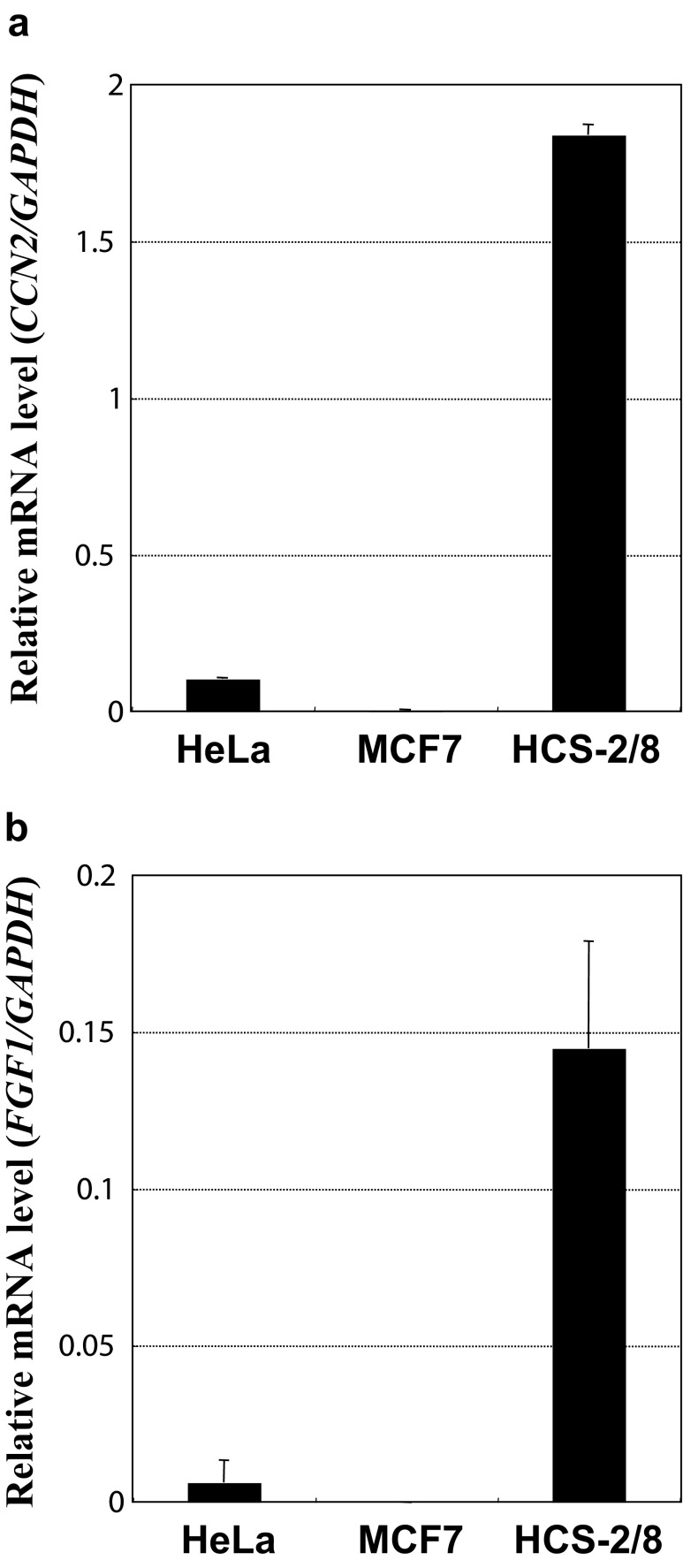
Specific expression of FGF-1 and CCN2 in human chondrocytic HCS-2/8 cells. Distinct gene expression of CCN2 a and FGF-1 b was observed in chondrocytic HCS-2/8 cells, whereas the other non-chondrocytic cell lines showed almost no expression of those genes. Gene expression levels are represented by relative values against those of GAPDH with error bars of standard deviations
Fig. 5
Fig. 5
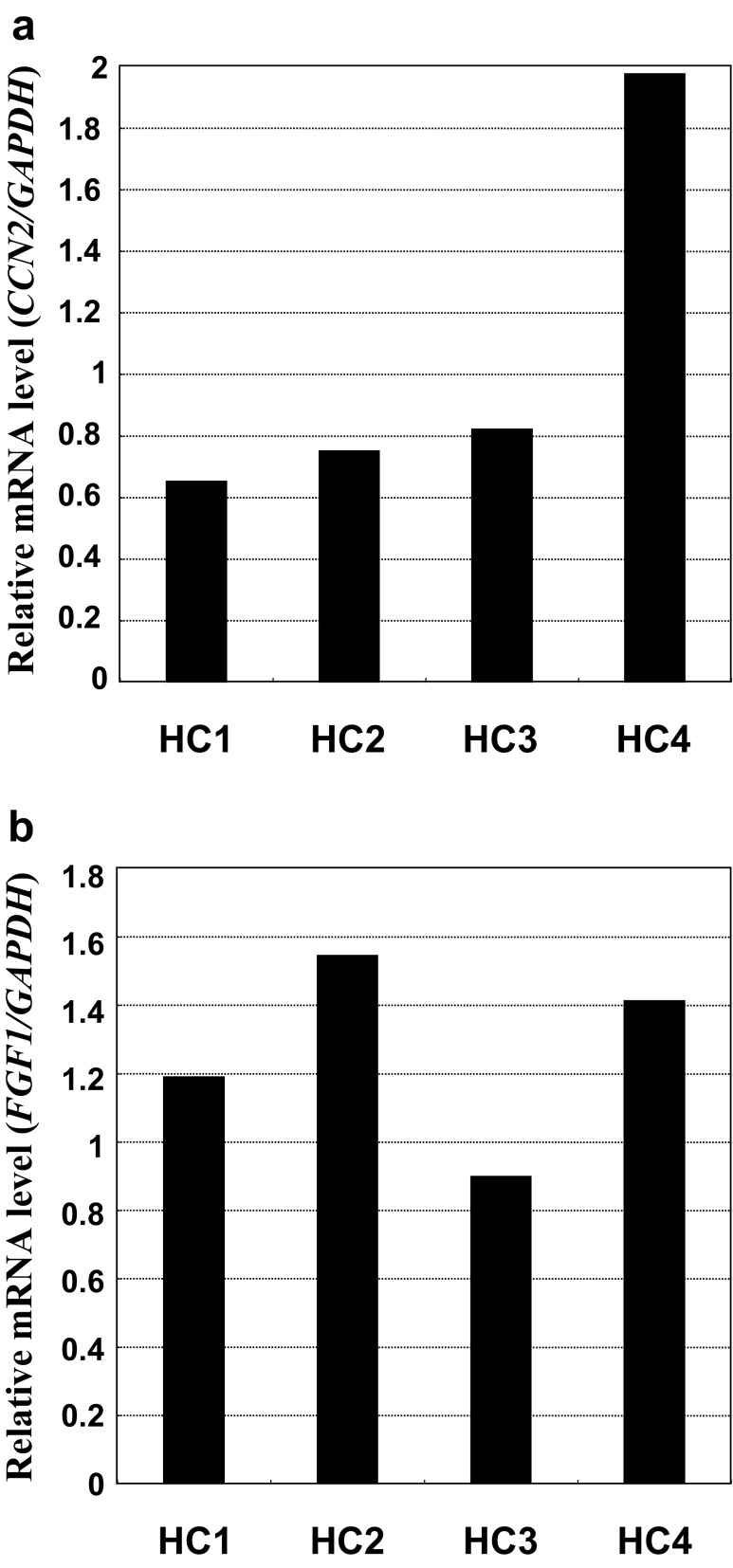
Concomitant expression of FGF-1 and CCN2 in human articular chondrocytes from OA patients. Expression of CCN2 a and FGF-1 b in human chondrocytes obtained from knee joints upon total knee replacement therapy of OA. Values obtained from each individual (HC1 - 4) are shown. Gene expression levels are represented by relative values against those of GAPDH

References

    1. Abd El Kader T, Kubota S, Nishida T, Hattori T, Aoyama E, Janune D, Hara ES, Ono M, Tabata Y, Kuboki T, Takigawa M. The regenerative effects of CCN2 independent modules on chondrocytes in vitro and osteoarthritis models in vivo. Bone. 2014;59:180–188. doi: 10.1016/j.bone.2013.11.010. - DOI - PubMed
    1. Acosta CA, Izal I, Ripalda P, Douglas-Price AL, Forriol F. Gene expression and proliferation analysis in young, aged, and osteoarthritic sheep chondrocytes effect of growth factor treatment. J Orthop Res. 2006;24:2087–94. doi: 10.1002/jor.20245. - DOI - PubMed
    1. Aoyama E, Kubota S, Takigawa M. CCN2/CTGF binds to fibroblast growth factor receptor 2 and modulates its signaling. FEBS Lett. 2012;586:4270–4275. doi: 10.1016/j.febslet.2012.10.038. - DOI - PubMed
    1. Ellman MB, An HS, Muddasani P, Im HJ. Biological impact of the fibroblast growth factor family on articular cartilage and intervertebral disc homeostasis. Gene. 2008;420:82–89. doi: 10.1016/j.gene.2008.04.019. - DOI - PMC - PubMed
    1. Gao R, Brigstock DR. Connective tissue growth factor (CCN2) induces adhesion of rat activated hepatic stellate cells by binding of its C-terminal domain to integrin alpha(v)beta(3) and heparan sulfate proteoglycan. J Biol Chem. 2004;279:8848–8855. doi: 10.1074/jbc.M313204200. - DOI - PubMed