


A mutually assured destruction mechanism attenuates light signaling in Arabidopsis
- PMID: 24904166
- PMCID: PMC4414656
- DOI: 10.1126/science.1250778
A mutually assured destruction mechanism attenuates light signaling in Arabidopsis
Abstract
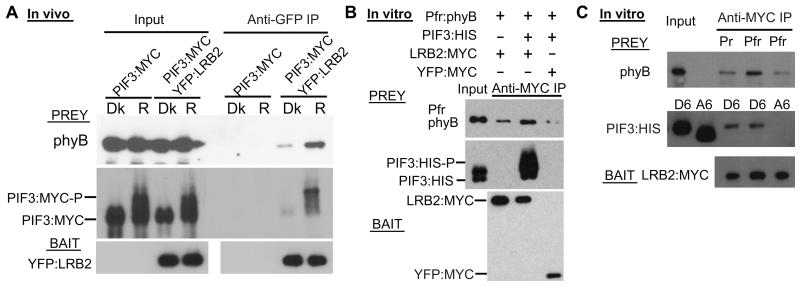
After light-induced nuclear translocation, phytochrome photoreceptors interact with and induce rapid phosphorylation and degradation of basic helix-loop-helix transcription factors, such as PHYTOCHROME-INTERACTING FACTOR 3 (PIF3), to regulate gene expression. Concomitantly, this interaction triggers feedback reduction of phytochrome B (phyB) levels. Light-induced phosphorylation of PIF3 is necessary for the degradation of both proteins. We report that this PIF3 phosphorylation induces, and is necessary for, recruitment of LRB [Light-Response Bric-a-Brack/Tramtrack/Broad (BTB)] E3 ubiquitin ligases to the PIF3-phyB complex. The recruited LRBs promote concurrent polyubiqutination and degradation of both PIF3 and phyB in vivo. These data reveal a linked signal-transmission and attenuation mechanism involving mutually assured destruction of the receptor and its immediate signaling partner.
Copyright © 2014, American Association for the Advancement of Science.
Figures



References
-
- Avraham R, Yarden Y. Feedback regulation of EGFR signalling: decision making by early and delayed loops. Nat Rev Mol Cell Biol. 2011;12:104. - PubMed
-
- Yarden Y. The biological framework: translational research from bench to clinic. Oncologist. 2010;15:1. - PubMed
-
- Amit I, et al. A module of negative feedback regulators defines growth factor signaling. Nat Genet. 2007;39:503. - PubMed
-
- Jiao Y, Lau OS, Deng XW. Light-regulated transcriptional networks in higher plants. Nat Rev Genet. 2007;8:217. - PubMed
Publication types
MeSH terms
Substances
Grants and funding
LinkOut - more resources
Full Text Sources
Other Literature Sources
Molecular Biology Databases
