


The promising potential of menstrual stem cells for antenatal diagnosis and cell therapy
- PMID: 24904569
- PMCID: PMC4032935
- DOI: 10.3389/fimmu.2014.00205
The promising potential of menstrual stem cells for antenatal diagnosis and cell therapy
Abstract
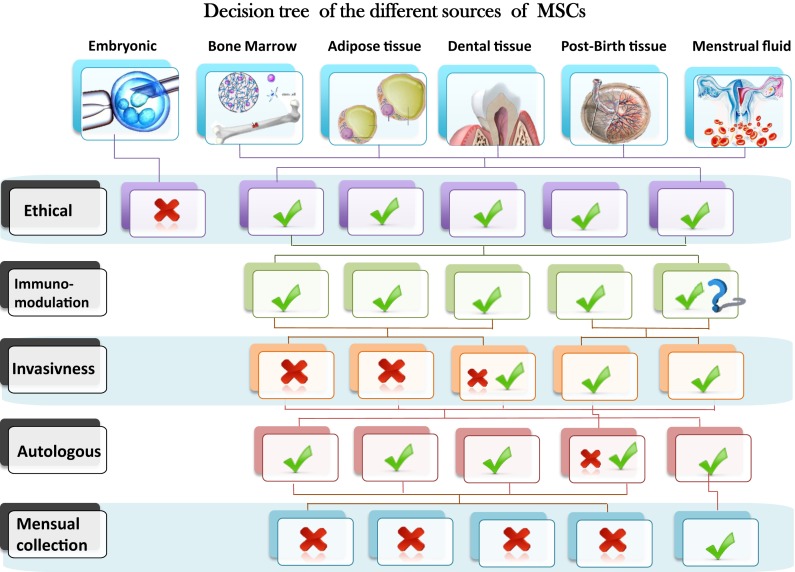
Menstrual-derived stem cells (MenSCs) are a new source of mesenchymal stem cells isolated from the menstrual fluid. Currently, there is a growing interest in their clinical potential due to fact that they are multipotent, highly proliferative, and easy to obtain in a non-invasive manner. Sampling can be repeated periodically in a simplified and reproducible manner devoid of complications that no existing cell source can match. MenSCs are also free of ethical dilemmas, and display novel properties with regard to presently known adult derived stem cells. This review details their distinctive biological properties regarding immunophenotype and function, proliferation rate, differentiation potential, and paracrine effects mediated by secreted factors. Their possible role in antenatal diagnosis is also discussed. While more insight on their immunomodulatory and diagnostic properties is needed, the impact of clinical and epidemiological factors, such as age, use of contraceptives, or hormonal status still requires further investigations to properly assess their current and future use in clinical application and diagnosis.
Keywords: cell therapy; menstrual blood; menstrual stem cells; mesenchymal stem cells; stem cells.
Figures
References
Publication types
LinkOut - more resources
Full Text Sources
Other Literature Sources
