


Role of toll-like receptors in immune activation and tolerance in the liver
- PMID: 24904576
- PMCID: PMC4032908
- DOI: 10.3389/fimmu.2014.00221
Role of toll-like receptors in immune activation and tolerance in the liver
Abstract
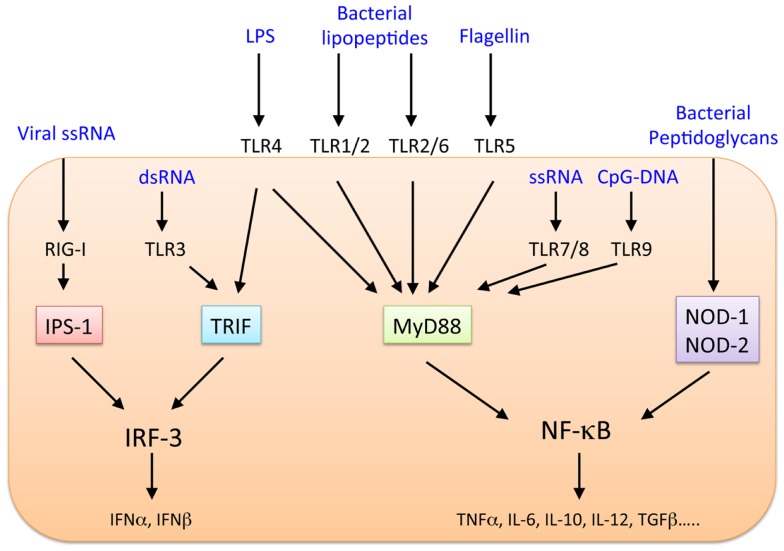
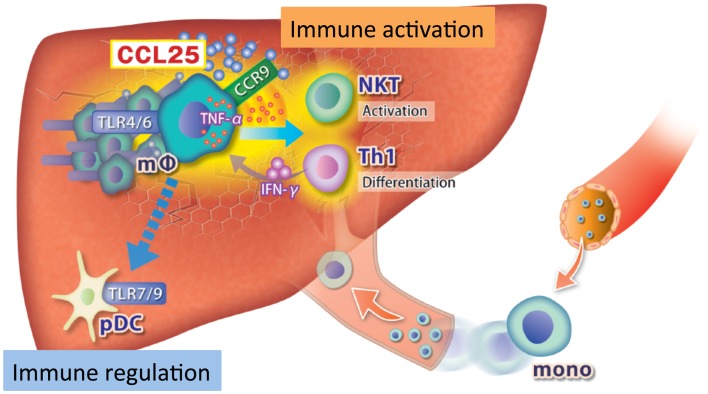
Liver has a unique vascular system receiving the majority of the blood supply from the gastrointestinal tract through the portal vein and faces continuous exposure to foreign pathogens and commensal bacterial products. These gut-derived antigens stimulate liver cells and result in a distinctive immune response via a family of pattern recognition receptors, the Toll-like receptors (TLRs). TLRs are expressed on Kupffer cells, dendritic cells, hepatic stellate cells, endothelial cells, and hepatocytes in the liver. The crosstalk between gut-derived antigens and TLRs on immune cells trigger a distinctive set of mechanisms to induce immunity, contributing to various acute and chronic liver diseases including liver cirrhosis and hepatocellular carcinoma. Accumulating evidence has shown that TLRs stimulation by foreign antigens induces the production of immunoactivating and immunoregulatory cytokines. Furthermore, the immunoregulatory arm of TLR stimulation can also control excessive tissue damage. With this knowledge at hand, it is important to clarify the dual role of disease-specific TLRs as activators and regulators, especially in the liver. We will review the current understanding of TLR signaling and subsequent immune activation and tolerance by the innate immune system in the liver.
Keywords: Kupffer cell; Toll-like receptor; dendritic cell; liver tolerance; microbiota.
Figures
References
-
- Dong Z, Wei H, Sun R, Tian Z. The roles of innate immune cells in liver injury and regeneration. Cell Mol Immunol (2007) 4:241–52 - PubMed
Publication types
LinkOut - more resources
Full Text Sources
Other Literature Sources
