


Early exposure to nicotine during critical periods of brain development: Mechanisms and consequences
- PMID: 24904708
- PMCID: PMC4042244
- DOI: 10.3233/JPB-2010-0012
Early exposure to nicotine during critical periods of brain development: Mechanisms and consequences
Abstract
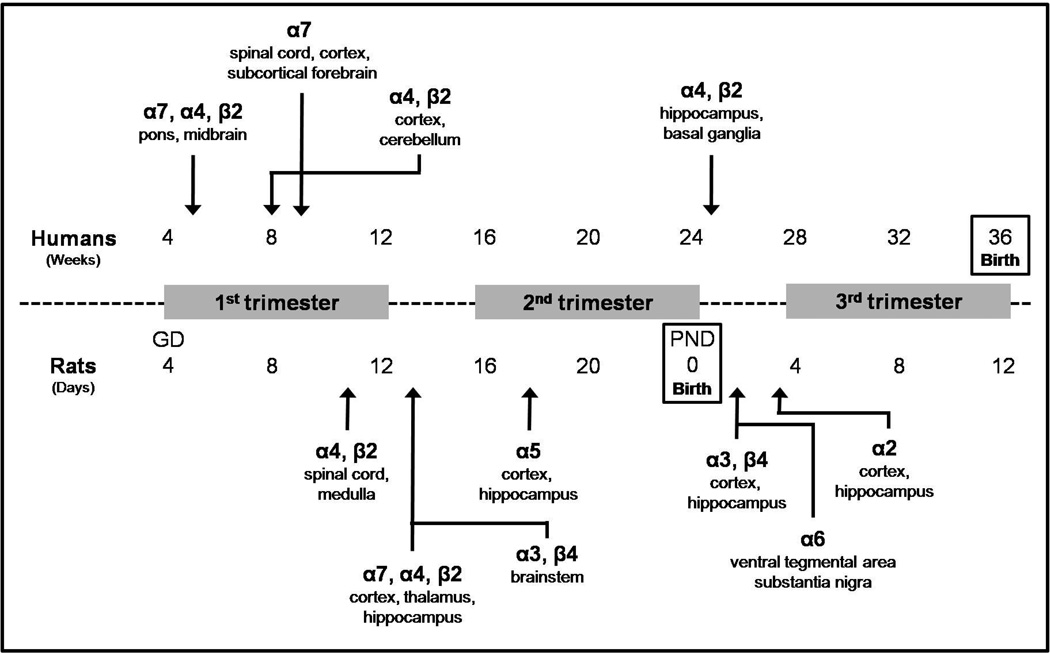
Tobacco use during pregnancy continues to be a major problem with more than 16% of pregnant women in the United States continuing to smoke during pregnancy. Tobacco smoke is known to contain more than 4,000 different chemicals, and while many of these compounds have the potential to interfere with proper neurodevelopment, there is direct evidence that nicotine, the major psychoactive substance present in tobacco, acts as a neuroteratogen. Nicotine activates, and subsequently desensitizes, neuronal nicotinic acetylcholine receptor subtypes (AChRs), which are expressed in the developing central nervous system (CNS) prior to the in-growth of cholinergic neurons. Nicotinic AChRs are present by the first trimester of development in both humans and rodents, and activation of these receptors by acetylcholine is thought to play a critical role in CNS development. The purpose of the current review is to provide an overview of the role that nicotinic AChRs play in the developing CNS and to describe the effects of nicotine exposure during early development on neuronal cell biology, nicotinic AChR expression and neurotransmitter system (e.g., dopamine, norepinephrine, serotonin) function. In particular, differences that occur as a result of the timing and duration of nicotine exposure will be discussed. Emphasis will be placed on preclinical studies examining particular periods of time which correspond to periods of prenatal development in humans (i.e., first, second and third trimesters). Finally, the effects of early nicotine exposure on neurobehavioral development as it pertains to specific disorders, i.e., attention deficit hyperactivity disorder (ADHD), depression and addiction, will be discussed.
Keywords: addiction; attention deficit hyperactivity disorder; depression; dopamine; neuroanatomy; nicotine; nicotinic acetylcholine receptors; norepinephrine; serotonin.
Figures
References
-
- Samet JM, Wipfli HL. Globe still in grip of addiction. Nature. 2010;463:1020–1021. - PubMed
-
- Shafey O, Eriksen M, Ross H, et al. The Tobacco Atlas. 3rd edn. Atlanta, Georgia: American Cancer Society; 2009.
-
- Mackay J, Eriksen M. Geneva. The world tobacco atlas. Switzerland: World Health Organization Publications; 2006.
-
- Substance Abuse and Mental Health Services Administration. Results from the 2008 National Survey on Drug Use and Health: National Findings (Office of Applied Studies, NSDUH Series H-36, HHS Publication No. SMA 09-4434) Rockville, MD: 2009.
Grants and funding
LinkOut - more resources
Full Text Sources