


Trail resistance induces epithelial-mesenchymal transition and enhances invasiveness by suppressing PTEN via miR-221 in breast cancer
- PMID: 24905916
- PMCID: PMC4048247
- DOI: 10.1371/journal.pone.0099067
Trail resistance induces epithelial-mesenchymal transition and enhances invasiveness by suppressing PTEN via miR-221 in breast cancer
Erratum in
-
Correction: Trail Resistance Induces Epithelial-Mesenchymal Transition and Enhances Invasiveness by Suppressing PTEN via miR-221 in Breast Cancer.PLoS One. 2019 Mar 21;14(3):e0214433. doi: 10.1371/journal.pone.0214433. eCollection 2019. PLoS One. 2019. PMID: 30897152 Free PMC article.
Abstract
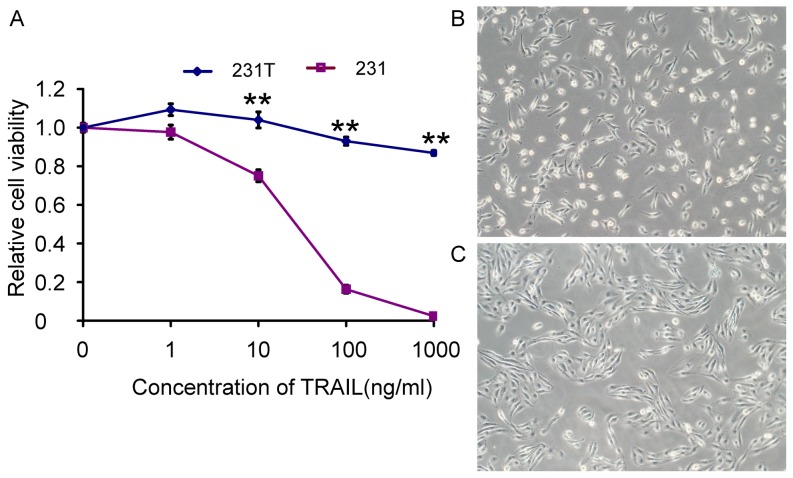
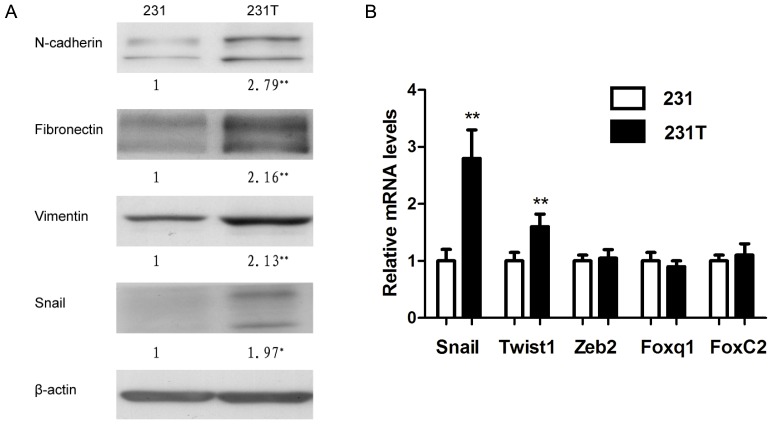
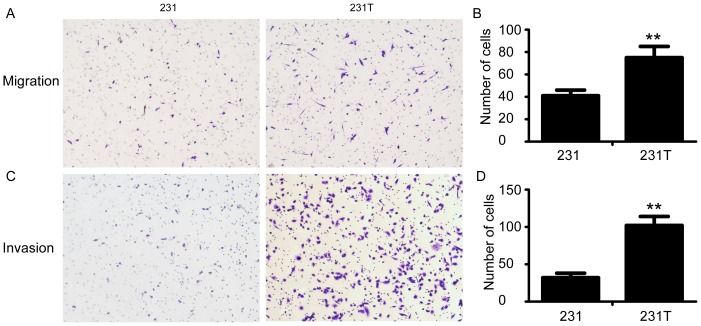
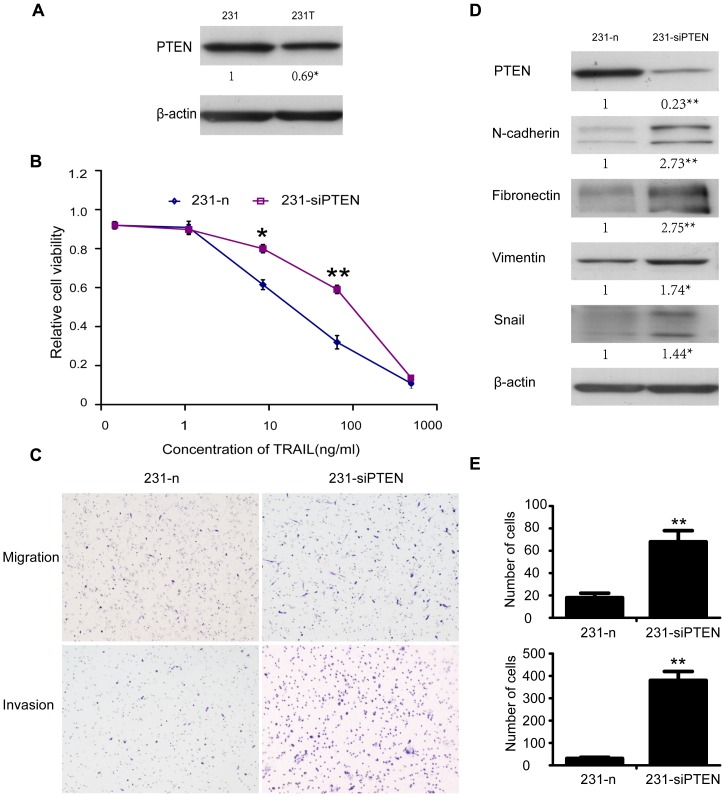
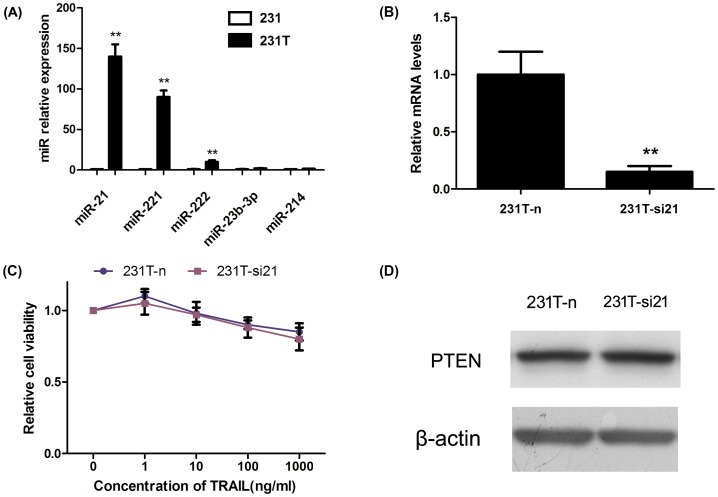
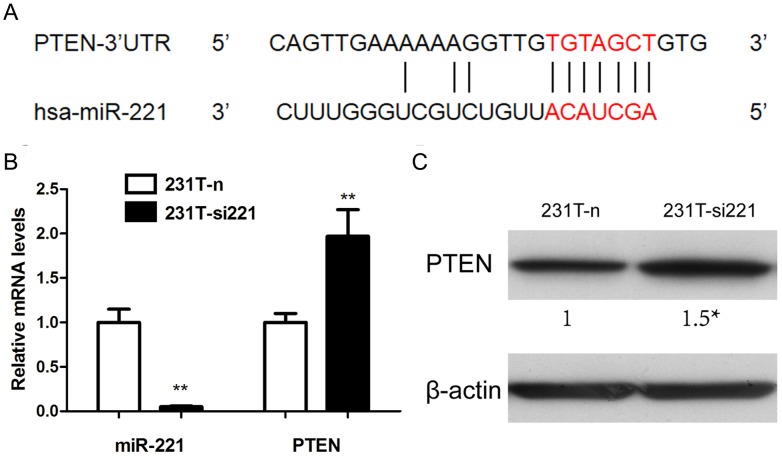
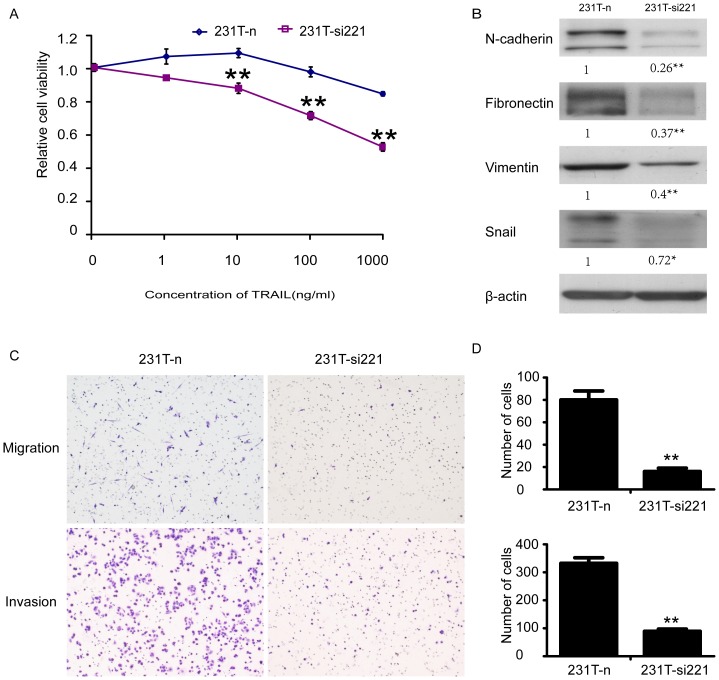
Tumor necrosis factor-related apoptosis-inducing ligand (TRAIL) can selectively induce apoptosis of cancer cells and is verified effective to various cancers. However, a variety of breast cancer cell lines are resistant to TRAIL and the mechanisms of resistance are largely unknown. In our present experiment, we successfully utilized breast cancer cell line MDA-MB-231 to establish TRAIL-resistant cell line. We found resistance to TRAIL could induce epithelial-mesenchymal transition (EMT) and enhance invasiveness. We further demonstrated PTEN was down-regulated in TRAIL-resistant cells. Silencing miR-221, PTEN expression was up-regulated, the process of EMT could be reversed, and the ability of migration and invasion were correspondingly weakened. We also demonstrated knockdown of miR-221 could reverse resistance to TRAIL partially by targeting PTEN. Our findings suggest that resistance to TRAIL could induce EMT and enhance invasiveness by suppressing PTEN via miR-221. Re-expression of miR-221 or targeting PTEN might serve as potential therapeutic approaches for the treatment of Trail-resistant breast cancer.
Conflict of interest statement
Figures
References
-
- Benson JR, Jatoi I (2012) The global breast cancer burden. Future Oncol 8: 697–702. - PubMed
-
- Youlden DR, Cramb SM, Dunn NA, Muller JM, Pyke CM, et al. (2012) The descriptive epidemiology of female breast cancer: an international comparison of screening, incidence, survival and mortality. Cancer Epidemiol 36: 237–248. - PubMed
-
- Griffith TS, Lynch DH (1998) TRAIL: a molecule with multiple receptors and control mechanisms. Curr Opin Immunol 10: 559–563. - PubMed
-
- Hotte SJ, Hirte HW, Chen EX, Siu LL, Le LH, et al. (2008) A phase 1 study of mapatumumab (fully human monoclonal antibody to TRAIL-R1) in patients with advanced solid malignancies. Clin Cancer Res 14: 3450–3455. - PubMed
-
- de Jong S, Timmer T, Heijenbrok FJ, de Vries EG (2001) Death receptor ligands, in particular TRAIL, to overcome drug resistance. Cancer Metastasis Rev 20: 51–56. - PubMed
Publication types
MeSH terms
Substances
LinkOut - more resources
Full Text Sources
Other Literature Sources
Medical
Research Materials
Miscellaneous
