


The need for randomization in animal trials: an overview of systematic reviews
- PMID: 24906117
- PMCID: PMC4048216
- DOI: 10.1371/journal.pone.0098856
The need for randomization in animal trials: an overview of systematic reviews
Abstract
Background and objectives: Randomization, allocation concealment, and blind outcome assessment have been shown to reduce bias in human studies. Authors from the Collaborative Approach to Meta Analysis and Review of Animal Data from Experimental Studies (CAMARADES) collaboration recently found that these features protect against bias in animal stroke studies. We extended the scope the work from CAMARADES to include investigations of treatments for any condition.
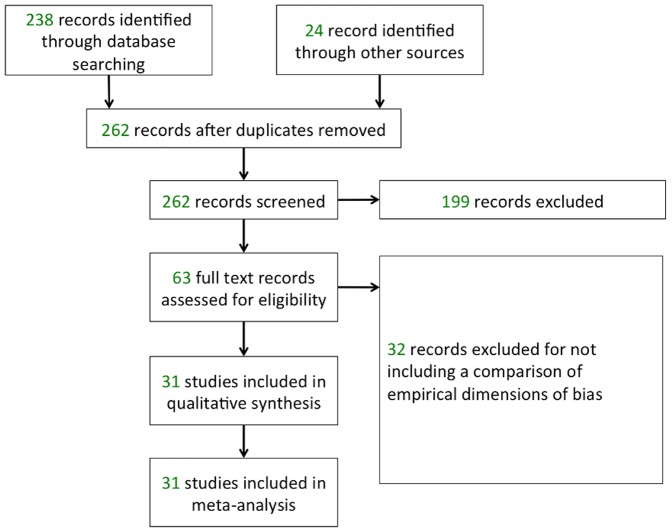
Methods: We conducted an overview of systematic reviews. We searched Medline and Embase for systematic reviews of animal studies testing any intervention (against any control) and we included any disease area and outcome. We included reviews comparing randomized versus not randomized (but otherwise controlled), concealed versus unconcealed treatment allocation, or blinded versus unblinded outcome assessment.
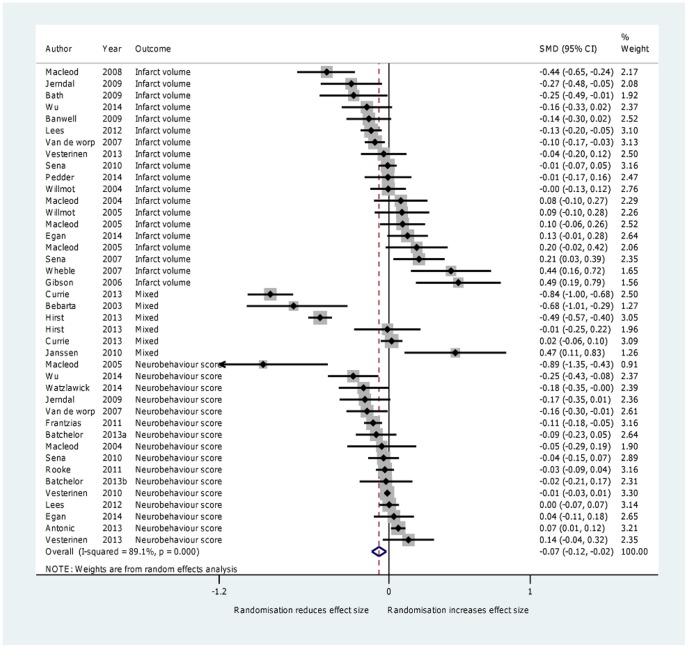
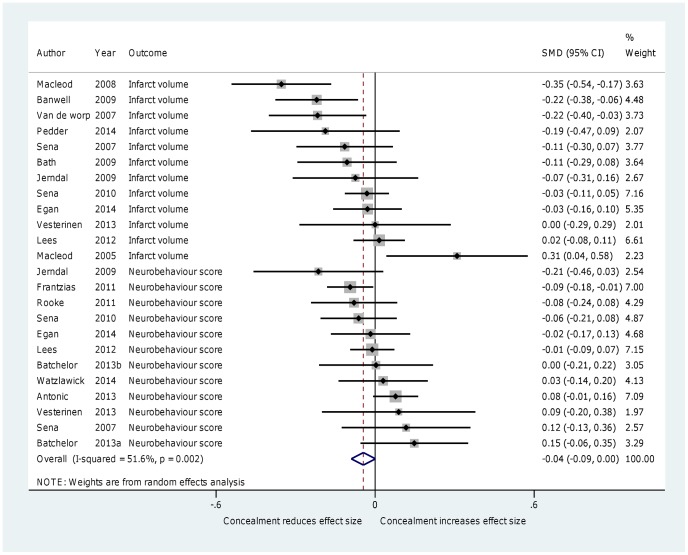
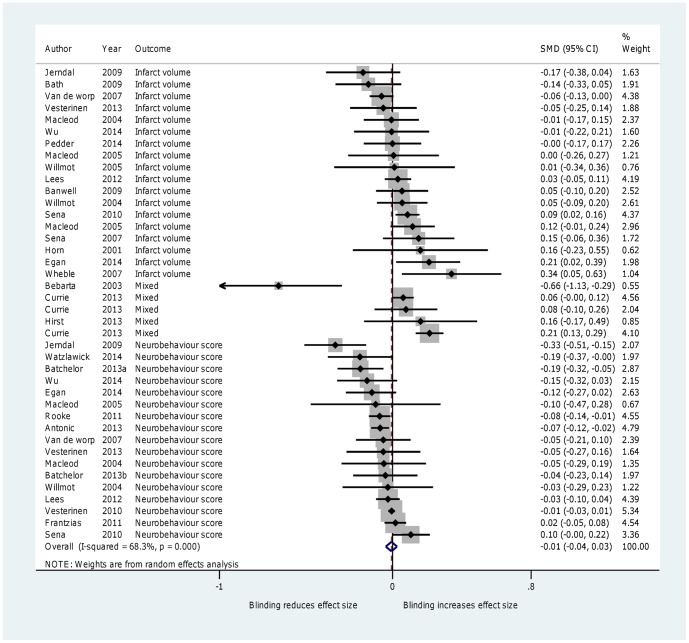
Results: Thirty-one systematic reviews met our inclusion criteria: 20 investigated treatments for experimental stroke, 4 reviews investigated treatments for spinal cord diseases, while 1 review each investigated treatments for bone cancer, intracerebral hemorrhage, glioma, multiple sclerosis, Parkinson's disease, and treatments used in emergency medicine. In our sample 29% of studies reported randomization, 15% of studies reported allocation concealment, and 35% of studies reported blinded outcome assessment. We pooled the results in a meta-analysis, and in our primary analysis found that failure to randomize significantly increased effect sizes, whereas allocation concealment and blinding did not. In our secondary analyses we found that randomization, allocation concealment, and blinding reduced effect sizes, especially where outcomes were subjective.
Conclusions: Our study demonstrates the need for randomization, allocation concealment, and blind outcome assessment in animal research across a wide range of outcomes and disease areas. Since human studies are often justified based on results from animal studies, our results suggest that unduly biased animal studies should not be allowed to constitute part of the rationale for human trials.
Conflict of interest statement
Figures
References
-
- Sackett DL (1969) Clinical epidemiology. Am J Epidemiol 89: 125–128. - PubMed
-
- Sackett DL (1986) Rules of evidence and clinical recommendations on the use of antithrombotic agents. Chest 89: 2S–3S. - PubMed
-
- Sackett DL, Richardson WS, Rosenberg W, Haynes B (1997) Evidence-based medicine: How to Practice & Teach EBM. London: Churchill Livingstone.
-
- Chalmers I (2007) The lethal consequences of failing to make full use of all relevant evidence about the effects of medical treatments: the importance of systematic reviews. In: Rothwell PM, editor. Treating individuals: from randomised trials to personalized medicine. London: The Lancet.
-
- Howick J (2011) The Philosophy of Evidence-Based Medicine. Oxford: Wiley-Blackwell.
Publication types
MeSH terms
LinkOut - more resources
Full Text Sources
Other Literature Sources
Miscellaneous
