


Effects of systemic hypoxia on human muscular adaptations to resistance exercise training
- PMID: 24907297
- PMCID: PMC4208656
- DOI: 10.14814/phy2.12033
Effects of systemic hypoxia on human muscular adaptations to resistance exercise training
Abstract
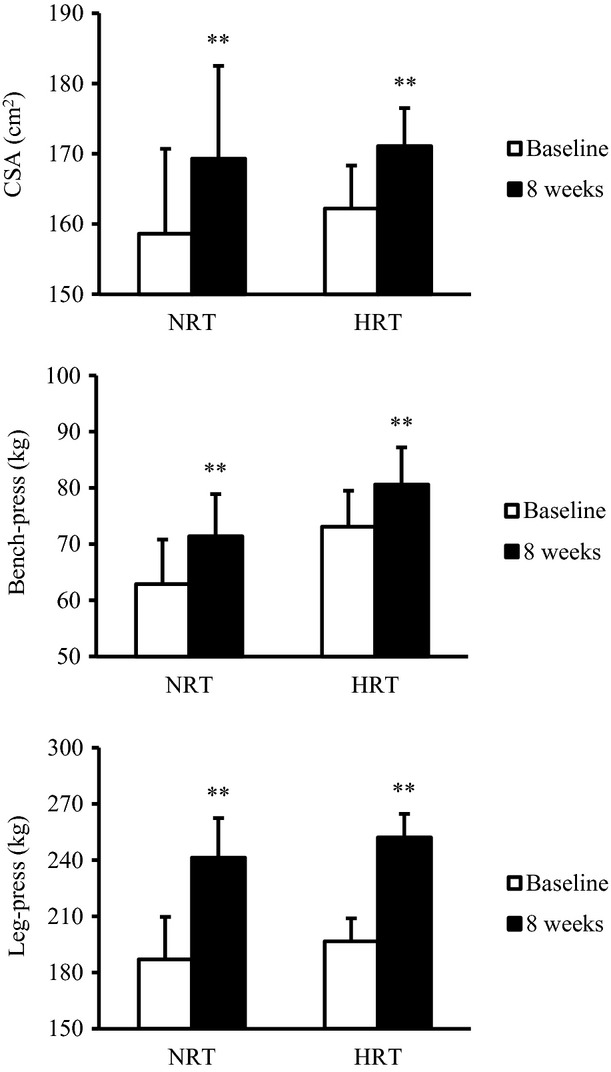
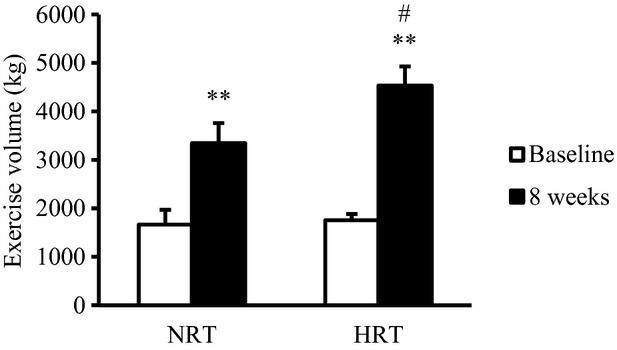
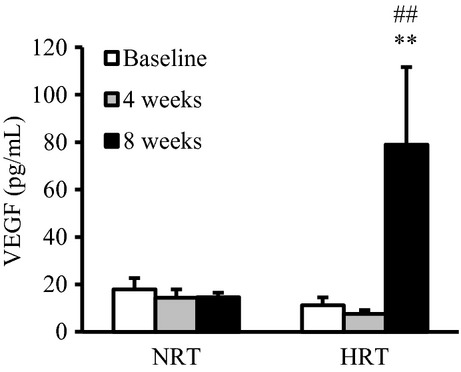
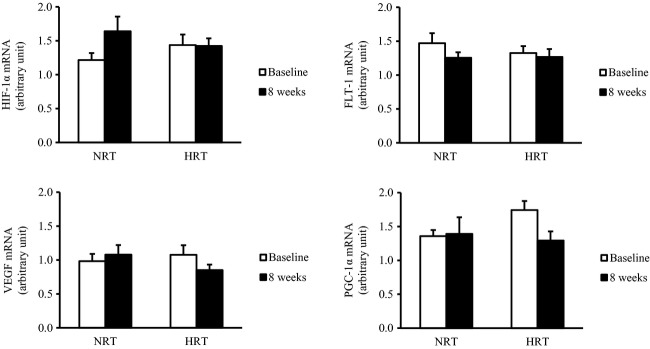
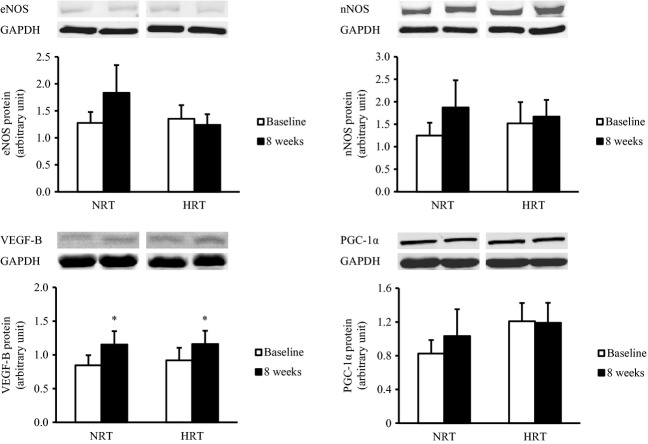
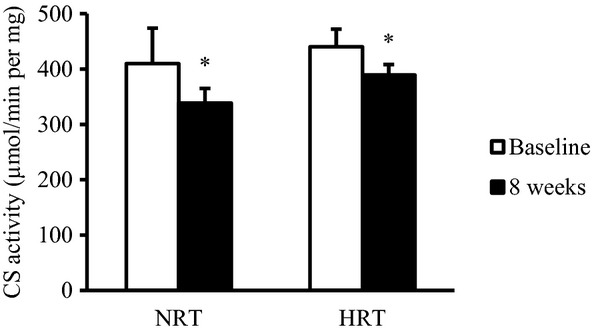
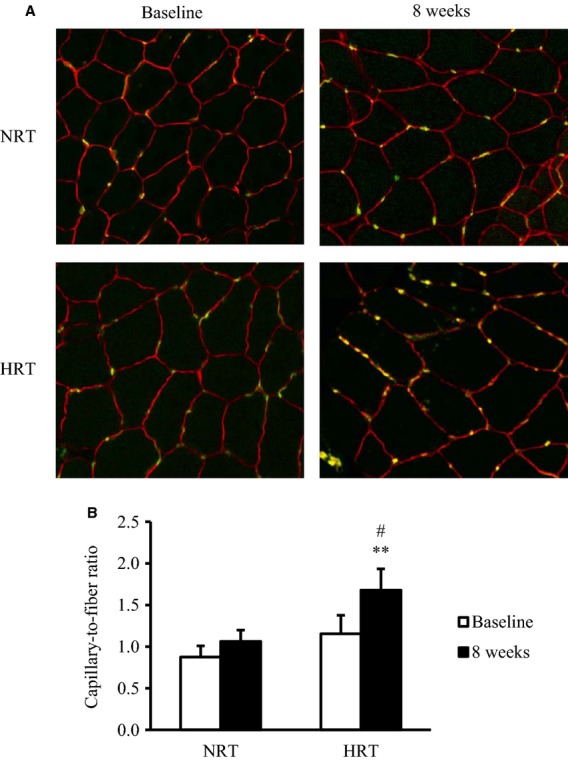
Hypoxia is an important modulator of endurance exercise-induced oxidative adaptations in skeletal muscle. However, whether hypoxia affects resistance exercise-induced muscle adaptations remains unknown. Here, we determined the effect of resistance exercise training under systemic hypoxia on muscular adaptations known to occur following both resistance and endurance exercise training, including muscle cross-sectional area (CSA), one-repetition maximum (1RM), muscular endurance, and makers of mitochondrial biogenesis and angiogenesis, such as peroxisome proliferator-activated receptor-γ coactivator-1α (PGC-1α), citrate synthase (CS) activity, nitric oxide synthase (NOS), vascular endothelial growth factor (VEGF), hypoxia-inducible factor-1 (HIF-1), and capillary-to-fiber ratio. Sixteen healthy male subjects were randomly assigned to either a normoxic resistance training group (NRT, n = 7) or a hypoxic (14.4% oxygen) resistance training group (HRT, n = 9) and performed 8 weeks of resistance training. Blood and muscle biopsy samples were obtained before and after training. After training muscle CSA of the femoral region, 1RM for bench-press and leg-press, muscular endurance, and skeletal muscle VEGF protein levels significantly increased in both groups. The increase in muscular endurance was significantly higher in the HRT group. Plasma VEGF concentration and skeletal muscle capillary-to-fiber ratio were significantly higher in the HRT group than the NRT group following training. Our results suggest that, in addition to increases in muscle size and strength, HRT may also lead to increased muscular endurance and the promotion of angiogenesis in skeletal muscle.
Keywords: Capillarization; resistance exercise training; skeletal muscle; systemic hypoxia.
© 2014 The Authors. Physiological Reports published by Wiley Periodicals, Inc. on behalf of the American Physiological Society and The Physiological Society.
Figures
References
-
- Andersen P. 1975. Capillary density in skeletal muscle of man. Acta Physiol. Scand.; 95:203-205. - PubMed
-
- Arany Z., Foo S. Y., Ma Y., Ruas J. L., Bommi‐Reddy A., Girnun G. 2008. HIF‐independent regulation of VEGF and angiogenesis by the transcriptional coactivator PGC‐1alpha. Nature; 451:1008-1012. - PubMed
-
- Baum O., Da Silva‐Azevedo L., Willerding G., Wöckel A., Planitzer G., Gossrau R. 2004. Endothelial NOS is main mediator for shear stress‐dependent angiogenesis in skeletal muscle after prazosin administration. Am. J. Physiol. Heart Circ. Physiol.; 287:H2300-H2308. - PubMed
-
- Baum O., Vieregge M., Koch P., Gül S., Hahn S., Huber‐Abel F. A. 2013. Phenotype of capillaries in skeletal muscle of nNOS‐knockout mice. Am. J. Physiol. Regul. Integr. Comp. Physiol.; 304:R1175-R1182. - PubMed
-
- Bergstrom J. 1975. Percutaneous needle biopsy of skeletal muscle in physiological and clinical research. Scand. J. Clin. Lab. Invest.; 35:609-616. - PubMed
LinkOut - more resources
Full Text Sources
Other Literature Sources
Medical
