


Damage of photoreceptor-derived cells in culture induced by light emitting diode-derived blue light
- PMID: 24909301
- PMCID: PMC4048889
- DOI: 10.1038/srep05223
Damage of photoreceptor-derived cells in culture induced by light emitting diode-derived blue light
Abstract
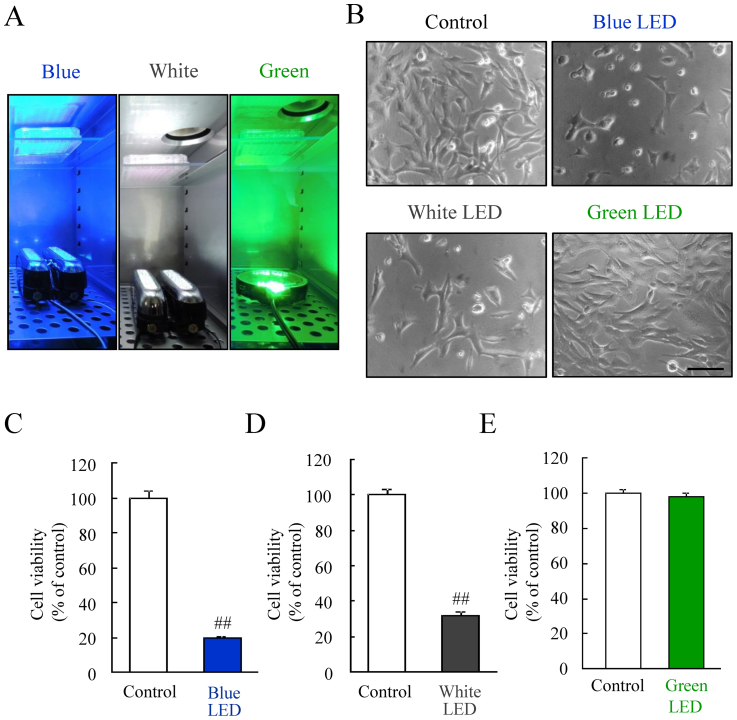
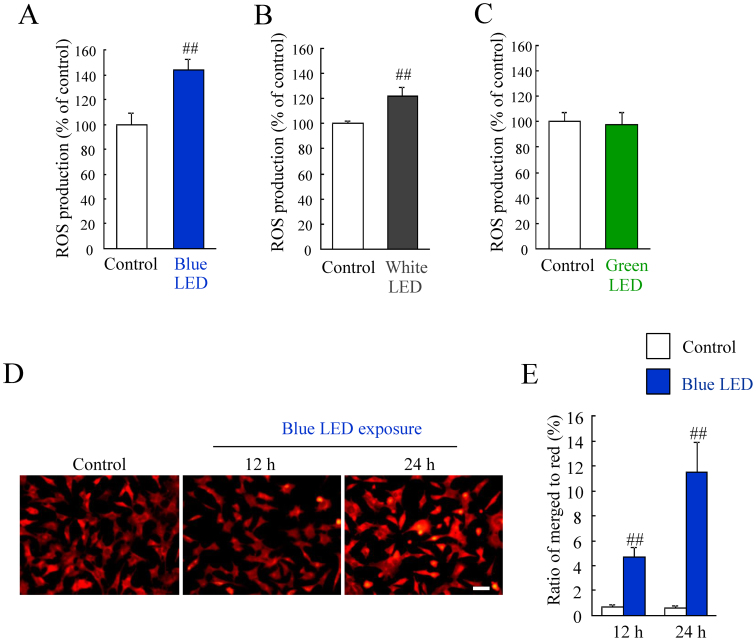
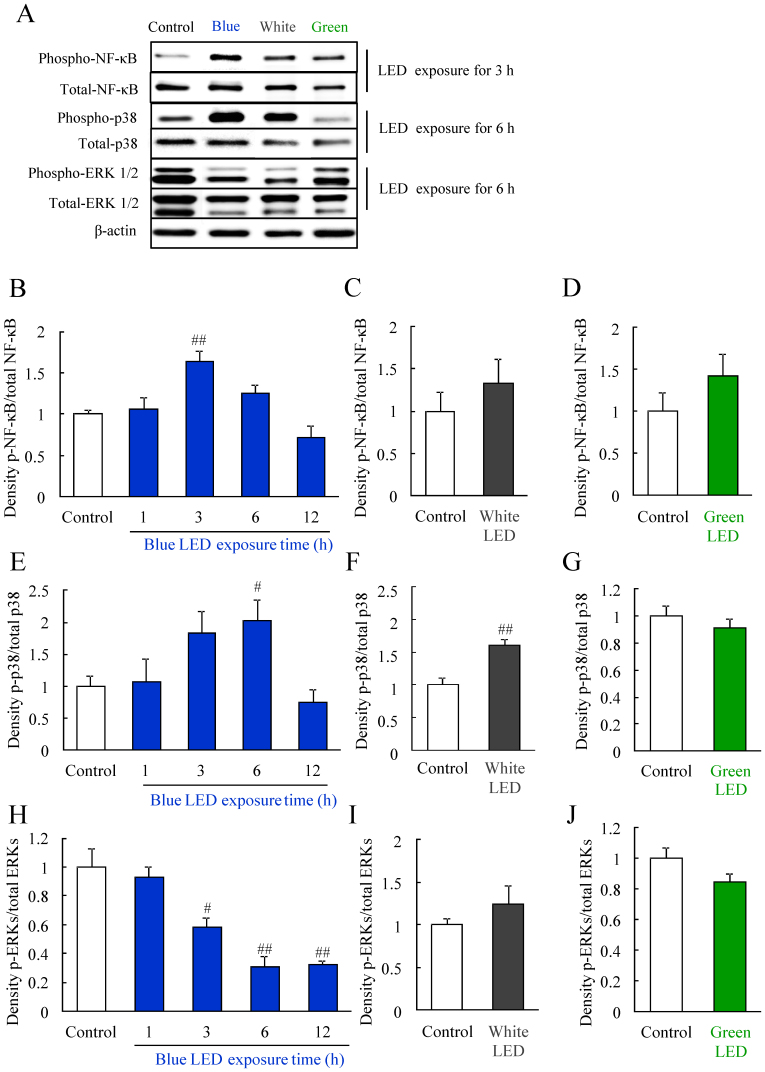
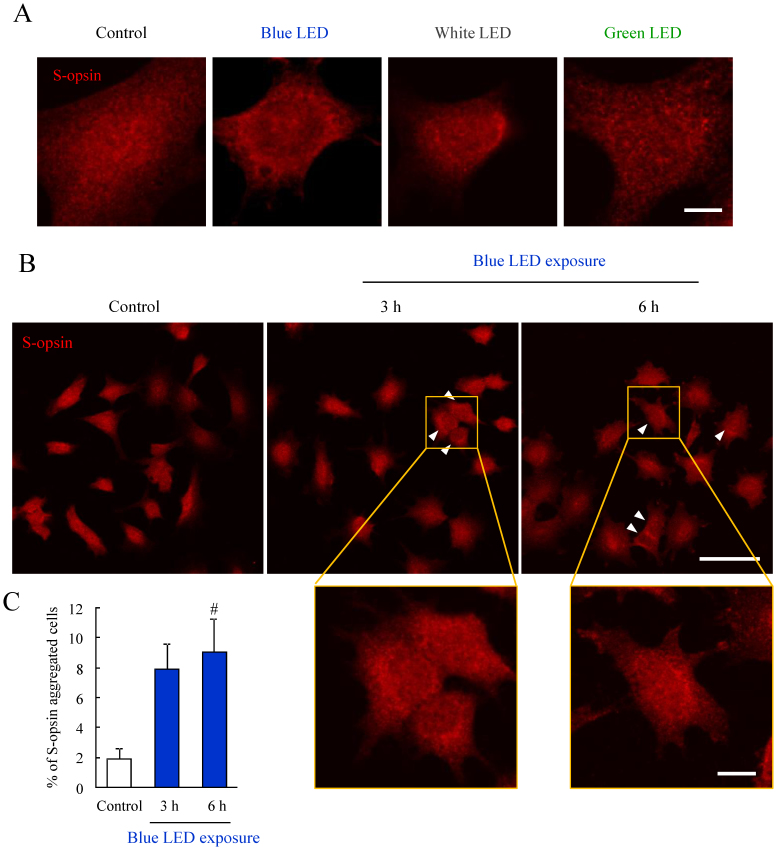
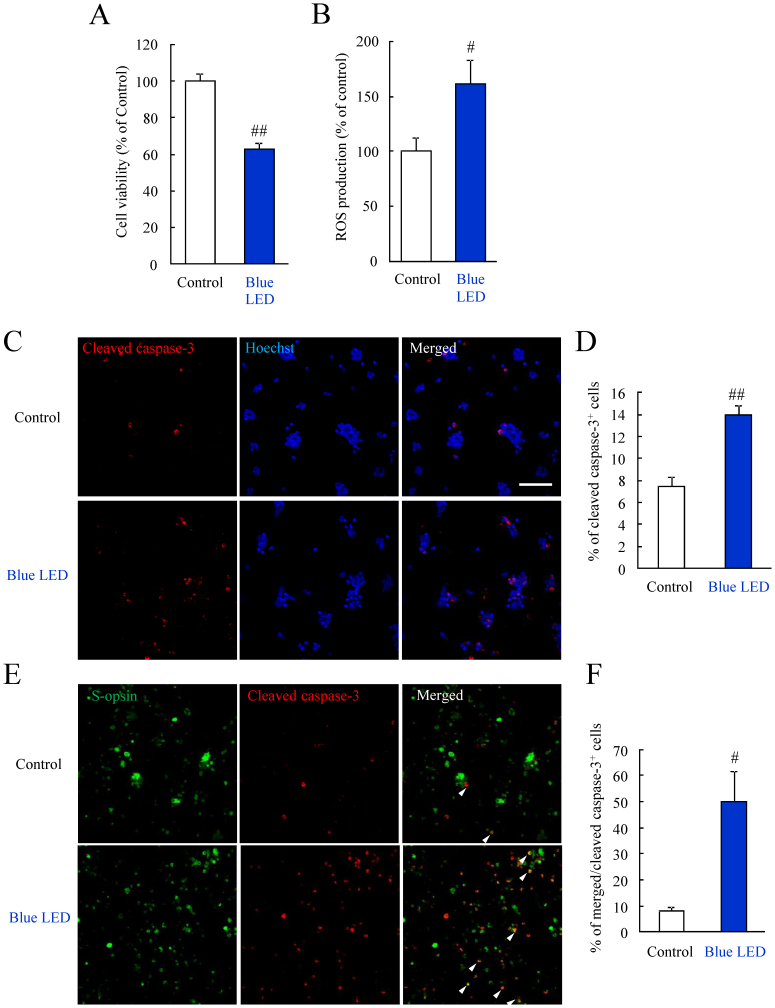
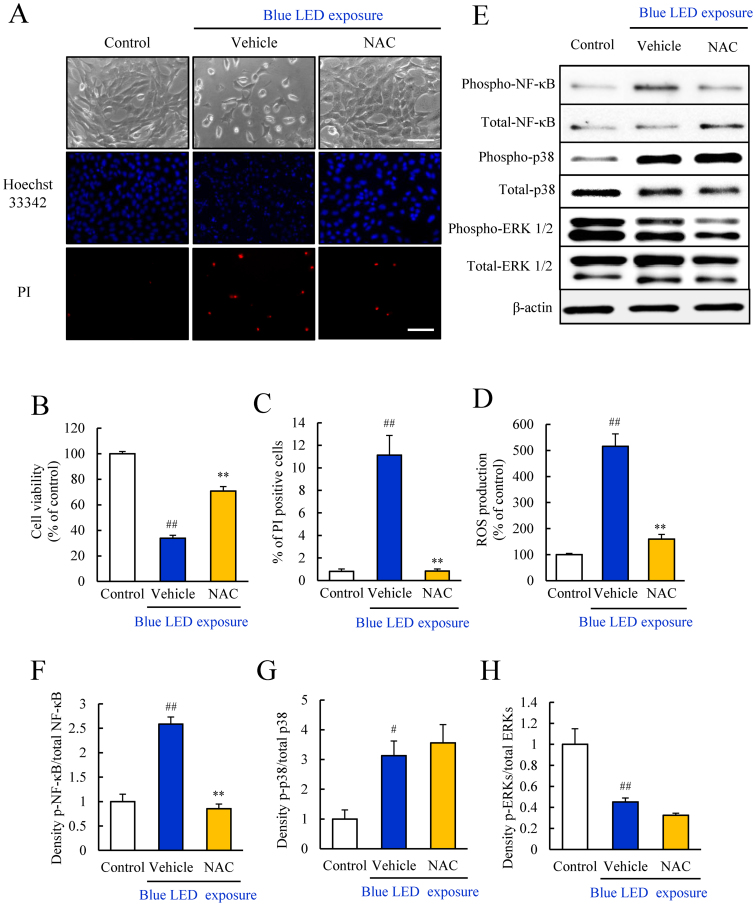
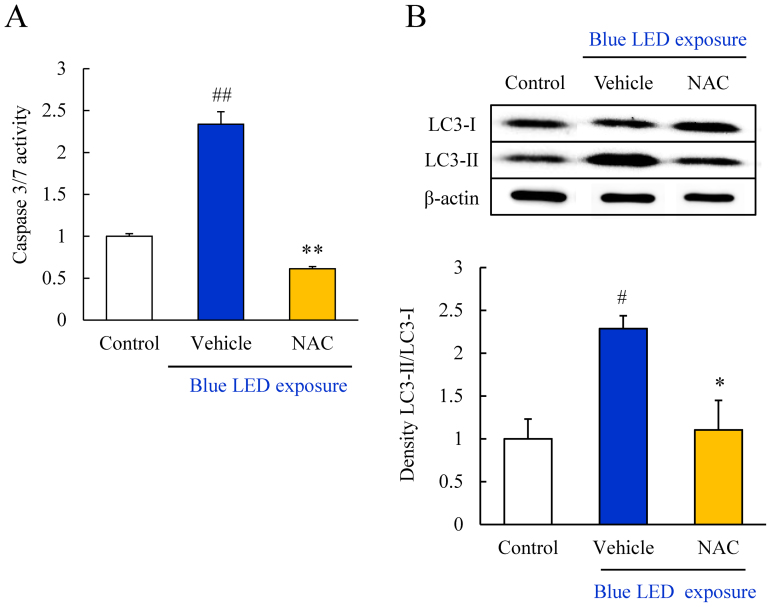
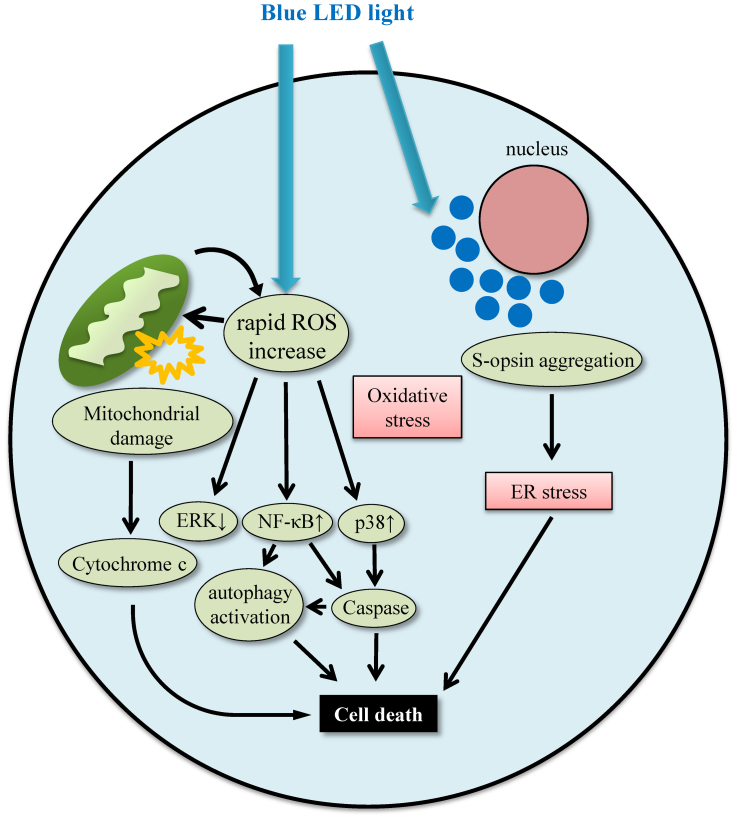
Our eyes are increasingly exposed to light from the emitting diode (LED) light of video display terminals (VDT) which contain much blue light. VDTs are equipped with televisions, personal computers, and smart phones. The present study aims to clarify the mechanism underlying blue LED light-induced photoreceptor cell damage. Murine cone photoreceptor-derived cells (661 W) were exposed to blue, white, or green LED light (0.38 mW/cm(2)). In the present study, blue LED light increased reactive oxygen species (ROS) production, altered the protein expression level, induced the aggregation of short-wavelength opsins (S-opsin), resulting in severe cell damage. While, blue LED light damaged the primary retinal cells and the damage was photoreceptor specific. N-Acetylcysteine (NAC), an antioxidant, protected against the cellular damage induced by blue LED light. Overall, the LED light induced cell damage was wavelength-, but not energy-dependent and may cause more severe retinal photoreceptor cell damage than the other LED light.
Figures
References
-
- Grimm C. et al. Rhodopsin-mediated blue-light damage to the rat retina: effect of photoreversal of bleaching. Invest Ophthalmol Vis Sci 42, 497–505 (2001). - PubMed
-
- Shahinfar S., Edward D. P. & Tso M. O. A pathologic study of photoreceptor cell death in retinal photic injury. Curr Eye Res 10, 47–59 (1991). - PubMed
-
- Beatty S., Koh H., Phil M., Henson D. & Boulton M. The role of oxidative stress in the pathogenesis of age-related macular degeneration. Surv Ophthalmol 45, 115–34 (2000). - PubMed
MeSH terms
Substances
LinkOut - more resources
Full Text Sources
Other Literature Sources
Molecular Biology Databases
Research Materials
