


Insulin-like growth factor-1 as a prognostic marker in patients with acute ischemic stroke
- PMID: 24911265
- PMCID: PMC4050057
- DOI: 10.1371/journal.pone.0099186
Insulin-like growth factor-1 as a prognostic marker in patients with acute ischemic stroke
Retraction in
-
Retraction: Insulin-Like Growth Factor-1 as a Prognostic Marker in Patients with Acute Ischemic Stroke.PLoS One. 2022 Mar 30;17(3):e0266429. doi: 10.1371/journal.pone.0266429. eCollection 2022. PLoS One. 2022. PMID: 35353874 Free PMC article. No abstract available.
Abstract
Objective: Insulin-like growth factor-1 (IGF-1) has been associated with cardiovascular risk factors and atherosclerosis. The aim of the present study was to evaluate the prognostic value of IGF-1 levels in patients with acute ischemic stroke (AIS).
Methods: All patients with first-ever AIS from August 1, 2012 to August 31, 2013 were recruited to participate in the study. Clinical data were collected. The National Institutes of Health Stroke Scale (NIHSS) score was assessed on admission blinded to serum IGF-1 levels. For the assessment of functional outcome at 90 days Modified Rankin Scale (mRS) was used. On admission, serum IGF-1 levels were determined by chemiluminescence immunoassay. The influence of IGF-1 levels on functional outcome and death was assessed by multivariate logistic regression analysis.
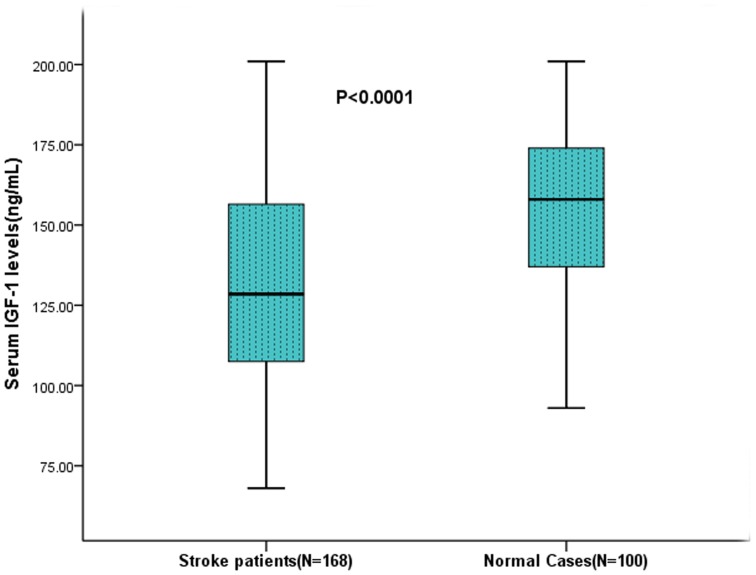
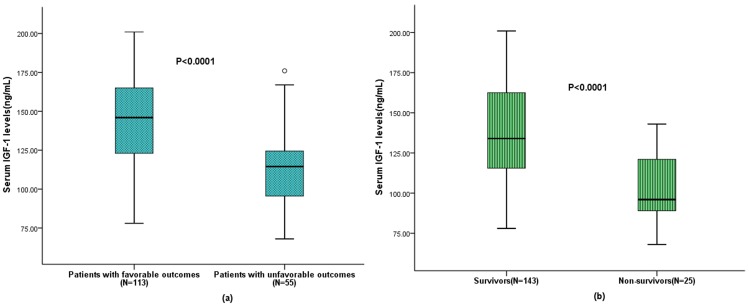
Results: Patients with an unfavorable outcomes and non-survivors had significantly decreased serum IGF-1 levels on admission (P<0.0001 for both). IGF-1 was an independent prognostic marker of functional outcome and death [odds ratio 0.89 (0.84-0.93) and 0.90 (0.84-0.95), respectively, P<0.0001 for both, adjusted for age, NIHSS score and other predictors] in patients with ischemic stroke. Serum IGF-1 levels ≤130 ng/mL was as an value indicator for unfavorable functional outcome (OR 3.31, 95% CI:1.87-5.62; P<0.0001), after adjusting for other significant confounders.
Conclusions: We reported a significant association between low serum IGF-1 levels and unfavorable functional outcome and death.
Conflict of interest statement
Figures
References
-
- Bonita R, Mendis S, Truelsen T, Bogousslavsky J, Toole J, et al. (2004) The global stroke initiative. Lancet Neurol 3(7): 391–393. - PubMed
-
- Mehta S, Livingstone C, Borai A, Ferns G (2012) Insulin-like growth factor binding protein-1 in insulin resistance and cardiovascular disease. The British Journal of Diabetes & Vascular Disease 12(1): 17–25.
-
- LeRoith D, Roberts Jr CT (2003) The insulin-like growth factor system and cancer. Cancer letters 195(2): 127–137. - PubMed
-
- Duron E, Funalot B, Brunel N, Coste J, Quinquis L, et al. (2012) Insulin-like growth factor-I and insulin-like growth factor binding protein-3 in Alzheimer's disease. J Clin Endocrinol Metab 97(12): 4673–4681. - PubMed
-
- Yeap BB, Paul Chubb SA, Lopez D, Ho KK, Hankey GJ, et al. (2013) Associations of insulin-like growth factor-I and its binding proteins and testosterone with frailty in older men. Clinical endocrinology 78(5): 752–759. - PubMed
Publication types
MeSH terms
Substances
LinkOut - more resources
Full Text Sources
Other Literature Sources
Medical
Miscellaneous
