. 2014 Jun 10:4:5232.
doi: 10.1038/srep05232.

Quantity and accessibility for specific targeting of receptors in tumours

Affiliations

Quantity and accessibility for specific targeting of receptors in tumours

Sajid Hussain et al. Sci Rep. .

Abstract

Synaphic (ligand-directed) targeting of drugs is an important potential new approach to drug delivery, particularly in oncology. Considerable success with this approach has been achieved in the treatment of blood-borne cancers, but the advances with solid tumours have been modest. Here, we have studied the number and availability for ligand binding of the receptors for two targeting ligands. The results show that both paucity of total receptors and their poor availability are major bottlenecks in drug targeting. A tumour-penetrating peptide greatly increases the availability of receptors by promoting transport of the drug to the extravascular tumour tissue, but the number of available receptors still remains low, severely limiting the utility of the approach. Our results emphasize the importance of using drugs with high specific activity to avoid exceeding receptor capacity because any excess drug conjugate would lose the targeting advantage. The mathematical models we describe make it possible to focus on those aspects of the targeting mechanism that are most likely to have a substantial effect on the overall efficacy of the targeting.


Conflict of interest statement

E.R. has ownership interest (including patents) in CendR Therapeutics Inc. E.R. is the founder, chairman of the board, consultant/advisory board member, and major shareholder of CendR Therapeutics Inc., and has ownership interest (including patents) in the same. E.R. is also a consultant/advisory board member, and major shareholder of EnduRx Pharmaceuticals Inc., and has ownership interest (including patents) in the same. No potential conflicts of interest were disclosed by the other authors.

Figures
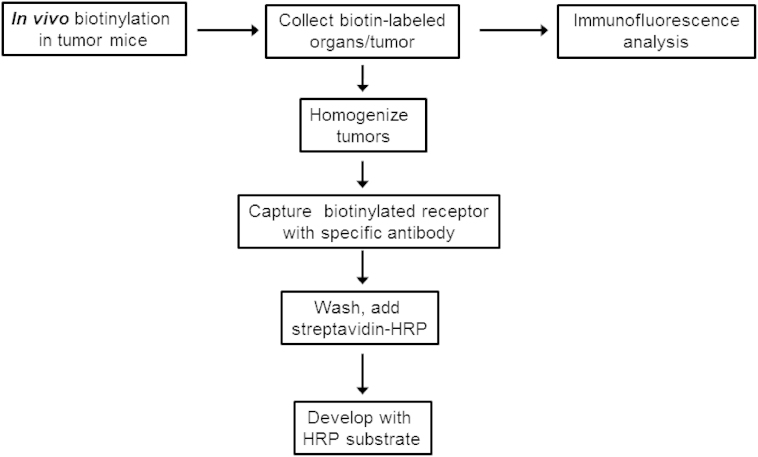
Figure 1
Figure 1. Schematic representation of the analysis of accessible receptors in tumor bearing mice by using the in vivo biotinylation method.
Figure 2
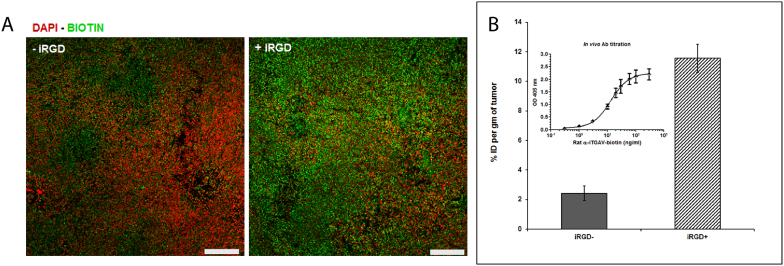
Figure 2. Effect of iRGD on antibody accumulation in tumor tissue.
(A) Fluorescence microscopy images of biotin-labeled rat anti-mouse αv with and without prior injection of the tumor penetrating peptide, iRGD. Images representative of at least five sections from each tumor (n = 3 mice per group) are shown. Scale bars = 100 μm. (B) Percentage of injected dose of the antibody per gram tumor (%ID/g) measured by sandwich ELISA. The inset shows the ELISA standard curve.
Figure 3
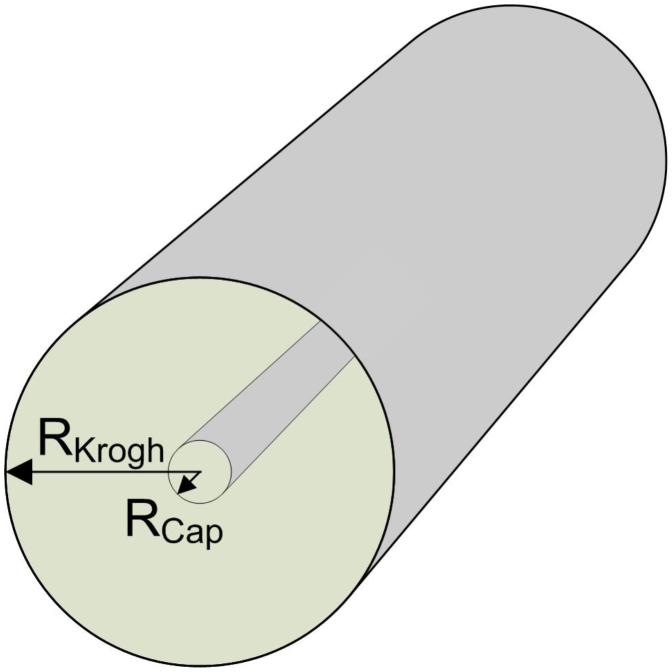
Figure 3. The geometry of the vascular-tissue model, the Krogh cylinder.
A hollow inner cylinder with radius Rcap represents a capillary that carries the blood plasma and probe molecules while a semi-permeable endothelial barrier restricts passage between the plasma and the surrounding tissue. Each section of capillary vessel is responsible for supplying blood and the small molecule biotinylation probe, or antibody, to the surrounding cylindrical section of tissue with radius RKrogh.
Figure 4
Figure 4
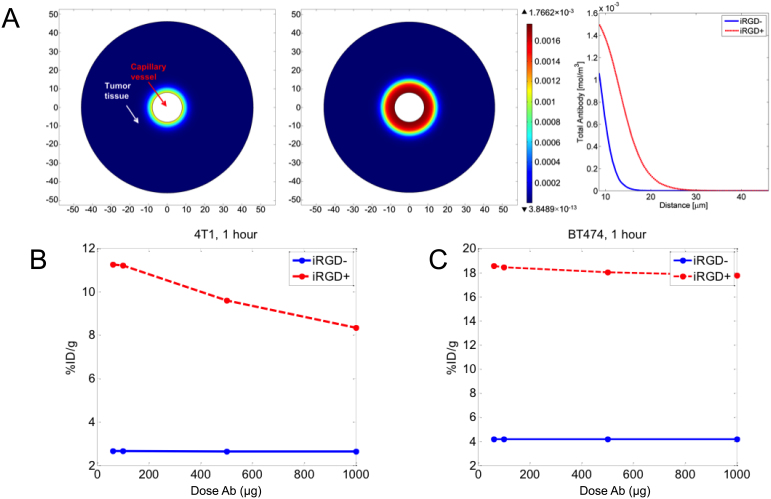
(A) Tumor total antibody concentration profile after 1 h circulation for BT474 illustrating how the antibody penetrates deeper into the tumor when iRGD is present. (B) Plot of simulation %ID/g vs Antibody (Ab) dose after 1 h circulation with and without iRGD for the 4T1 tumor model and (C) for BT474 tumor model.

References

    1. Ruoslahti E., Bhatia S. N. & Sailor M. J. Targeting of drugs and nanoparticles to tumors. J Cell Biol 188, 759–768 (2010). - PMC - PubMed
    1. Sugahara K. N. et al. Tissue-penetrating delivery of compounds and nanoparticles into tumors. Cancer Cell 16, 510–520 (2009). - PMC - PubMed
    1. Sugahara K. N. et al. Coadministration of a tumor-penetrating peptide enhances the efficacy of cancer drugs. Science 328, 1031–1035 (2010). - PMC - PubMed
    1. Desgrosellier J. S. & Cheresh D. A. Integrins in cancer: biological implications and therapeutic opportunities. Nat Rev Cancer 10, 9–22 (2010). - PMC - PubMed
    1. Ruoslahti E. Peptides as targeting elements and tissue penetration devices for nanoparticles. Adv Mater 24, 3747–3756 (2012). - PMC - PubMed

Publication types