


Adverse events and deterioration reported by participants in the PACE trial of therapies for chronic fatigue syndrome
- PMID: 24913337
- PMCID: PMC4065570
- DOI: 10.1016/j.jpsychores.2014.04.002
Adverse events and deterioration reported by participants in the PACE trial of therapies for chronic fatigue syndrome
Abstract
Objective: Adverse events (AEs) are health related events, reported by participants in clinical trials. We describe AEs in the PACE trial of treatments for chronic fatigue syndrome (CFS) and baseline characteristics associated with them.
Methods: AEs were recorded on three occasions over one year in 641 participants. We compared the numbers and nature of AEs between treatment arms of specialist medical care (SMC) alone, or SMC supplemented by adaptive pacing therapy (APT), cognitive behaviour therapy (CBT) or graded exercise therapy (GET). We examined associations with baseline measures by binary logistic regression analyses, and compared the proportions of participants who deteriorated by clinically important amounts.
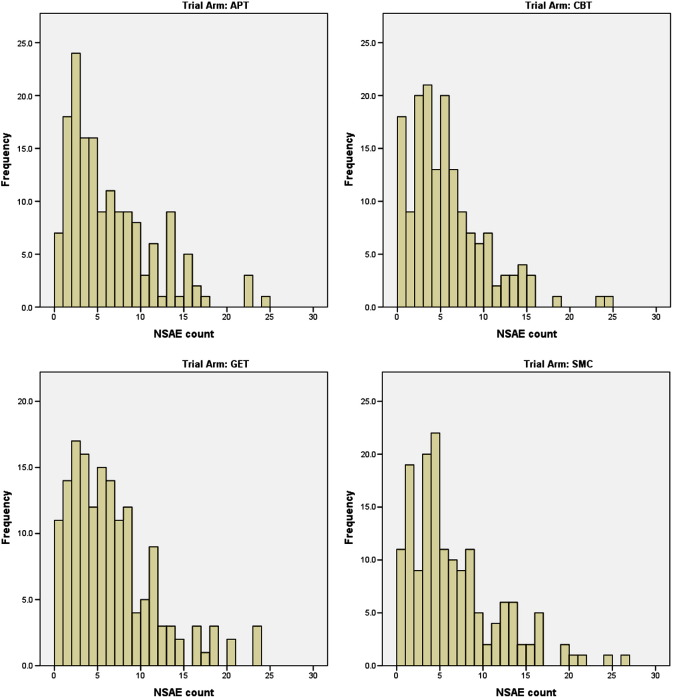
Results: Serious adverse events and reactions were infrequent. Non-serious adverse events were common; the median (quartiles) number was 4 (2, 8) per participant, with no significant differences between treatments (P=.47). A greater number of NSAEs were associated with recruitment centre, and baseline physical symptom count, body mass index, and depressive disorder. Physical function deteriorated in 39 (25%) participants after APT, 15 (9%) after CBT, 18 (11%) after GET, and 28 (18%) after SMC (P<.001), with no significant differences in worsening fatigue.
Conclusions: The numbers of adverse events did not differ significantly between trial treatments, but physical deterioration occurred most often after APT. The reporting of non-serious adverse events may reflect the nature of the illness rather than the effect of treatments. Differences between centres suggest that both standardisation of ascertainment methods and training are important when collecting adverse event data.
Keywords: Adverse events; Body mass index; Chronic fatigue syndrome; Depression; Medically unexplained symptoms.
Copyright © 2013. Published by Elsevier Inc.
Figures
References
-
- Almeida L, Kashdan T, Nunes T, Coelho R, Albino-Teixeira A, Soares-da-Silva P. Who volunteers for phase I clinical trials? Influences of anxiety, social anxiety and depressive symptoms on self-selection and the reporting of adverse events. Eur J Clin Pharmacol. 2008;64:575–582. - PubMed
-
- Foster J, Sanderman R, van der Molen T, Mueller T, Sonderen E. Personality influences the reporting of side effects of inhaled corticosteroids in asthma patients. J Asthma. 2008;45:664–669. - PubMed
-
- Davis C, Ralevski E, Kennedy S, Neitzert C. The role of personality factors in the reporting of side effect complaints to moclobemide and placebo: a study of healthy male and female volunteers. J Clin Psychopharmacol. 1995;15:347–352. - PubMed
-
- Almeida L, Falcao A, Vaz-da-Silva M, Coelho R, Albino-Teixeira A, Soares-da-Silva P. Personality characteristics of volunteers in phase 1 studies and likelihood of reporting adverse events. Int J Clin Pharmacol Ther. 2008;46:340–348. - PubMed
-
- Papakostas GI, Petersen T, Hughes ME, Nierenberg AA, Alpert JE, Fava M. Anxiety and somatic symptoms as predictors of treatment-related adverse events in major depressive disorder. Psychiatry Res. 2004;126:287–290. - PubMed
Publication types
MeSH terms
Grants and funding
LinkOut - more resources
Full Text Sources
Other Literature Sources
Medical
