. 2014 Sep;2(9):901-10.
doi: 10.1158/2326-6066.CIR-13-0123. Epub 2014 Jun 9.

STING ligand c-di-GMP improves cancer vaccination against metastatic breast cancer

Affiliations

STING ligand c-di-GMP improves cancer vaccination against metastatic breast cancer

Dinesh Chandra et al. Cancer Immunol Res. 2014 Sep.

Abstract

Cancer vaccination may be our best and most benign option for preventing or treating metastatic cancer. However, breakthroughs are hampered by immune suppression in the tumor microenvironment. In this study, we analyzed whether cyclic diguanylate (c-di-GMP), a ligand for stimulator of interferon genes (STING), could overcome immune suppression and improve vaccination against metastatic breast cancer. Mice with metastatic breast cancer (4T1 model) were therapeutically immunized with an attenuated Listeria monocytogenes (LM)-based vaccine, expressing tumor-associated antigen Mage-b (LM-Mb), followed by multiple low doses of c-di-GMP (0.2 μmol/L). This treatment resulted in a striking and near elimination of all metastases. Experiments revealed that c-di-GMP targets myeloid-derived suppressor cells (MDSC) and tumor cells. Low doses of c-di-GMP significantly increased the production of IL12 by MDSCs, in correlation with improved T-cell responses to Mage-b, whereas a high dose of c-di-GMP (range, 0.3-3 mmol/L) activated caspase-3 in the 4T1 tumor cells and killed the tumor cells directly. On the basis of these results, we tested one administration of high-dose c-di-GMP (3 mmol/L) followed by repeated administrations of low-dose c-di-GMP (0.2 μmol/L) in the 4T1 model, and found equal efficacy compared with the combination of LM-Mb and c-di-GMP. This finding correlated with a mechanism of improved CD8 T-cell responses to tumor-associated antigens (TAA) Mage-b and Survivin, most likely through cross-presentation of these TAAs from c-di-GMP-killed 4T1 tumor cells, and through c-di-GMP-activated TAA-specific T cells. Our results demonstrate that activation of STING-dependent pathways by c-di-GMP is highly attractive for cancer immunotherapy.


Conflict of interest statement

Disclosure of Potential Conflicts of Interests

David Karaolis is the inventor for several patents on the use of cyclic dinucleotides, such as c-di-GMP, as vaccine adjuvants to prevent cancer and infectious disease

Figures
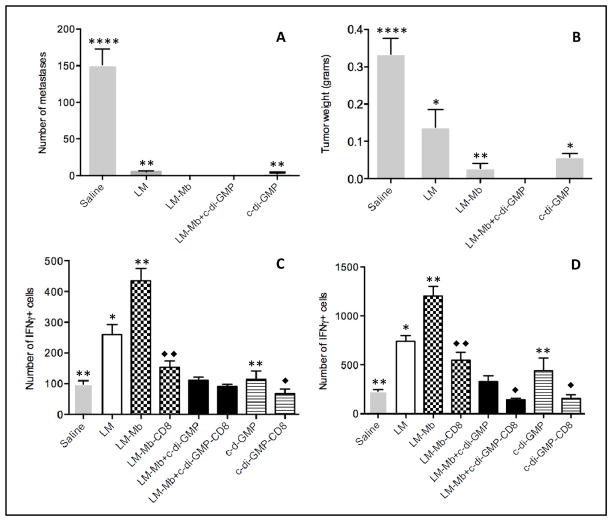
Figure 1
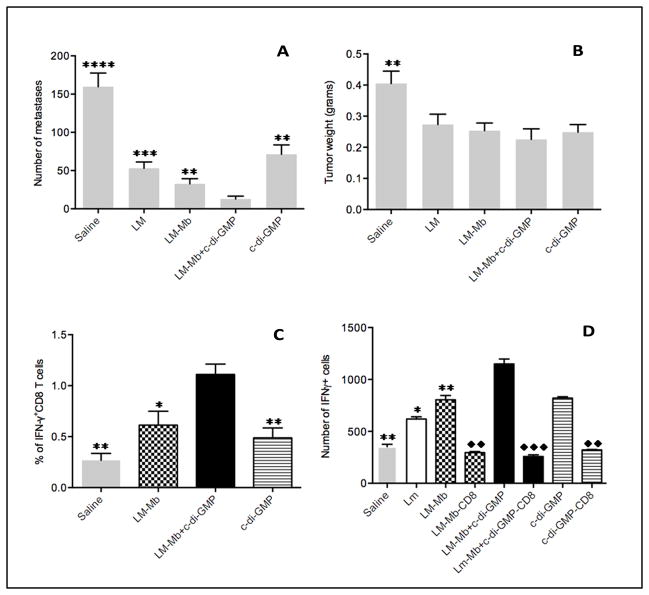
Figure 1. Semi-prophylactic immunizations with high doses of c-di-GMP and LM-Mb completely eliminated the metastatic breast cancer without improving T-cell responses
BALB/c mice received one preventive followed by two therapeutic immunizations with high doses of c-di-GMP and LM-Mb according to Immunization protocol A. All mice were euthanized nineteen days after the first immunization and analyzed for the number of metastases (A) and tumor weight (B). In the same experiments, Mage-b-specific (C) and LM-specific (D) CD8 T-cell responses were analyzed in the spleen (pooled) by ELISPOT in vitro. The results shown here are the averages of three independent experiments (n=5 mice per group). The error bars represent standard error of the mean (SEM). In A and B, all groups were compared to LM-Mb + c-di-GMP. In C and D, all groups not depleted for CD8 T cells were compared to LM-Mb + c-di-GMP (star), while the CD8 T cell-depleted groups were compared to the same groups without CD8-depletion (rhombus). Mann-Whitney test. *p<0.05, **<0.01, ***<0.001, ****<0.0001. Values p<0.05 were considered statistically significant.
Figure 2
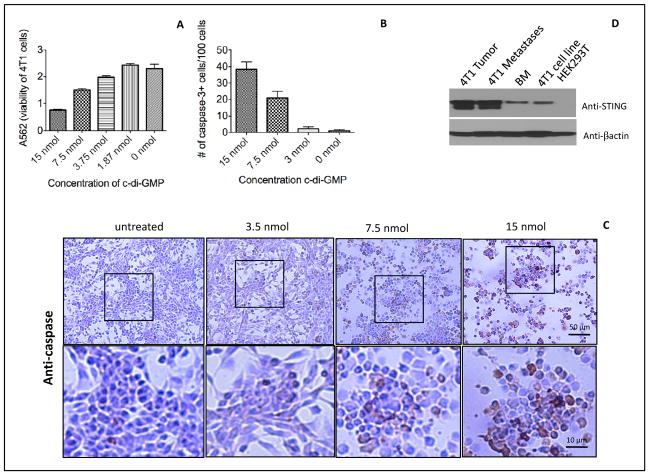
Figure 2. High doses of c-di-GMP killed 4T1 tumor cells directly and activated caspase-3
4T1 tumor cells were incubated with various doses of c-di-GMP for 24hours. The viability of the 4T1 tumor cells was assayed by MTT assay (A), or the number of 4T1 tumor cells with caspase-3 activation was quantified by immunohistochemistry (IHC) (B). The results shown here is the average of three independent experiments. The number of caspase-3-positive cells was counted per 100 cells. The error bars represent the SEM. An example of caspase-3 activation is shown by IHC (C). Also the expression of STING was analyzed in the primary tumor, metastases and the 4T1 cell line by western blotting (D). Bone marrow (BM) cells and HEK293 were used as a positive and negative control, respectively.
Figure 3
Figure 3. Therapeutic immunizations with low doses of c-di-GMP and LM-Mb almost completely eliminated all metastases and improved T-cell responses in vitro and in vivo
BALB/c mice received five therapeutic immunizations with low doses of c-di-GMP every day and LM-Mb every three days, according to Immunization protocol C. Nineteen days after tumor challenge mice were euthanized and analyzed for the number of metastases (A), tumor weight (B). In the same experiments, CD8 T-cell responses to Mage-b were analyzed in the spleen (pooled) in vitro by ELISPOT (C), or in blood (pooled) in vivo without any restimulation by flow cytometry (D). The results shown here are the averages of three independent experiments (n=5 mice per group). The error bars represent the SEM. In A and B, all groups were compared to LM-Mb + c-d-GMP. In C, all groups not depleted for CD8 T cells were compared to LM-Mb + c-di-GMP (star), and the CD8 T cell-depleted groups were compared to the same groups without CD8-depletion (rhombus). In D, all groups were compared to LM-Mb + c-di-GMP (*). Mann-Whitney test. *p<0.05, **<0.01, ***<0.001, ****<0.0001. Values p<0.05 were considered statistically significant.
Figure 4
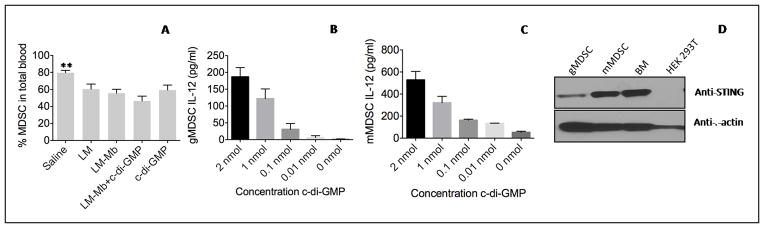
Figure 4. Therapeutic immunizations with low doses of c-di-GMP and LM-Mb reduced the percentage of MDSCs and c-di-GMP induced IL-12 production by MDSCs
BALB/c mice were immunized with low doses c-di-GMP and LM-Mb and challenged with 4T1 tumor cells according to Immunization protocol C. Nineteen days after tumor challenge mice were euthanized and the percentage of MDSCs (CD11b+Gr1+) was determined in blood in vivo by flow cytometry (A). An example of gating MDSC in blood is shown in Figure S10. In addition, gMDSCs (B) and mMDSCs (C) were isolated from 4T1 tumor-bearing mice, incubated with various concentrations of c-di-GMP in vitro, and then analyzed for IL-12 secretion in the culture supernatant by ELISA (C). The results shown here are the averages of three independent experiments (n=5 mice per group). In A, all groups were compared to LM-Mb + c-di-GMP. The error bars represent the SEM. Mann-Whitney test. *p<0.05, **<0.01, ***<0.001, ****<0.0001. Values p<0.05 were considered statistically significant. Also the expression of STING was analyzed in MDSCs by western blotting. Bone marrow (BM) cells and HEK293 cells were used as positive and negative controls, respectively.
Figure 5
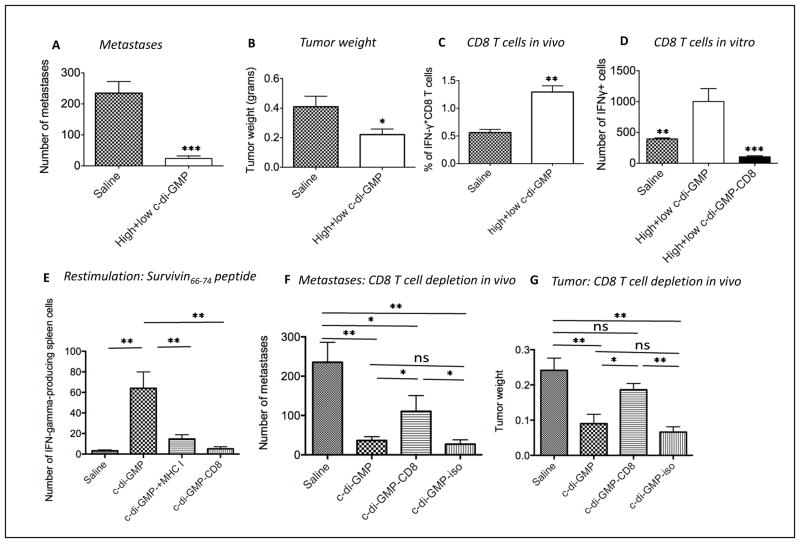
Figure 5. One therapeutic high dose followed by multiple low doses of c-di-GMP almost completely eliminated the metastases and improved T-cell responses to TAAs
BALB/c mice received one high dose of c-di-GMP followed by multiple low doses of c-di-GMP every day according to Immunization protocol D. Nineteen days after tumor challenge mice were euthanized and analyzed for the number of metastases (A) and tumor weight (B). In the same experiments, CD8 T-cell responses to Mage-b were analyzed in the spleen (pooled) in vitro by ELISPOT (C), or in blood (pooled) in vivo without any restimulation by flow cytometry (D). The results shown here are the averages of three independent experiments. In each experiment n=5 mice per group. Unpaired t test. *p<0.05, **<0.01, ***<0.001, ****<0.0001. Values p<0.05 were considered statistically significant. Spleen cells of c-di-GMP-treated and saline-control mice were re-stimulated with Survivin66–74 peptide (GWEPDDNPI) in the absence or presence of anti-MHC class I antibodies (E). Tumor-bearing mice were treated with c-di-GMP plus anti-CD8 antibodies (H35), and the number of metastases (F) and tumor weight (G) were compared to treatments with c-di-GMP alone, saline or isotype controls. In this experiment n=7 mice per group. The error bars in all graphs represent the standard error of the mean (SEM). Mann-Whitney test. *p<0.05, **<0.01, ***<0.001, ****<0.0001. Values p<0.05 were considered statistically significant. The error bars in all graphs represent the standard SEM.

References

    1. Thurner B, Haendle I, Roder C, Dieckmann D, Keikavoussi P, Jonuleit H, et al. Vaccination with mage-3A1 peptide-pulsed mature, monocyte-derived dendritic cells expands specific cytotoxic T cells and induces regression of some metastases in advanced stage IV melanoma. J Exp Med. 1999;190:1669–78. - PMC - PubMed
    1. Kruit WH, van Ojik HH, Brichard VG, Escudier B, Dorval T, Dreno B, et al. Phase 1/2 study of subcutaneous and intradermal immunization with a recombinant MAGE-3 protein in patients with detectable metastatic melanoma. Int J Cancer. 2005;117:596–604. - PubMed
    1. Kim SH, Castro F, Gonzalez D, Maciag PC, Paterson Y, Gravekamp C. Mage-b vaccine delivered by recombinant Listeria monocytogenes is highly effective against breast cancer metastases. Br J Cancer. 2008;99:741–9. - PMC - PubMed
    1. Gabrilovich DI, Nagaraj S. Myeloid-derived suppressor cells as regulators of the immune system. Nat Rev Immunol. 2009;9:162–74. - PMC - PubMed
    1. Chandra D, Jahangir A, Quispe-Tintaya W, Einstein MH, Gravekamp C. Myeloid-derived suppressor cells have a central role in attenuated Listeria monocytogenes-based immunotherapy against metastatic breast cancer in young and old mice. Br J Cancer. 2013;108:2281–90. - PMC - PubMed

Publication types

MeSH terms