Comparative Study
. 2014 Jun 9;29(5):621-628.
doi: 10.1016/j.devcel.2014.04.013.

Effect of developmental stage of HSC and recipient on transplant outcomes

Affiliations
Comparative Study

Effect of developmental stage of HSC and recipient on transplant outcomes

Natasha Arora et al. Dev Cell. .

Abstract

The first hematopoietic stem cells (HSCs) that engraft irradiated adult mice arise in the aorta-gonad-mesonephros (AGM) on embryonic day 11.5 (E11.5). However, at this stage, there is a discrepancy between the apparent frequency of HSCs depicted with imaging and their rarity when measured with limiting dilution transplant. We have attempted to reconcile this difference using neonatal recipients, which are more permissive for embryonic HSC engraftment. We found that embryonic HSCs from E9.5 and E10.5 preferentially engrafted neonates, whereas developmentally mature, definitive HSCs from E14.5 fetal liver or adult bone marrow (BM) more robustly engrafted adults. Neonatal engraftment was enhanced after treating adult BM-derived HSCs with interferon. Adult BM-derived HSCs preferentially homed to the liver in neonatal mice yet showed balanced homing to the liver and spleen in adults. These findings emphasize the functional differences between nascent and mature definitive HSCs.


Figures

Figure 1
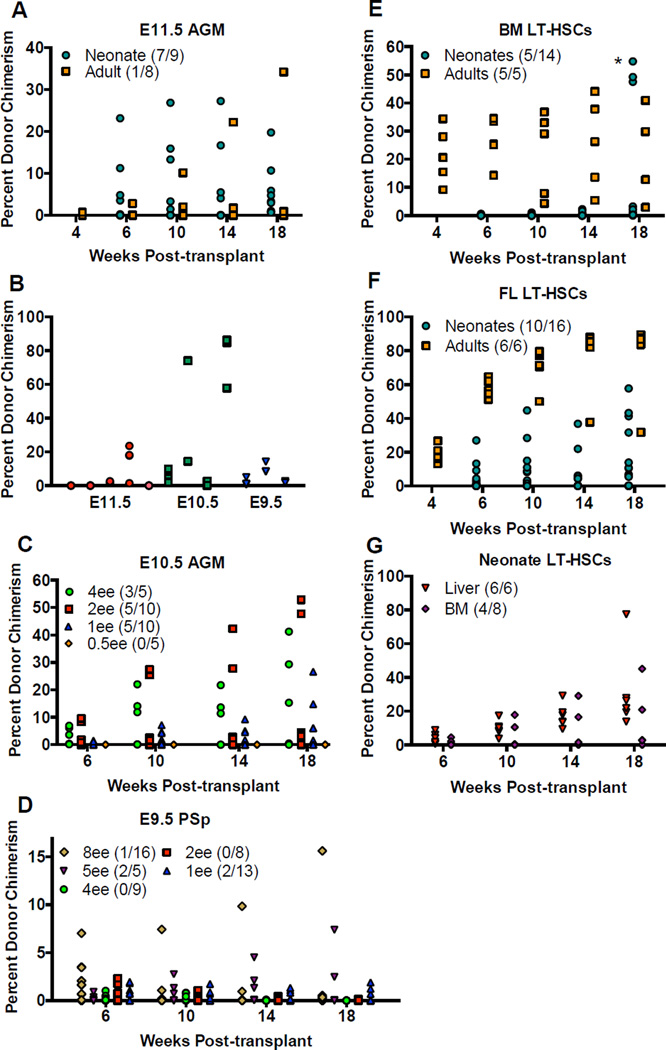
Figure 1. Neonates are only more permissive for engraftment of early embryonic HSCs
A) Adult (square) and neonatal (circle) recipients were both transplanted with 1ee of whole E11.5 AGM. Also see Figure S2. B) Secondary transplants were carried out for primary recipients engrafted with early embryonic HSCs. Neonatal recipients were transplanted with limiting doses of C) whole E10.5 AGM and D) whole E9.5 PSp. Also see Figure S1. E) Neonatal (circle) and adult (square) recipients were transplanted with 100 adult BM LT-HSCs. *While in 3 neonatal recipients we detected a robust signal in the peripheral blood at a single time point of 18 weeks in one experiment, substantially lower donor chimerism was observed in these mice at the next time point of 23 weeks, and no other experiments showed this phenomenon, leading us to conclude that these data may have been a spurious experimental artifact. F) Neonatal (circle) and adult (square) recipients were transplanted with 100 E14.5 FL LT-HSCs. G) Neonatal recipients were transplanted with 50 neonatal liver LT-HSCs (triangle) and 50 neonatal BM LT-HSCs (diamond). The numbers in the graph legends reflect the number of animals engrafted over the number of animals transplanted.
Figure 2
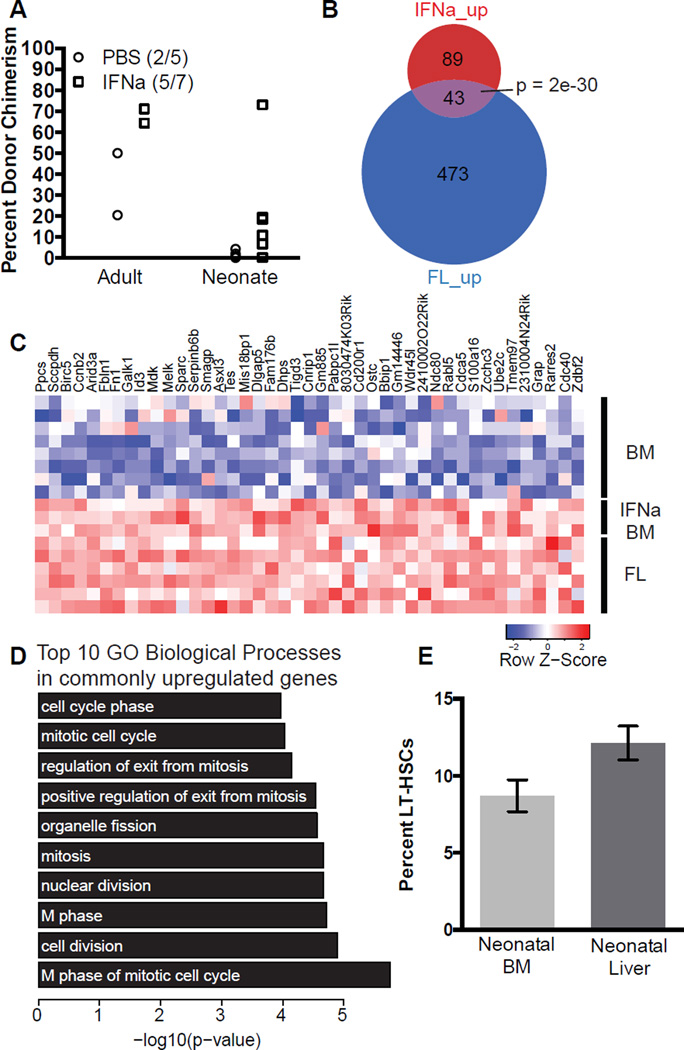
Figure 2. Cycling adult LT-HSCs engraft neonates
A) Neonatal and adult recipients were transplanted with 100 BM LT-HSCs from adult mice treated with IFNα (square) or PBS (circle). Data shown are at 18 weeks post-transplantation. Using Fisher’s exact test to compare the percent of animals engrafted, the p-value is 0.5581, whereas using student’s t-test to compare the average percent engraftment, the p-value is 0.1730. B) Depiction of overlap of up-regulated genes in IFNα-treated bone-marrow HSCs (Essers et al. 2007) and FL HSCs (McKinney-Freeman et al., 2012) when compared to untreated bone-marrow HSCs. Significance of overlap was determined via the hypergeometric test. C) List of commonly up-regulated genes. D) Top 10 gene-ontology biological processes in commonly upregulated genes from panel B. E) Quantification of FACS analysis of Ki-67+ LT-HSCs in neonatal liver and BM. Data shown is the mean ± SEM of three experimental replicates with pooled samples. Paired t-test value = 0.065. Also see Figure S3.
Figure 3
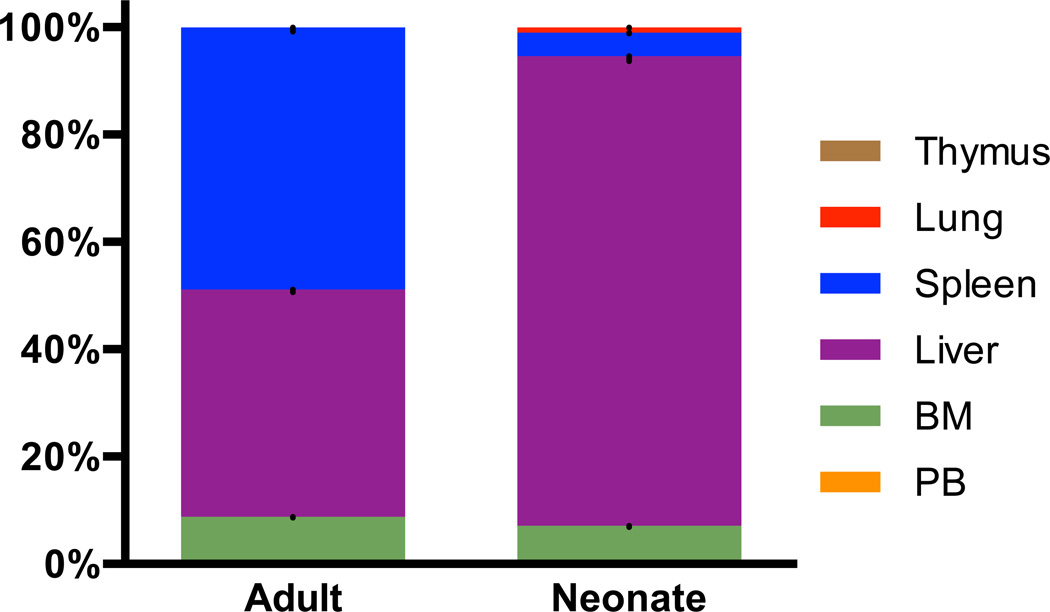
Figure 3. Homing of adult LT-HSCs differs in adult and neonatal recipients
Percentages of GFP+ CD45.2+ donor adult BM LT-HSCs detected in six tissues in adult and neonatal recipients 15 hours post-transplantation. Data shown is the mean ± SEM, representing a total of 5 – 6 mice per condition with data collected in experimental duplicate for adults and triplicate for neonates. Liver and spleen p-value < 0.05; lung, BM (BM), thymus, and peripheral blood (PB) p-value > 0.05 as calculated by the student’s t-test.

References

    1. Becker AJ, Mc CE, Till JE. Cytological demonstration of the clonal nature of spleen colonies derived from transplanted mouse marrow cells. Nature. 1963;197:452–454. - PubMed
    1. Bertrand JY, Giroux S, Golub R, Klaine M, Jalil A, Boucontet L, Godin I, Cumano A. Characterization of purified intraembryonic hematopoietic stem cells as a tool to define their site of origin. Proc Natl Acad Sci U S A. 2005;102:134–139. - PMC - PubMed
    1. Boisset JC, van Cappellen W, Andrieu-Soler C, Galjart N, Dzierzak E, Robin C. In vivo imaging of haematopoietic cells emerging from the mouse aortic endothelium. Nature. 2010;464:116–120. - PubMed
    1. Bowie MB, Kent DG, Copley MR, Eaves CJ. Steel factor responsiveness regulates the high self-renewal phenotype of fetal hematopoietic stem cells. Blood. 2007a;109:5043–5048. - PubMed
    1. Bowie MB, Kent DG, Dykstra B, McKnight KD, McCaffrey L, Hoodless PA, Eaves CJ. Identification of a new intrinsically timed developmental checkpoint that reprograms key hematopoietic stem cell properties. Proc Natl Acad Sci U S A. 2007b;104:5878–5882. - PMC - PubMed

Publication types

MeSH terms