Differentially regulated protein kinase A (PKA) activity in adipose tissue and liver is associated with resistance to diet-induced obesity and glucose intolerance in mice that lack PKA regulatory subunit type IIα
- PMID: 24914943
- PMCID: PMC4138573
- DOI: 10.1210/en.2014-1122
Differentially regulated protein kinase A (PKA) activity in adipose tissue and liver is associated with resistance to diet-induced obesity and glucose intolerance in mice that lack PKA regulatory subunit type IIα
Abstract
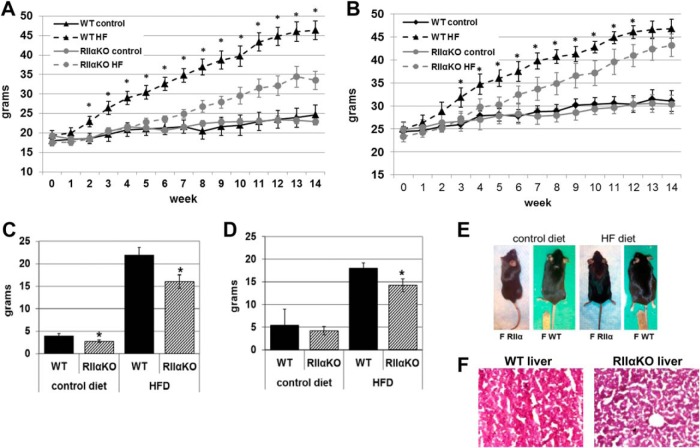
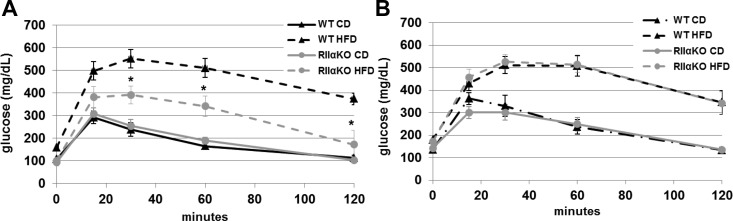
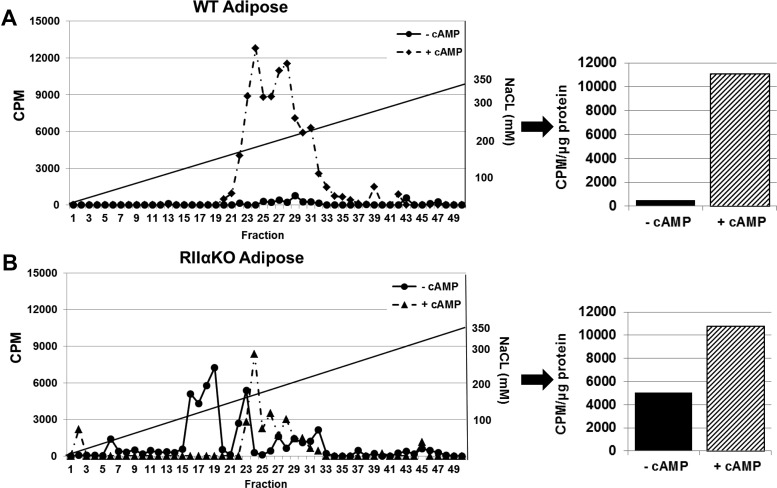
The cAMP-dependent protein kinase A (PKA) signaling system is widely expressed and has a central role in regulating cellular metabolism in all organ systems affected by obesity. PKA has four regulatory (RIα, RIIα, RIβ, RIIβ) and four catalytic (Cα, Cβ, Cγ, Prkx) subunit isoforms that have tissue-specific expression profiles. In mice, knockout (KO) of RIIβ, the primary PKA regulatory subunit in adipose tissue or knockout of the catalytic subunit Cβ resulted in a lean phenotype that resists diet-induced obesity and associated metabolic complications. Here we report that the disruption of the ubiquitously expressed PKA RIIα subunit in mice (RIIαKO) confers resistance to diet-induced obesity, glucose intolerance, and hepatic steatosis. After 2-week high-fat diet exposure, RIIαKO mice weighed less than wild-type littermates. Over time this effect was more pronounced in female mice that were also leaner than their wild-type counterparts, regardless of the diet. Decreased intake of a high-fat diet contributed to the attenuated weight gain in RIIαKO mice. Additionally, RIIα deficiency caused differential regulation of PKA in key metabolic organs: cAMP-stimulated PKA activity was decreased in liver and increased in gonadal adipose tissue. We conclude that RIIα represents a potential target for therapeutic interventions in obesity, glucose intolerance, and nonalcoholic fatty liver disease.
Figures
References
-
- Ogden CL, Carroll MD, Kit BK, Flegal KM. Prevalence of obesity in the United States. NCHS Data Brief. 2012;(82):1–8 - PubMed
-
- Amieux PS, McKnight GS. The essential role of RI α in the maintenance of regulated PKA activity. Ann NY Acad Sci. 2002;968:75–95 - PubMed
-
- Cummings DE, Brandon EP, Planas JV, Motamed K, Idzerda RL, McKnight GS. Genetically lean mice result from targeted disruption of the RII β subunit of protein kinase A. Nature. 1996;382:622–626 - PubMed
-
- Schreyer SA, Cummings DE, McKnight GS, LeBoeuf RC. Mutation of the RIIβ subunit of protein kinase A prevents diet-induced insulin resistance and dyslipidemia in mice. Diabetes. 2001;50:2555–2562 - PubMed
Publication types
MeSH terms
Substances
Grants and funding
LinkOut - more resources
Full Text Sources
Other Literature Sources
Medical
Molecular Biology Databases
Research Materials