


Plantar pressure in diabetic peripheral neuropathy patients with active foot ulceration, previous ulceration and no history of ulceration: a meta-analysis of observational studies
- PMID: 24915443
- PMCID: PMC4051689
- DOI: 10.1371/journal.pone.0099050
Plantar pressure in diabetic peripheral neuropathy patients with active foot ulceration, previous ulceration and no history of ulceration: a meta-analysis of observational studies
Abstract
Aims: Elevated dynamic plantar pressures are a consistent finding in diabetes patients with peripheral neuropathy with implications for plantar foot ulceration. This meta-analysis aimed to compare the plantar pressures of diabetes patients that had peripheral neuropathy and those with neuropathy with active or previous foot ulcers.
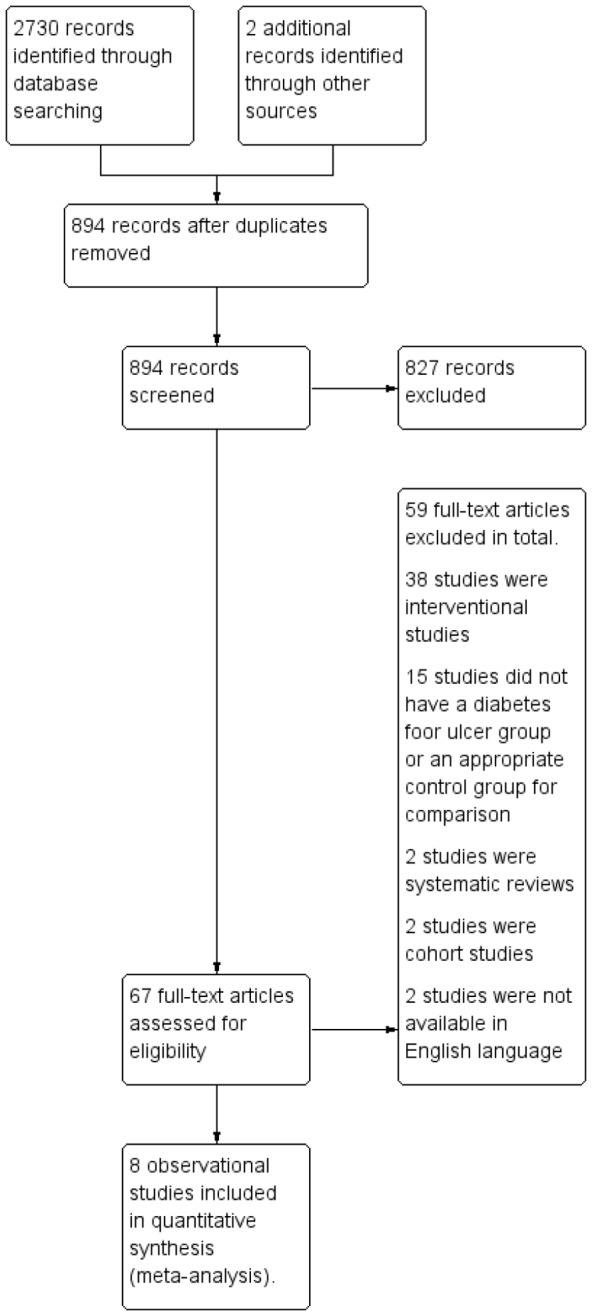
Methods: Published articles were identified from Medline via OVID, CINAHL, SCOPUS, INFORMIT, Cochrane Central EMBASE via OVID and Web of Science via ISI Web of Knowledge bibliographic databases. Observational studies reporting barefoot dynamic plantar pressure in adults with diabetic peripheral neuropathy, where at least one group had a history of plantar foot ulcers were included. Interventional studies, shod plantar pressure studies and studies not published in English were excluded. Overall mean peak plantar pressure (MPP) and pressure time integral (PTI) were primary outcomes. The six secondary outcomes were MPP and PTI at the rear foot, mid foot and fore foot. The protocol of the meta-analysis was published with PROPSERO, (registration number CRD42013004310).
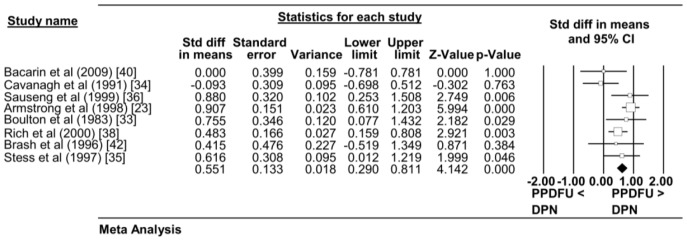
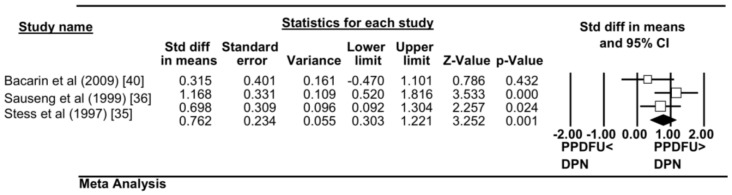
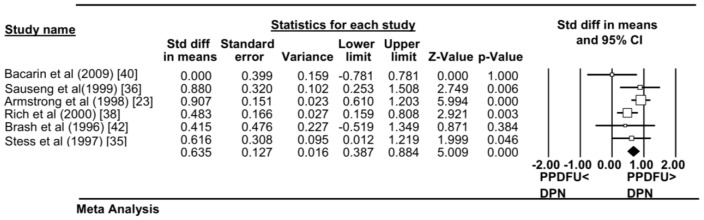
Results: Eight observational studies were included. Overall MPP and PTI were greater in diabetic peripheral neuropathy patients with foot ulceration compared to those without ulceration (standardised mean difference 0.551, 95% CI 0.290-0.811, p<0.001; and 0.762, 95% CI 0.303-1.221, p = 0.001, respectively). Sub-group analyses demonstrated no significant difference in MPP for those with neuropathy with active ulceration compared to those without ulcers. A significant difference in MPP was found for those with neuropathy with a past history of ulceration compared to those without ulcers; (0.467, 95% CI 0.181- 0.753, p = 0.001). Statistical heterogeneity between studies was moderate.
Conclusions: Plantar pressures appear to be significantly higher in patients with diabetic peripheral neuropathy with a history of foot ulceration compared to those with diabetic neuropathy without a history of ulceration. More homogenous data is needed to confirm these findings.
Conflict of interest statement
Figures
References
-
- Jeffcoate WJ, Harding KG (2003) Diabetic foot ulcers. The Lancet 361: 1545–1551. - PubMed
-
- Boulton AJ, Vileikyte L, Ragnarson-Tennvall G, Apelqvist J (2005) The global burden of diabetic foot disease. Lancet 366: 1719–1724. - PubMed
-
- Singh N, Armstrong DG, Lipsky BA (2005) Preventing foot ulcers in patients with diabetes. Journal of the American Medical Association 293: 217–228. - PubMed
-
- Gonzalez R, Pedro T, Real JT, Martinez-Hervas S, Abellan MR, et al. (2010) Plasma homocysteine levels are associated with ulceration of the foot in patients with type 2 diabetes mellitus. Diabetes/metabolism research and reviews 26: 115–120. - PubMed
-
- Clayton WJ, Elasy TA (2009) A Review of the Pathophysiology, Classification, and Treatment of Foot Ulcers in Diabetic Patients. Journal of Clinical Diabetes 27: 52–58.
Publication types
MeSH terms
LinkOut - more resources
Full Text Sources
Other Literature Sources
Medical
Miscellaneous
