


The new insights into cadmium sensing
- PMID: 24917871
- PMCID: PMC4042028
- DOI: 10.3389/fpls.2014.00245
The new insights into cadmium sensing
Abstract
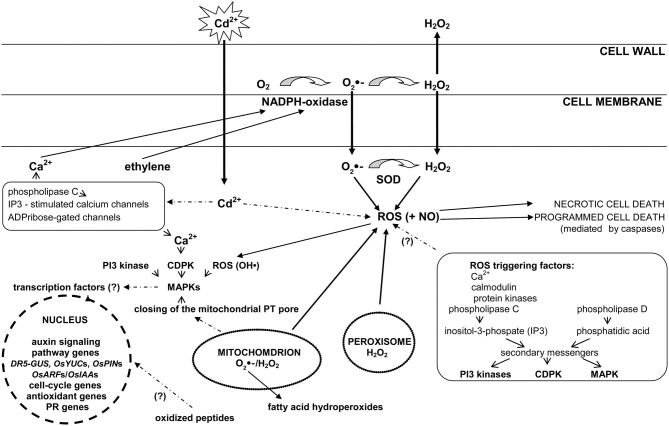
Cadmium (Cd) is non-essential heavy metal, which in excess, exhibits deleterious effects to the most of the organisms. Mobilization of defense mechanisms against this toxic agent requires rapid activation of signaling pathways. The article presents recent advances in the research concerning cadmium signal transduction in plants. New insights into the involvement of reactive oxygen species (ROS), nitric oxide (NO), plant growth regulators, and Cd-induced protein modifications are reviewed. Moreover, the role of recently recognized Cd-associated signal elements, including micro RNAs and several cis- and trans-acting elements is discussed.
Keywords: cadmium; micro RNA; nitric oxide; plant hormones; plant signaling; reactive oxygen species; transcription factors.
Figures
References
-
- Agrawal G. K., Tamogami S., Iwahashi H., Agrawal V. P., Rakwal R. (2003). Transient regulation of jasmonic acid-inducible rice MAP kinase gene (OsBWMK1) by diverse biotic and abiotic stresses. Plant Physiol. Biochem. 41, 355–361 10.1016/S0981-9428(03)00030-5 - DOI
-
- Ahmad P., Nabi G., Ashraf M. (2011). Cadmium-induced oxidative damage in mustard [Brassica juncea (L.) Czern. & Coss.] plants can be alleviated by salicylic acid. S. Afr. J. Bot. 77, 36–44 10.1016/j.sajb.2010.05.003 - DOI
-
- Al-Hakimi A. M. A. (2007). Modification of cadmium toxicity in pea seedlings by kinetin. Plant Soil Environ. 53, 129–135
Publication types
LinkOut - more resources
Full Text Sources
Other Literature Sources
