


Renal blood flow and oxygenation drive nephron progenitor differentiation
- PMID: 24920757
- PMCID: PMC4121567
- DOI: 10.1152/ajprenal.00208.2014
Renal blood flow and oxygenation drive nephron progenitor differentiation
Abstract
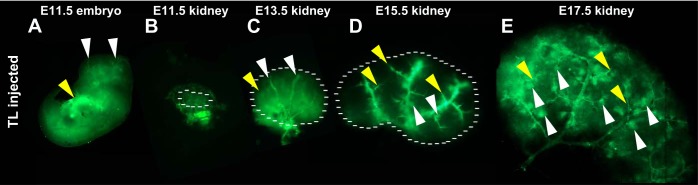
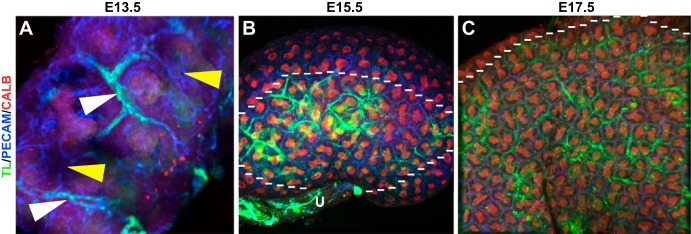
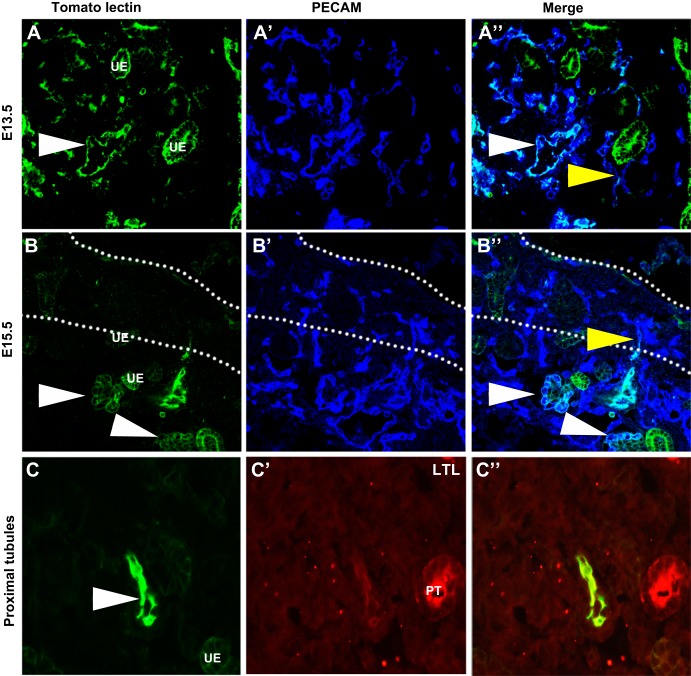
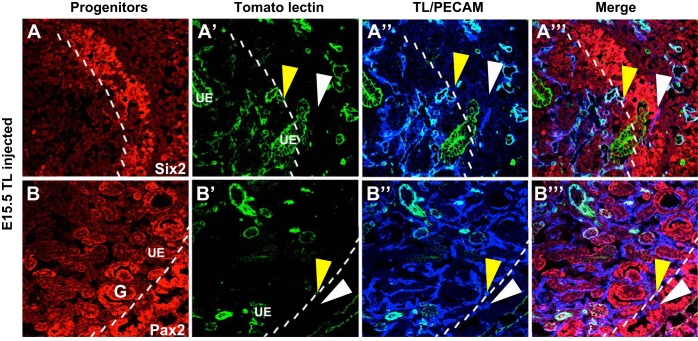
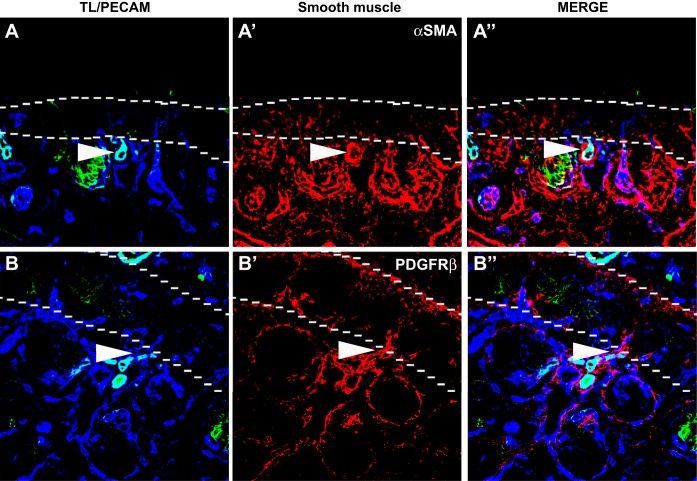
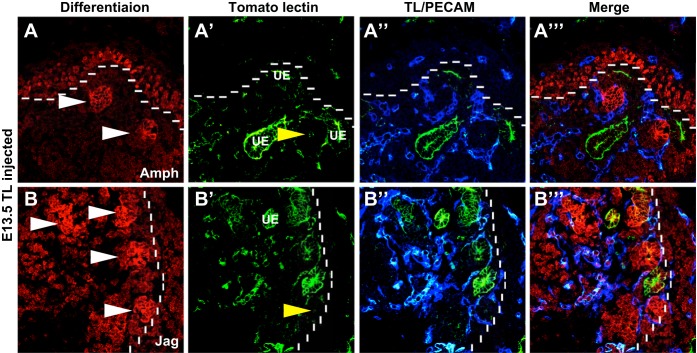
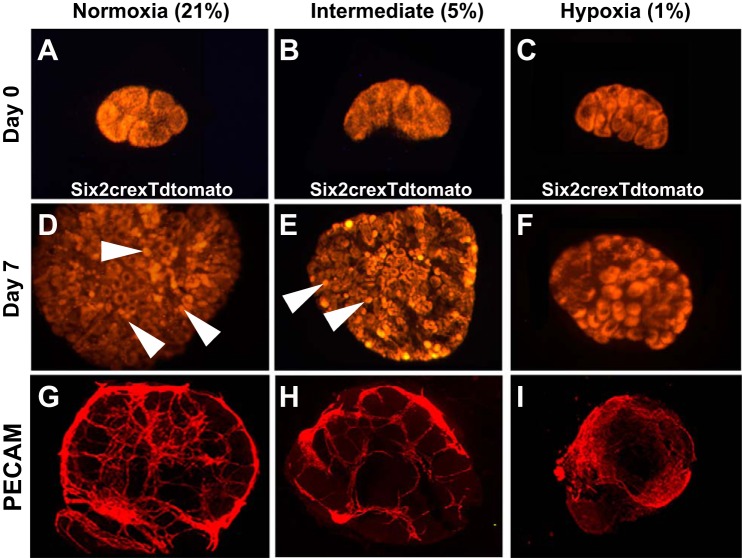
During kidney development, the vasculature develops via both angiogenesis (branching from major vessels) and vasculogenesis (de novo vessel formation). The formation and perfusion of renal blood vessels are vastly understudied. In the present study, we investigated the regulatory role of renal blood flow and O2 concentration on nephron progenitor differentiation during ontogeny. To elucidate the presence of blood flow, ultrasound-guided intracardiac microinjection was performed, and FITC-tagged tomato lectin was perfused through the embryo. Kidneys were costained for the vasculature, ureteric epithelium, nephron progenitors, and nephron structures. We also analyzed nephron differentiation in normoxia compared with hypoxia. At embryonic day 13.5 (E13.5), the major vascular branches were perfused; however, smaller-caliber peripheral vessels remained unperfused. By E15.5, peripheral vessels started to be perfused as well as glomeruli. While the interior kidney vessels were perfused, the peripheral vessels (nephrogenic zone) remained unperfused. Directly adjacent and internal to the nephrogenic zone, we found differentiated nephron structures surrounded and infiltrated by perfused vessels. Furthermore, we determined that at low O2 concentration, little nephron progenitor differentiation was observed; at higher O2 concentrations, more differentiation of the nephron progenitors was induced. The formation of the developing renal vessels occurs before the onset of blood flow. Furthermore, renal blood flow and oxygenation are critical for nephron progenitor differentiation.
Keywords: blood flow; endothelium; hypoxia; kidney development; vasculature.
Copyright © 2014 the American Physiological Society.
Figures
References
-
- Abrahamson DR, Robert B, Hyink DP, St John PL, Daniel TO. Origins and formation of microvasculature in the developing kidney. Kidney Int Suppl 67: S7–S11, 1998 - PubMed
-
- Andres AC, Munarini N, Djonov V, Bruneau S, Zuercher G, Loercher S, Rohrbach V, Ziemiecki A. EphB4 receptor tyrosine kinase transgenic mice develop glomerulopathies reminiscent of aglomerular vascular shunts. Mech Dev 120: 511–516, 2003 - PubMed
Publication types
MeSH terms
Substances
Grants and funding
LinkOut - more resources
Full Text Sources
Other Literature Sources
Medical
Molecular Biology Databases
