The status and future challenges of tobacco control policy in Korea
- PMID: 24921015
- PMCID: PMC4050209
- DOI: 10.3961/jpmph.2014.47.3.129
The status and future challenges of tobacco control policy in Korea
Abstract
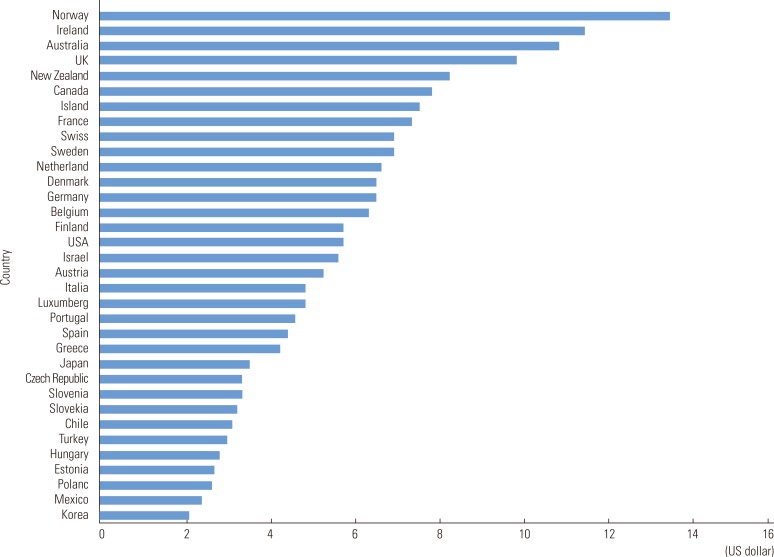
Tobacco use is the most important preventable risk factor for premature death. The World Health Organization (WHO) Framework Convention on Tobacco Control (FCTC), the first international public health treaty, came into force in 2005. This paper reviews the present status of tobacco control policies in Korea according to the WHO FCTC recommendations. In Korea, cigarette use is high among adult males (48.2% in 2010), and cigarette prices are the lowest among the Organization for Economic Cooperation and Development countries with no tax increases since 2004. Smoke-free policies have shown incremental progress since 1995, but smoking is still permitted in many indoor public places. More than 30% of non-smoking adults and adolescents are exposed to second-hand smoke. Public education on the harmful effects of tobacco is currently insufficient and the current policies have not been adequately evaluated. There is no comprehensive ban on tobacco advertising, promotion, or sponsorship in Korea. Cigarette packages have text health warnings on only 30% of the main packaging area, and misleading terms such as "mild" and "light" are permitted. There are nationwide smoking cessation clinics and a Quitline service, but cessation services are not covered by public insurance schemes and there are no national treatment guidelines. The sale of tobacco to minors is prohibited by law, but is poorly enforced. The socioeconomic inequality of smoking prevalence has widened, although the government considers inequality reduction to be a national goal. The tobacco control policies in Korea have faltered recently and priority should be given to the development of comprehensive tobacco control policies.
Keywords: Korea; Smoke-free policy; Tobacco.
Conflict of interest statement
The author has no conflicts of interest with the material presented in this paper.
Figures
References
-
- World Health Organization. WHO report on the global tobacco epidemic 2013. 2013. [cited 2014 Feb 20]. Available from: http://www.who.int/tobacco/global_report/2013/en/
-
- World Health Organization. WHO global report: mortality attributable to tobacco. 2012. [cited 2014 Feb 20]. Available from: http://whqlibdoc.who.int/publications/2012/9789241564434_eng.pdf.
-
- Khang YH, Lynch JW, Jung-Choi K, Cho HJ. Explaining age-specific inequalities in mortality from all causes, cardiovascular disease and ischaemic heart disease among South Korean male public servants: relative and absolute perspectives. Heart. 2008;94(1):75–82. - PubMed
-
- World Health Organization. WHO framework convention on tobacco control. 2005. [cited 2014 Feb 21]. Available from: http://whqlibdoc.who.int/publications/2003/9241591013.pdf.
-
- World Health Organization. Tobacco: fact sheet N°339. 2013. [cited 2014 Feb 22]. Available from: http://www.who.int/mediacentre/factsheets/fs339/en/
Publication types
MeSH terms
Substances
LinkOut - more resources
Full Text Sources
Other Literature Sources