. 2014 Jun 12;9(6):e99680.
doi: 10.1371/journal.pone.0099680. eCollection 2014.

Kisspeptin regulation of genes involved in cell invasion and angiogenesis in first trimester human trophoblast cells

Affiliations

Kisspeptin regulation of genes involved in cell invasion and angiogenesis in first trimester human trophoblast cells

Víctor A Francis et al. PLoS One. .

Abstract

The precise regulation of extravillous trophoblast invasion of the uterine wall is a key process in successful pregnancies. Kisspeptin (KP) has been shown to inhibit cancer cell metastasis and placental trophoblast cell migration. In this study primary cultures of first trimester human trophoblast cells have been utilized in order to study the regulation of invasion and angiogenesis-related genes by KP. Trophoblast cells were isolated from first trimester placenta and their identity was confirmed by immunostaining for cytokeratin-7. Real-time quantitative RT-PCR demonstrated that primary trophoblast cells express higher levels of GPR54 (KP receptor) and KP mRNA than the trophoblast cell line HTR8Svneo. Furthermore, trophoblast cells also expressed higher GPR54 and KP protein levels. Treating primary trophoblast cells with KP induced ERK1/2 phosphorylation, while co-treating the cells with a KP antagonist almost completely blocked the activation of ERK1/2 and demonstrated that KP through its cognate GPR54 receptor can activate ERK1/2 in trophoblast cells. KP reduced the migratory capability of trophoblast cells in a scratch-migration assay. Real-time quantitative RT-PCR demonstrated that KP treatment reduced the expression of matrix metalloproteinase 1, 2, 3, 7, 9, 10, 14 and VEGF-A, and increased the expression of tissue inhibitors of metalloproteinases 1 and 3. These results suggest that KP can inhibit first trimester trophoblast cells invasion via inhibition of cell migration and down regulation of the metalloproteinase system and VEGF-A.


Conflict of interest statement

Competing Interests: The authors have declared that no competing interests exist.

Figures

Figure 1
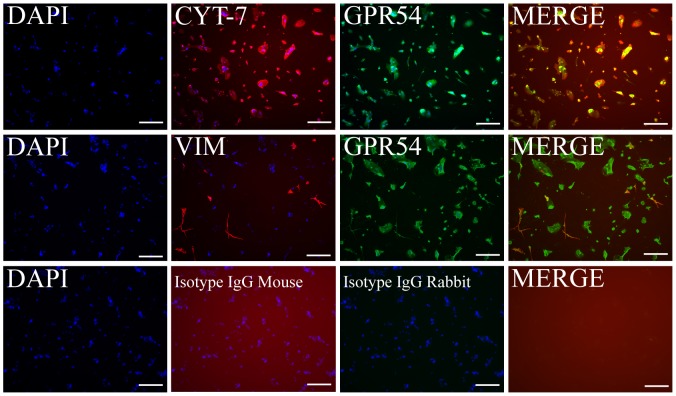
Figure 1. Characterization of primary cultures of first trimester trophoblast cells.
Staining of primary cultures of isolated first trimester trophoblast cells. Top row, staining with DAPI (blue) which labels cell nuclei, anti-cytokeratin-7 (CYT-7, red), anti-GPR54 (green) and the merge of staining with anti-cytokeratin-7 (red) and anti-GPR54 (green). Middle row, staining with DAPI (blue), anti-vimentin (VIM, red), anti-GPR54 (green) and the merge of staining with anti-vimentin (red) and anti-GPR54 (green). Bottom row, staining with DAPI (blue), isotype matched mouse and rabbit IgG as negative controls and their merge. Scale bar indicates 200 µm.
Figure 2
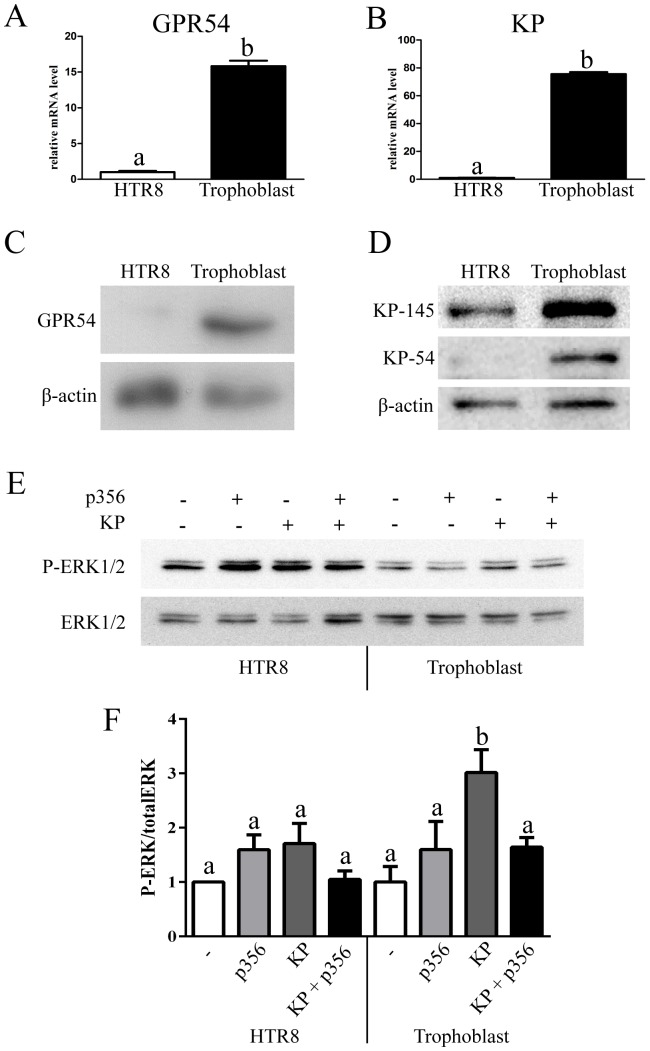
Figure 2. Expression of GPR54 and KP and KP induction of ERK in primary trophoblast cells.
Relative mRNA expression levels of GPR54 (A) and KP (B) in HTR8 cells (white bars) and trophoblast cells (black bars). Protein expression of GPR54 (C) and KP-145 and KP-54 (D) in HTR8 cells and trophoblast cells. β-actin was used as a loading control. (E) HTR8 and trophoblast cells were treated for 10 min with vehicle (-), 1 µM KP antagonist (p356), 100 nM KP or both treatments (KP + p356) in combination in serum-free medium. Phospho- and total ERK1/2 protein levels were determined by Western Blot. (F) Quantification of Western Blots for phospho- and total ERK1/2 expression (n = 3). Error bars represent SEM. Statistical significance was tested by ANOVA, columns with different letters represent statistically different values, p<0.05, while same letters indicates no significant difference, p>0.05.
Figure 3
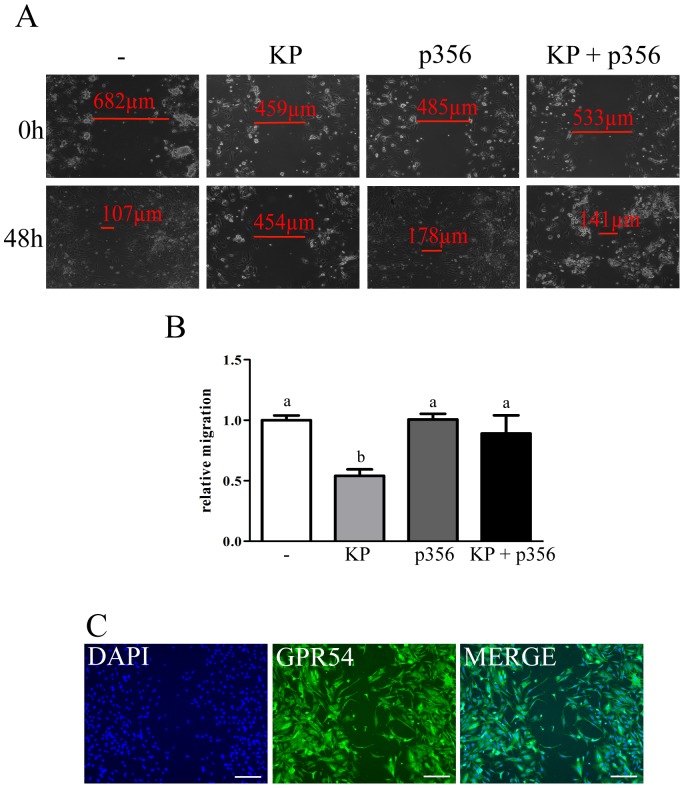
Figure 3. KP inhibits trophoblast migration.
(A) Images of the scratch migration assay performed on trophoblast cells treated for 48(-), 100 nM KP, 1 µM KP antagonist (p356) or both treatments (KP + p356) in combination. Images were taken immediately after performing the scratch (0 h) and 48 hours later (48 h). (B) Quantification of the relative migration of untreated trophoblast cells (white bar) and trophoblast cells treated with KP (light grey bar), p356 (dark grey bar) or KP + p356 (black bar) (n = 6). ANOVA test p<0.05, columns with different letters represent statistically different values, while same letters indicates no significant difference. (C) Staining of the migrated cells with DAPI (blue), anti-GPR54 (green) and the merge of staining. Scale bar indicates 200 µm.
Figure 4
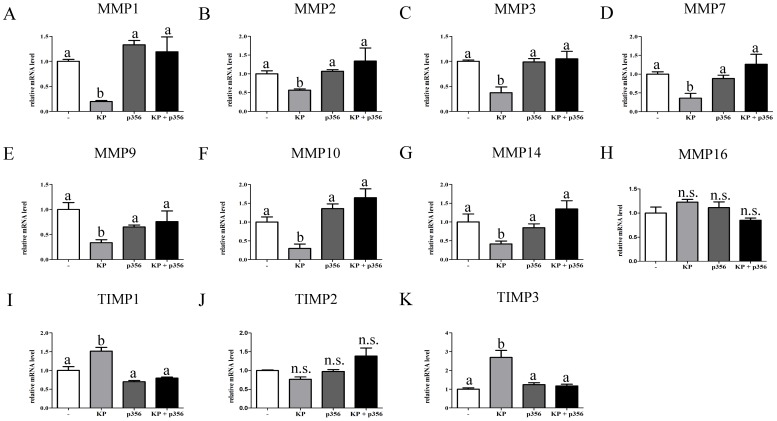
Figure 4. KP supresses expression of MMPs and induces expression of TIMPs.
Trophoblast cells were either not treated (white bars) or treated with 100 nM KP (light grey bars), 1 µM KP antagonist (p356) (dark grey bars) or both treatments in combination (black bars) for 48 h. RNA was extracted and expression of MMP1 (A), MMP2 (B), MMP3 (C), MMP7 (D), MMP9 (E), MMP10 (F), MMP14 (G), MMP16 (H), TIMP1 (I), TIMP2 (J) and TIMP3 (K) was analyzed by qPCR. Error bars represent SEM. ANOVA test p<0.05, columns with different letters represent statistically different values, n.s.  =  no significant difference.
Figure 5
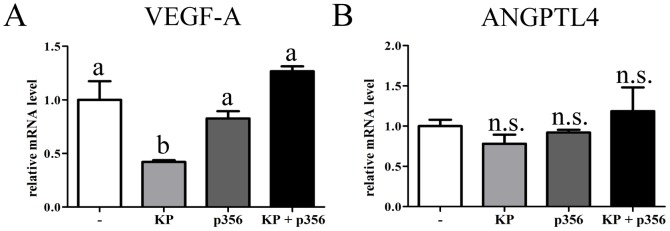
Figure 5. KP regulates expression of VEGF-A, but not of ANGPTL4.
Trophoblast cells were either not treated (white bars) or treated with 100 nM KP (light grey bars), 1 µM KP antagonist (p356) (dark grey bars) or both treatments in combination (black bars) for 48 h. RNA was extracted and expression of VEGF-A (A) and ANGPTL4 (B) was analyzed by qPCR. Error bars represent SEM. ANOVA test p<0.05, columns with different letters represent statistically different values, n.s.  =  no significant difference.

References

    1. Pijnenborg R, Bland JM, Robertson WB, Brosens I (1983) Uteroplacental arterial changes related to interstitial trophoblast migration in early human pregnancy. Placenta 4: 397–413. - PubMed
    1. Khong TY, De Wolf F, Robertson WB, Brosens I (1986) Inadequate maternal vascular response to placentation in pregnancies complicated by pre-eclampsia and by small-for-gestational age infants. Br J Obstet Gynaecol 93: 1049–1059. - PubMed
    1. Zhou Y, Damsky CH, Chiu K, Roberts JM, Fisher SJ (1993) Preeclampsia is associated with abnormal expression of adhesion molecules by invasive cytotrophoblasts. J Clin Invest 91: 950–960. - PMC - PubMed
    1. Tseng JJ, Chou MM, Hsieh YT, Wen MC, Ho ES, et al. (2006) Differential expression of vascular endothelial growth factor, placenta growth factor and their receptors in placentae from pregnancies complicated by placenta accreta. Placenta 27: 70–78. - PubMed
    1. Hiden U, Bilban M, Knofler M, Desoye G (2007) Kisspeptins and the placenta: regulation of trophoblast invasion. Rev Endocr Metab Disord 8: 31–39. - PubMed

Publication types

MeSH terms