


Retinopathy of prematurity and brain damage in the very preterm newborn
- PMID: 24924276
- PMCID: PMC4057649
- DOI: 10.1016/j.jaapos.2014.01.014
Retinopathy of prematurity and brain damage in the very preterm newborn
Abstract
Purpose: To explain why very preterm newborns who develop retinopathy of prematurity (ROP) appear to be at increased risk of abnormalities of both brain structure and function.
Methods: A total of 1,085 children born at <28 weeks' gestation had clinically indicated retinal examinations and had a developmental assessment at 2 years corrected age. Relationships between ROP categories and brain abnormalities were explored using logistic regression models with adjustment for potential confounders.
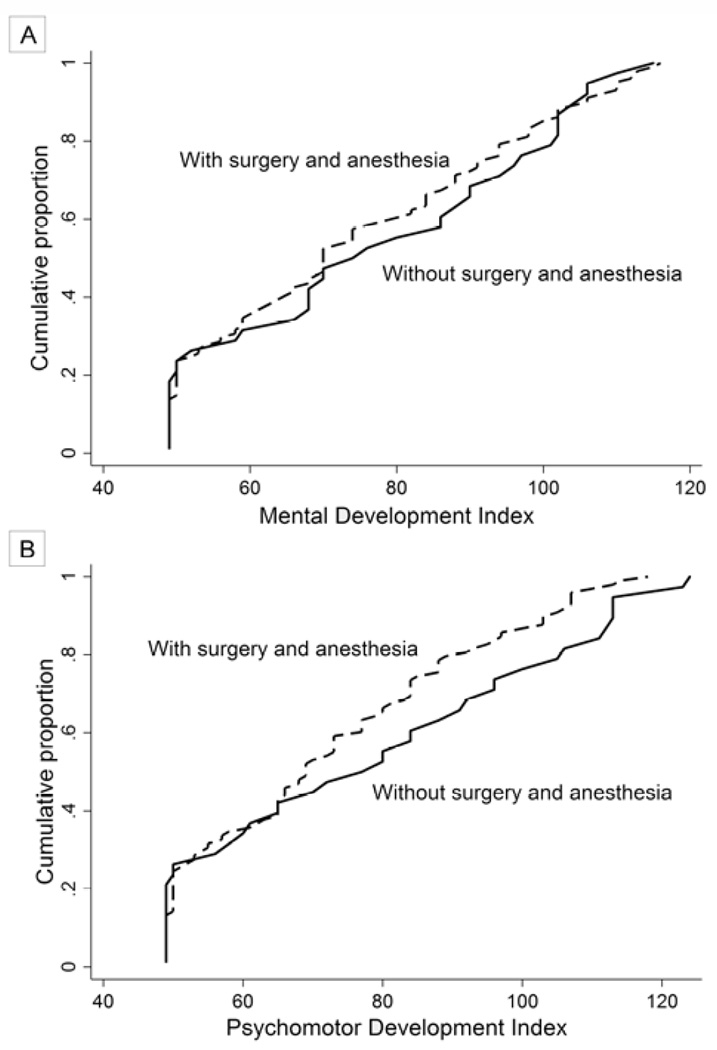
Results: The 173 children who had severe ROP, defined as prethreshold ROP (n = 146) or worse (n = 27) were somewhat more likely than their peers without ROP to have brain ultrasound lesions or cerebral palsy. They were approximately twice as likely to have very low Bayley Scales scores. After adjusting for risk factors common to both ROP and brain disorders, infants who developed severe ROP were at increased risk of low Bayley Scales only. Among children with prethreshold ROP, exposure to anesthesia was not associated with low Bayley Scales.
Conclusions: Some but not all of the association of ROP with brain disorders can be explained by common risk factors. Most of the increased risks of very low Bayley Scales associated with ROP are probably not a consequence of exposure to anesthetic agents.
Copyright © 2014 American Association for Pediatric Ophthalmology and Strabismus. Published by Mosby, Inc. All rights reserved.
Figures
References
-
- Msall ME, Phelps DL, DiGaudio KM, et al. Severity of neonatal retinopathy of prematurity is predictive of neurodevelopmental functional outcome at age 5.5 years. Behalf of the Cryotherapy for Retinopathy of Prematurity Cooperative Group. Pediatrics. 2000;106:998–1005. - PubMed
MeSH terms
Grants and funding
LinkOut - more resources
Full Text Sources
Other Literature Sources
Medical
