Knowledge and skills retention following Emergency Triage, Assessment and Treatment plus Admission course for final year medical students in Rwanda: a longitudinal cohort study
- PMID: 24925893
- PMCID: PMC4198299
- DOI: 10.1136/archdischild-2014-306078
Knowledge and skills retention following Emergency Triage, Assessment and Treatment plus Admission course for final year medical students in Rwanda: a longitudinal cohort study
Abstract
Aim: To determine whether, after the Emergency Triage, Assessment and Treatment plus Admission (ETAT+) course, a comprehensive paediatric life support course, final year medical undergraduates in Rwanda would achieve a high level of knowledge and practical skills and if these were retained. To guide further course development, student feedback was obtained.
Methods: Longitudinal cohort study of knowledge and skills of all final year medical undergraduates at the University of Rwanda in academic year 2011-2012 who attended a 5-day ETAT+ course. Students completed a precourse knowledge test. Knowledge and clinical skills assessments, using standardised marking, were performed immediately postcourse and 3-9 months later. Feedback was obtained using printed questionnaires.
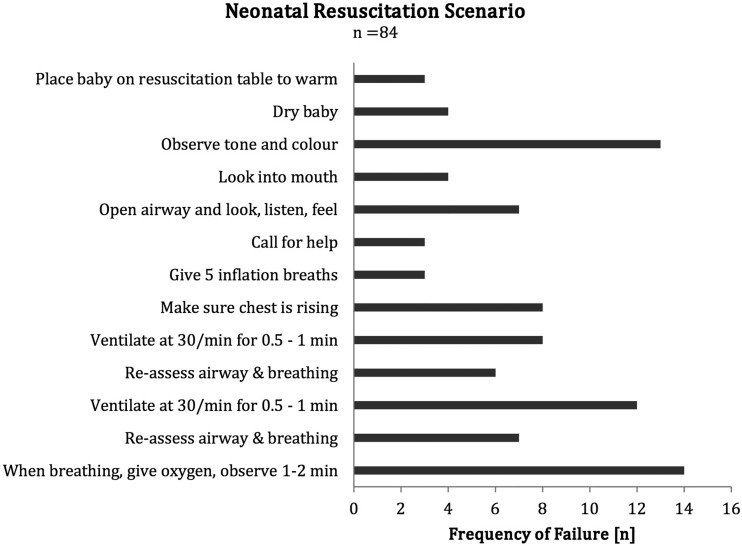
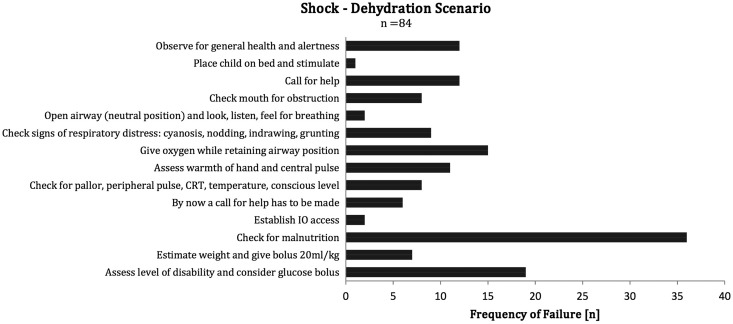
Results: 84 students attended the course and re-evaluation. Knowledge test showed a significant improvement, from median 47% to 71% correct answers (p<0.001). For two clinical skills scenarios, 98% passed both scenarios, 37% after a retake, 2% failed both scenarios. Three to nine months later, students were re-evaluated, median score for knowledge test 67%, not significantly different from postcourse (p>0.1). For clinical skills, 74% passed, with 32% requiring a retake, 8% failed after retake, 18% failed both scenarios, a significant deterioration (p<0.0001).
Conclusions: Students performed well on knowledge and skills immediately after a comprehensive ETAT+ course. Knowledge was maintained 3-9 months later. Clinical skills, which require detailed sequential steps, declined, but most were able to perform them satisfactorily after feedback. The course was highly valued, but several short courses and more practical teaching were advocated.
Keywords: Accident & Emergency; Low income populations; Medical Education; Resuscitation; Rwanda.
Published by the BMJ Publishing Group Limited. For permission to use (where not already granted under a licence) please go to http://group.bmj.com/group/rights-licensing/permissions.
Figures

References
-
- Ralston ME, Day LT, Slusher TM, et al. Global Paediatric Advanced Life Support: improving child survival in limited resource settings. Lancet 2013;381:256–65. - PubMed
-
- ETAT+ (Emergency Triage Assessment and Treatment plus Admission Care) http://www.idoc-africa.org (accessed May 2014)
-
- Countdown. 2015. http://www.countdown2015mnch.org (accessed May 2014)
-
- Human Development Reports. http://www.hdr.undp.org (accessed May 2014)
Publication types
MeSH terms
Grants and funding
LinkOut - more resources
Full Text Sources
Other Literature Sources