. 2014 Jun 13;9(6):e99720.
doi: 10.1371/journal.pone.0099720. eCollection 2014.

Differences in muscle transcriptome among pigs phenotypically extreme for fatty acid composition

Affiliations

Differences in muscle transcriptome among pigs phenotypically extreme for fatty acid composition

Anna Puig-Oliveras et al. PLoS One. .

Erratum in

  • PLoS One. 2014 Jul;9(7):e103668

Abstract

Background: Besides having an impact on human health, the porcine muscle fatty acid profile determines meat quality and taste. The RNA-Seq technologies allowed us to explore the pig muscle transcriptome with an unprecedented detail. The aim of this study was to identify differentially-expressed genes between two groups of 6 sows belonging to an Iberian × Landrace backcross with extreme phenotypes according to FA profile.

Results: We sequenced the muscle transcriptome acquiring 787.5 M of 75 bp paired-end reads. About 85.1% of reads were mapped to the reference genome. Of the total reads, 79.1% were located in exons, 6.0% in introns and 14.9% in intergenic regions, indicating expressed regions not annotated in the reference genome. We identified a 34.5% of the intergenic regions as interspersed repetitive regions. We predicted a total of 2,372 putative proteins. Pathway analysis with 131 differentially-expressed genes revealed that the most statistically-significant metabolic pathways were related with lipid metabolism. Moreover, 18 of the differentially-expressed genes were located in genomic regions associated with IMF composition in an independent GWAS study in the same genetic background. Thus, our results indicate that the lipid metabolism of FAs is differently modulated when the FA composition in muscle differs. For instance, a high content of PUFA may reduce FA and glucose uptake resulting in an inhibition of the lipogenesis. These results are consistent with previous studies of our group analysing the liver and the adipose tissue transcriptomes providing a view of each of the main organs involved in lipid metabolism.

Conclusions: The results obtained in the muscle transcriptome analysis increase the knowledge of the gene regulation of IMF deposition, FA profile and meat quality, in terms of taste and nutritional value. Besides, our results may be important in terms of human health.


Conflict of interest statement

Competing Interests: The authors have declared that no competing interests exist.

Figures

Figure 1
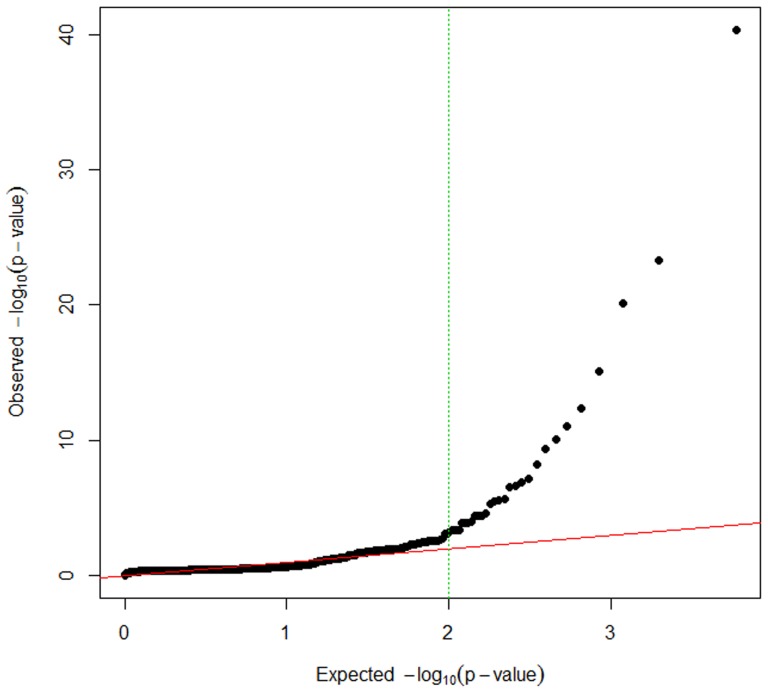
Figure 1. Q-Q plot representing the DESeq P-value distribution of the differentially expression analysis.
The expected distribution of the P-values is indicated with a red line, whereas black points represent the observed distribution. The selected cut-off is represented with a green discontinuous line (-log10 (P-value) >2).
Figure 2
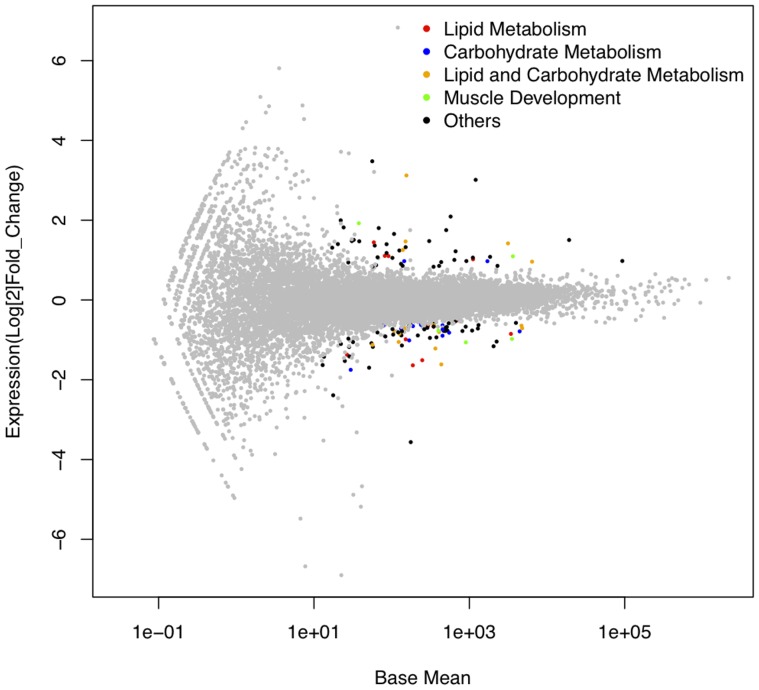
Figure 2. Plot of the 131 differentially-expressed genes identified between the two groups High and Low.
X-axis values correspond to base mean expression values and y-axis values are the log2(fold change). The colour for the differentially-expressed genes is related to their function in lipid metabolism (red), carbohydrate metabolism (blue), both lipid and carbohydrate metabolism (orange), muscle development (green) or others (black).
Figure 3
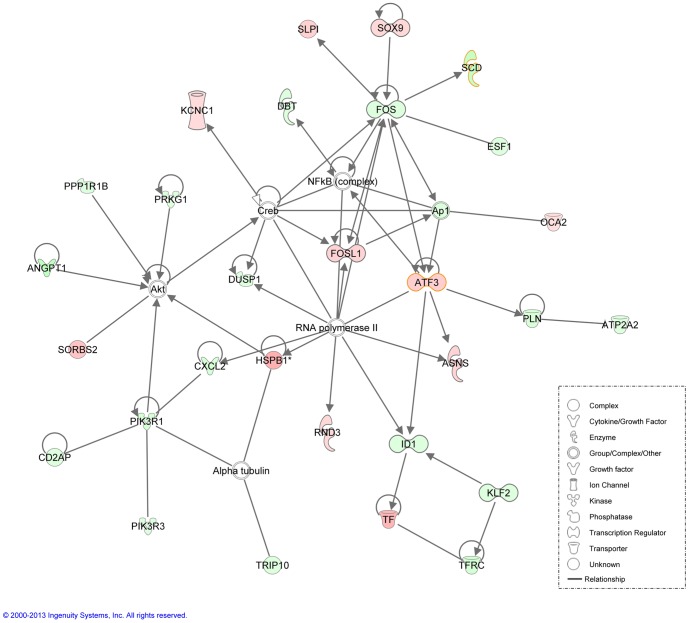
Figure 3. Network (direct, score 55) generated by IPA of 35 focus genes corresponding to the cell death and survival, cellular development, connective tissue and function pathways.
Node colours indicate gene expression, being the red nodes higher-expressed genes and the green nodes lower-expressed genes in the H group relative to the L group. Colour intensity is related to the degree of expression. Node shapes indicate the biological function of the protein.
Figure 4
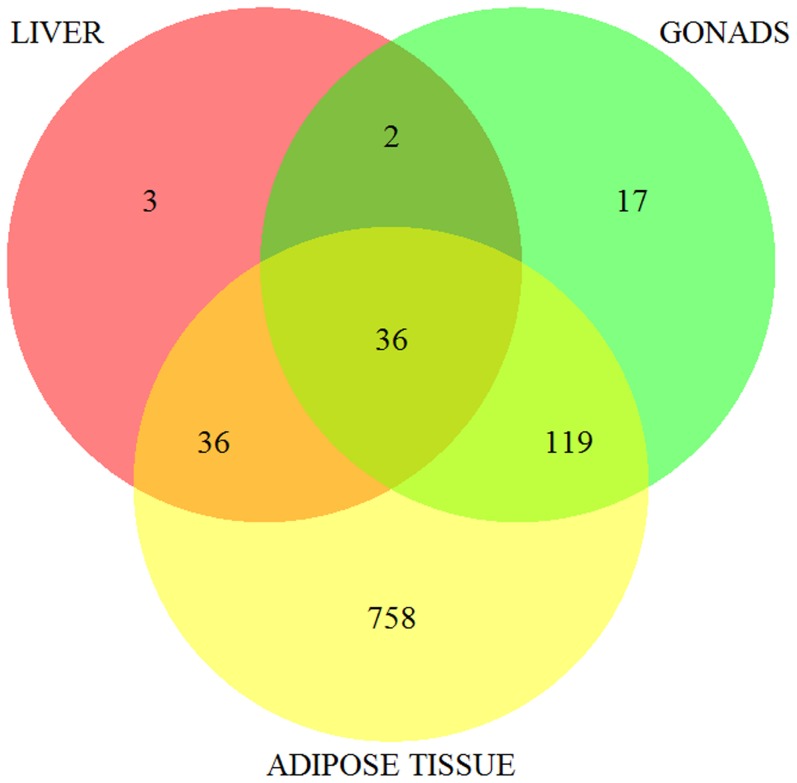
Figure 4. Venn diagram of the novel predicted proteins expressed in muscle, liver , gonads and adipose tissue .

References

    1. Trapnell C, Roberts A, Goff L, Pertea G, Kim D, et al. (2012) Differential gene and transcript expression analysis of RNA-seq experiments with TopHat and Cufflinks. Nat Protoc 7: 562–578 10.1038/nprot.2012.016 - DOI - PMC - PubMed
    1. Esteve-Codina A, Kofler R, Palmieri N, Bussotti G, Notredame C, et al. (2011) Exploring the gonad transcriptome of two extreme male pigs with RNA-seq. BMC Genomics 12: 552. - PMC - PubMed
    1. Chen C, Ai H, Ren J, Li W, Li P, et al. (2011) A global view of porcine transcriptome in three tissues from a full-sib pair with extreme phenotypes in growth and fat deposition by paired-end RNA sequencing. BMC Genomics 12: 448. - PMC - PubMed
    1. Ramayo-Caldas Y, Mach N, Esteve-Codina A, Corominas J, Castelló A, et al. (2012) Liver transcriptome profile in pigs with extreme phenotypes of intramuscular fatty acid composition. BMC Genomics 13: 547 10.1186/1471-2164-13-547 - DOI - PMC - PubMed
    1. Corominas J, Ramayo-Caldas Y, Puig-Oliveras A, Estellé J, Castelló A, et al.. (2013) Analysis of porcine adipose tissue transcriptome reveals differences in de novo fatty acid synthesis in pigs with divergent muscle fatty acid composition. Press. - PMC - PubMed

Publication types

Associated data