


Transient receptor potential channels as targets for phytochemicals
- PMID: 24926802
- PMCID: PMC4240255
- DOI: 10.1021/cn500094a
Transient receptor potential channels as targets for phytochemicals
Abstract
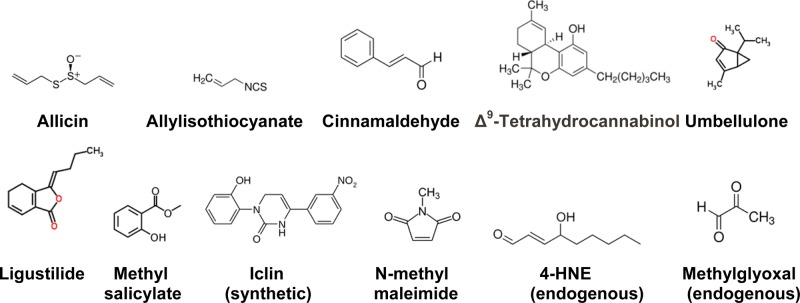
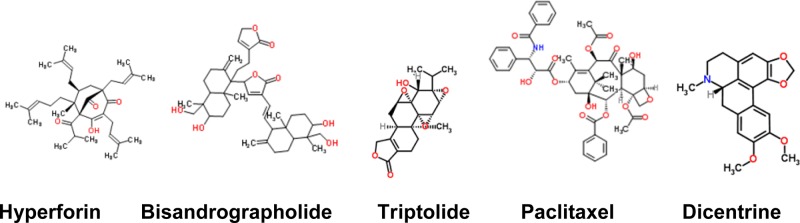
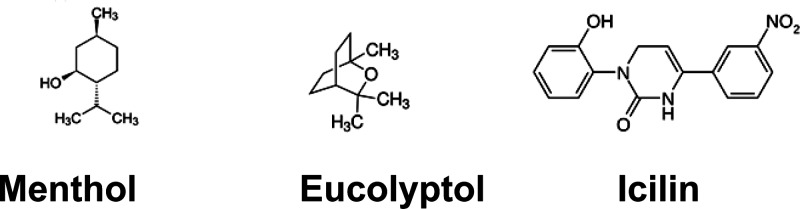
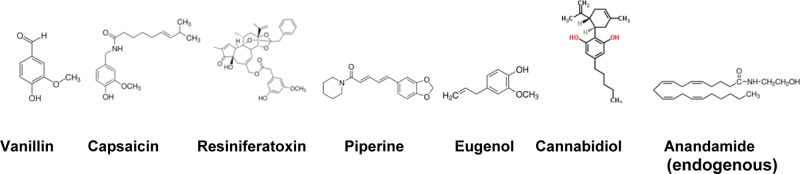
To date, 28 mammalian transient receptor potential (TRP) channels have been cloned and characterized. They are grouped into six subfamilies on the basis of their amino acid sequence homology: TRP Ankyrin (TRPA), TRP Canonical (TRPC), TRP Melastatin (TRPM), TRP Mucolipin (TRPML), TRP Polycystin (TRPP), and TRP Vanilloid (TRPV). Most of the TRP channels are nonselective cation channels expressed on the cell membrane and exhibit variable permeability ratios for Ca(2+) versus Na(+). They mediate sensory functions (such as vision, nociception, taste transduction, temperature sensation, and pheromone signaling) and homeostatic functions (such as divalent cation flux, hormone release, and osmoregulation). Significant progress has been made in our understanding of the specific roles of these TRP channels and their activation mechanisms. In this Review, the emphasis will be on the activation of TRP channels by phytochemicals that are claimed to exert health benefits. Recent findings complement the anecdotal evidence that some of these phytochemicals have specific receptors and the activation of which is responsible for the physiological effects. Now, the targets for these phytochemicals are being unveiled; a specific hypothesis can be proposed and tested experimentally to infer a scientific validity of the claims of the health benefits. The broader and pressing issues that have to be addressed are related to the quantities of the active ingredients in a given preparation, their bioavailability, metabolism, adverse effects, excretion, and systemic versus local effects.
Keywords: TRP channel; botanical; neuropeptide; phytochemical.
Figures
References
-
- Caterina M. J.; Schumacher M. A.; Tominaga M.; Rosen T. A.; Levine J. D.; Julius D. (1997) The capsaicin receptor: a heat-activated ion channel in the pain pathway. Nature 389, 816–824. - PubMed
-
- Cosens D. J.; Manning A. (1969) Abnormal electroretinogram from a Drosophila mutant. Nature 224, 285–287. - PubMed
-
- Montell C.; Rubin G. M. (1989) Molecular characterization of the Drosophila trp locus: a putative integral membrane protein required for phototransduction. Neuron 2, 1313–1323. - PubMed
-
- Montell C. (2005) The TRP superfamily of cation channels. Sci. STKE re3. - PubMed
-
- Story G. M.; Peier A. M.; Reeve A. J.; Eid S. R.; Mosbacher J.; Hricik T. R.; Earley T. J.; Hergarden A. C.; Andersson D. A.; Hwang S. W.; McIntyre P.; Jegla T.; Bevan S.; Patapoutian A. (2003) ANKTM1, a TRP-like channel expressed in nociceptive neurons, is activated by cold temperatures. Cell 112, 819–829. - PubMed
Publication types
MeSH terms
Substances
Grants and funding
LinkOut - more resources
Full Text Sources
Other Literature Sources
Miscellaneous
