


An examination of the relationship between hotspots and recombination associated with chromosome 21 nondisjunction
- PMID: 24926858
- PMCID: PMC4057233
- DOI: 10.1371/journal.pone.0099560
An examination of the relationship between hotspots and recombination associated with chromosome 21 nondisjunction
Abstract
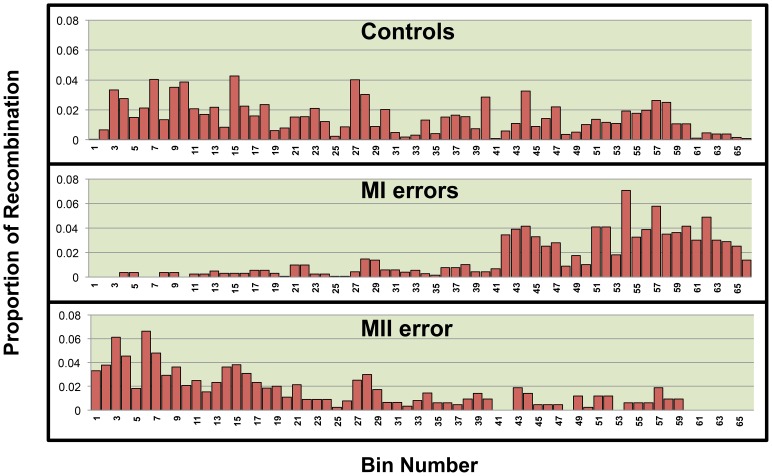
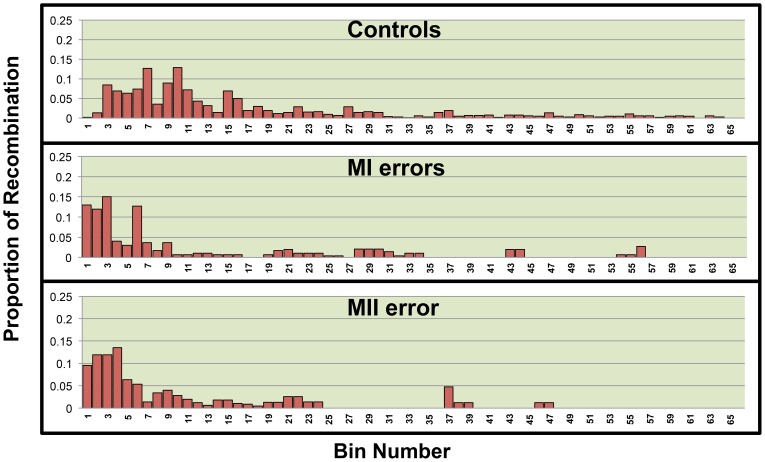
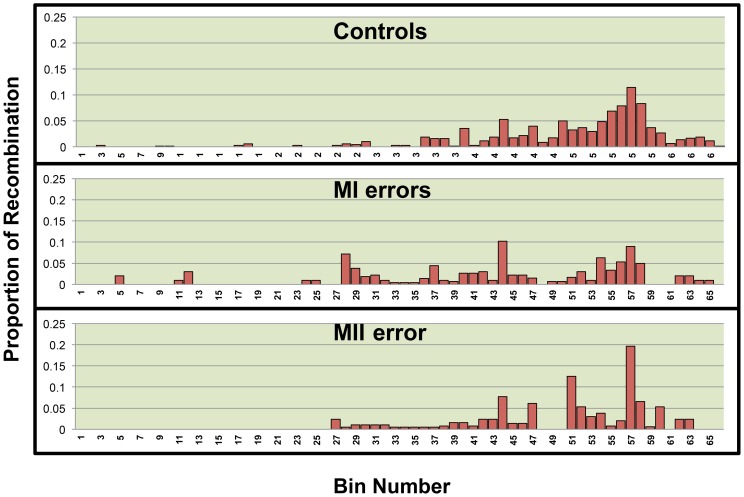
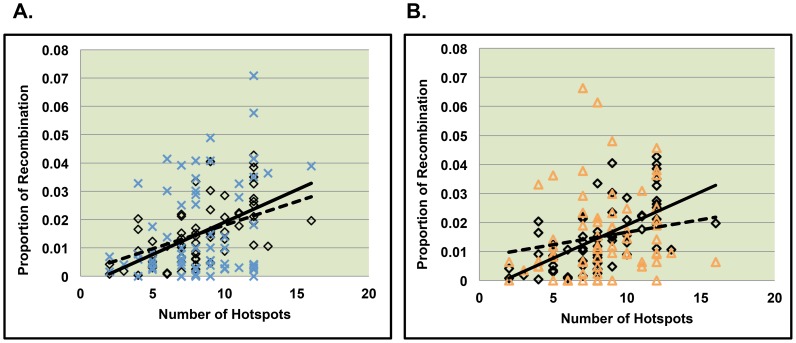
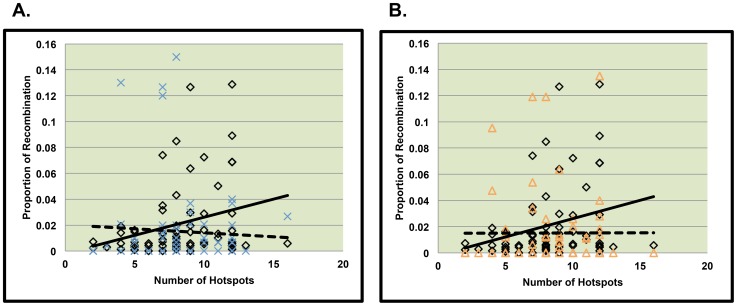
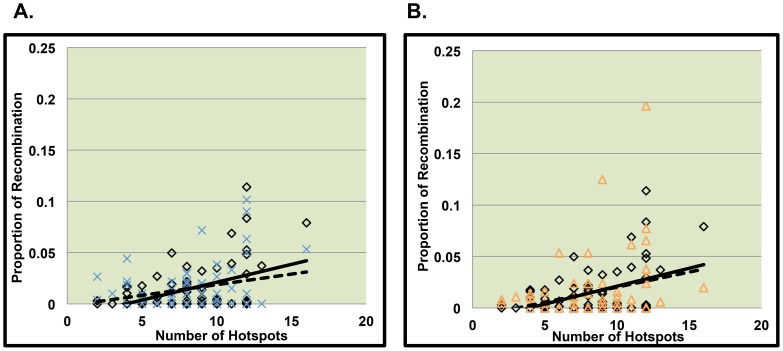
Trisomy 21, resulting in Down Syndrome (DS), is the most common autosomal trisomy among live-born infants and is caused mainly by nondisjunction of chromosome 21 within oocytes. Risk factors for nondisjunction depend on the parental origin and type of meiotic error. For errors in the oocyte, increased maternal age and altered patterns of recombination are highly associated with nondisjunction. Studies of normal meiotic events in humans have shown that recombination clusters in regions referred to as hotspots. In addition, GC content, CpG fraction, Poly(A)/Poly(T) fraction and gene density have been found to be significant predictors of the placement of sex-averaged recombination in the human genome. These observations led us to ask whether the altered patterns of recombination associated with maternal nondisjunction of chromosome 21 could be explained by differences in the relationship between recombination placement and recombination-related genomic features (i.e., GC content, CpG fraction, Poly(A)/Poly(T) fraction or gene density) on 21q or differential hot-spot usage along the nondisjoined chromosome 21. We found several significant associations between our genomic features of interest and recombination, interestingly, these results were not consistent among recombination types (single and double proximal or distal events). We also found statistically significant relationships between the frequency of hotspots and the distribution of recombination along nondisjoined chromosomes. Collectively, these findings suggest that factors that affect the accessibility of a specific chromosome region to recombination may be altered in at least a proportion of oocytes with MI and MII errors.
Conflict of interest statement
Figures
References
-
- Sherman SL, Allen EG, Bean LH, Freeman SB (2007) Epidemiology of Down syndrome. Ment Retard Dev Disabil Res Rev 13: 221–227. - PubMed
-
- Lamb NE, Feingold E, Savage A, Avramopoulos D, Freeman S, et al. (1997) Characterization of susceptible chiasma configurations that increase the risk for maternal nondisjunction of chromosome 21. Hum Mol Genet 6: 1391–1399. - PubMed
-
- Warren AC, Chakravarti A, Wong C, Slaugenhaupt SA, Halloran SL, et al. (1987) Evidence for reduced recombination on the nondisjoined chromosomes 21 in Down syndrome. Science 237: 652–654. - PubMed
Publication types
MeSH terms
Grants and funding
LinkOut - more resources
Full Text Sources
Other Literature Sources
Medical
Miscellaneous
