


Oxytocin promotes social bonding in dogs
- PMID: 24927552
- PMCID: PMC4078815
- DOI: 10.1073/pnas.1322868111
Oxytocin promotes social bonding in dogs
Abstract
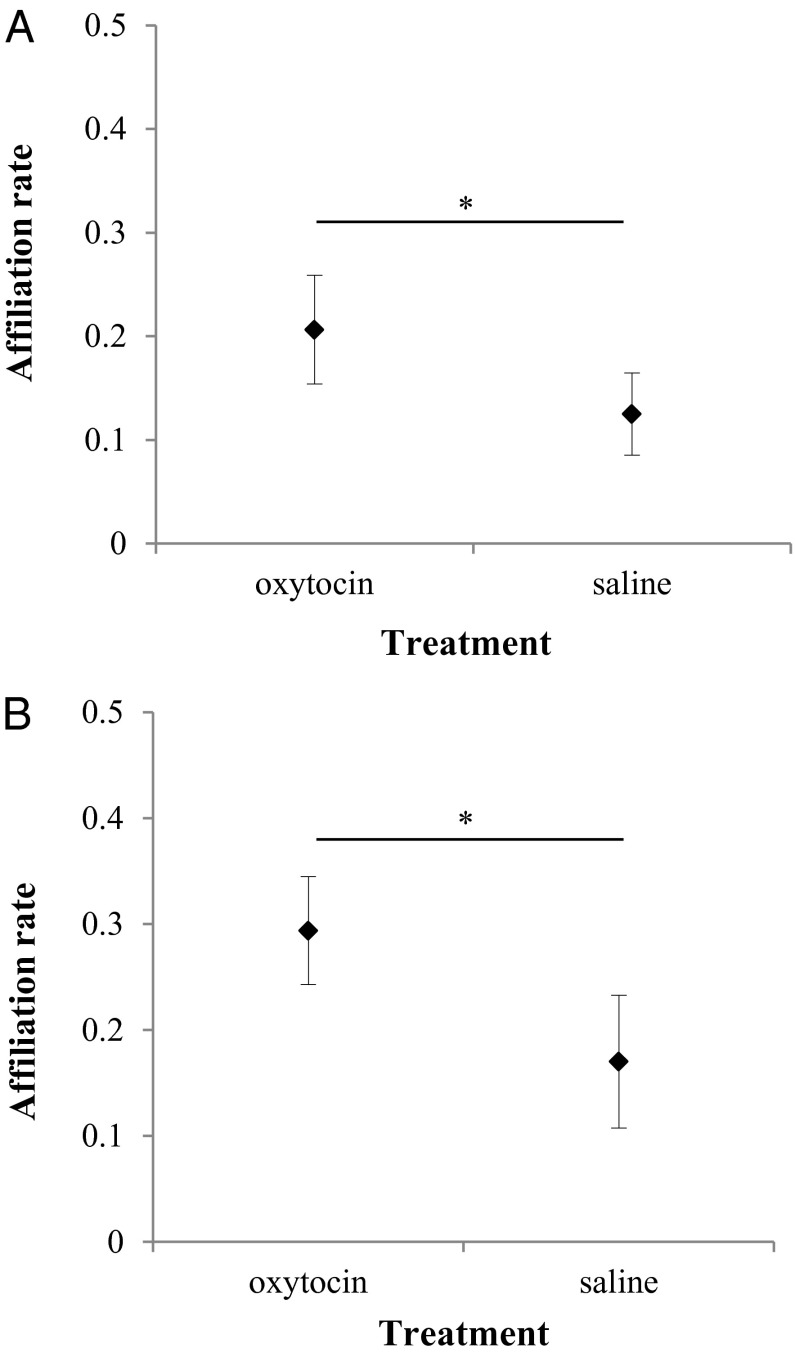
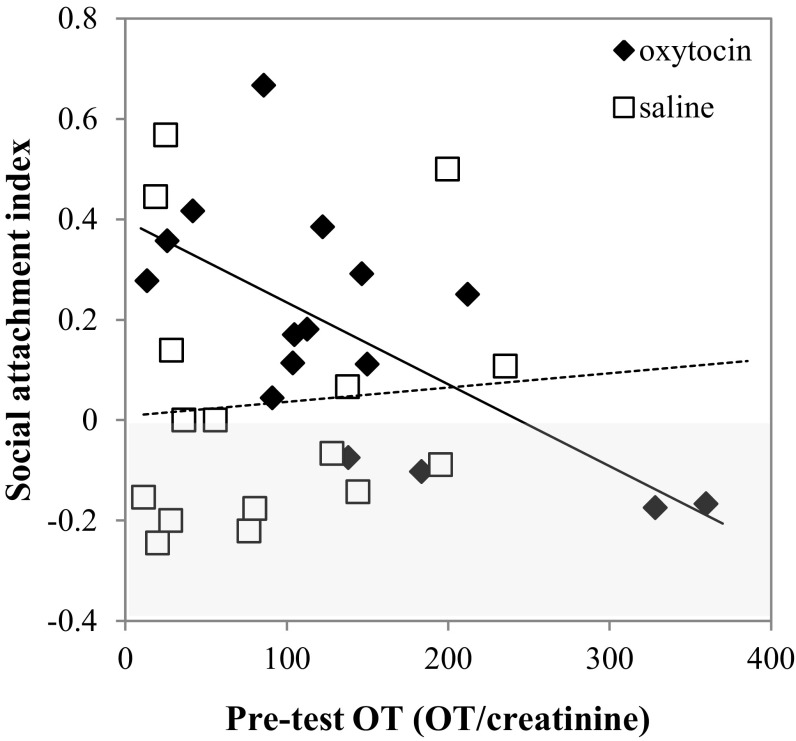
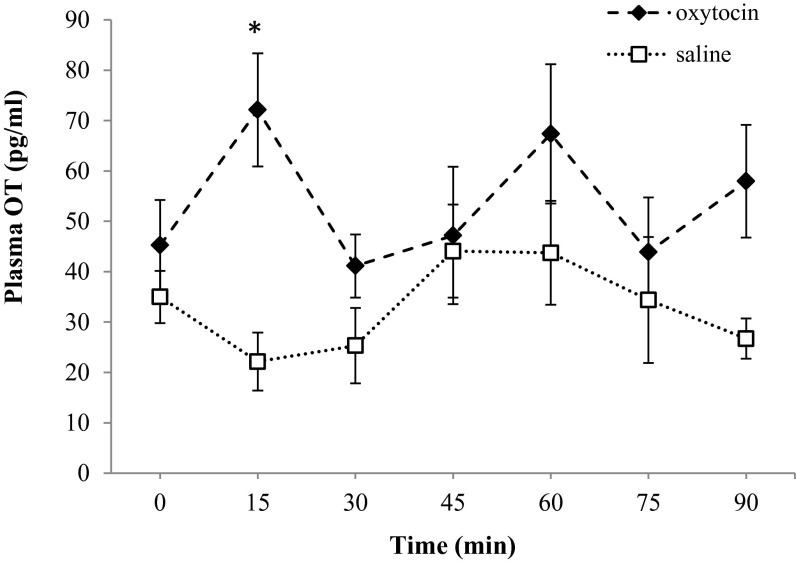
Recent evidence suggests that enduring social bonds have fitness benefits. However, very little is known about the neural circuitry and neurochemistry underlying the formation and maintenance of stable social bonds outside reproductive contexts. Oxytocin (OT), a neuropeptide synthetized by the hypothalamus in mammals, regulates many complex forms of social behavior and cognition in both human and nonhuman animals. Animal research, however, has concentrated on monogamous mammals, and it remains unknown whether OT also modulates social bonds in nonreproductive contexts. In this study we provide behavioral evidence that exogenous OT promotes positive social behaviors in the domestic dog toward not only conspecifics but also human partners. Specifically, when sprayed with OT, dogs showed higher social orientation and affiliation toward their owners and higher affiliation and approach behaviors toward dog partners than when sprayed with placebo. Additionally, the exchange of socio-positive behaviors with dog partners triggered the release of endogenous OT, highlighting the involvement of OT in the development of social relationships in the domestic dog. These data provide new insight into the mechanisms that facilitate the maintenance of close social bonds beyond immediate reproductive interest or genetic ties and complement a growing body of evidence that identifies OT as one of the neurochemical foundations of sociality in mammalian species.
Keywords: cooperative bonds; cooperative mechanisms.
Conflict of interest statement
The authors declare no conflict of interest.
Figures
References
-
- Alexander RD. The evolution of social behavior. Annu Rev Ecol Syst. 1974;5:325–383.
-
- Silk JB, Alberts SC, Altmann J. Social bonds of female baboons enhance infant survival. Science. 2003;302(5648):1231–1234. - PubMed
-
- Seyfarth RM, Cheney DL. The evolutionary origins of friendship. Annu Rev Psychol. 2012;63:153–177. - PubMed
-
- Weidt A, Hofmann SE, Konig B. Not only mate choice matters: Fitness consequences of social partner choice in female house mice. Anim Behav. 2008;75(3):801–808.
Publication types
MeSH terms
Substances
LinkOut - more resources
Full Text Sources
Other Literature Sources
Molecular Biology Databases
