


Cost effectiveness of group follow-up after structured education for type 1 diabetes: a cluster randomised controlled trial
- PMID: 24927851
- PMCID: PMC4070096
- DOI: 10.1186/1745-6215-15-227
Cost effectiveness of group follow-up after structured education for type 1 diabetes: a cluster randomised controlled trial
Abstract
Background: This study examines the cost effectiveness of group follow-up after participation in the Dose Adjustment for Normal Eating (DAFNE) structured education programme for type 1 diabetes.
Methods: Economic evaluation conducted alongside a cluster randomised controlled trial involving 437 adults with type 1 diabetes in Ireland. Group follow-up involved two group education 'booster' sessions post-DAFNE. Individual follow-up involved two standard one-to-one hospital clinic visits. Incremental costs, quality-adjusted life years (QALYs) gained and cost effectiveness were estimated at 18 months. Uncertainty was explored using sensitivity analysis and by estimating cost effectiveness acceptability curves.
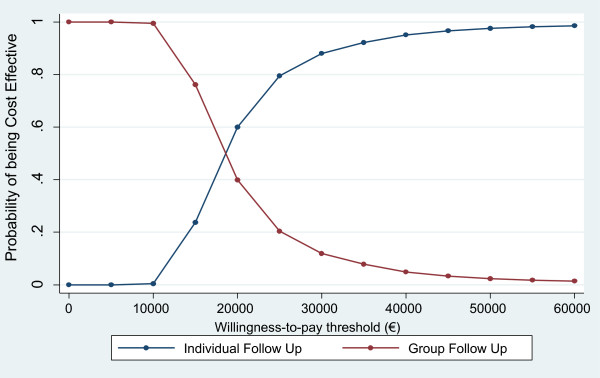
Results: Group follow-up was associated with a mean reduction in QALYs gained of 0.04 per patient (P value, 0.052; 95% CI, -0.08 to 0.01, intra-class correlation (ICC), 0.033) and a mean reduction in total healthcare costs of €772 (P value, 0.020; 95% CI, -1,415 to -128: ICC, 0.016) per patient. At alternative threshold values of €5,000, €15,000, €25,000, €35,000, and €45,000, the probability of group follow-up being cost effective was estimated to be 1.000, 0.762, 0.204, 0.078, and 0.033 respectively.
Conclusions: The results do not support implementation of group follow-up as the sole means of follow-up post-DAFNE. Given the reported cost savings, future studies should explore the cost effectiveness of alternative models of group care for diabetes.
Trial registration: Current Controlled Trials ISRCTN79759174 (assigned: 9 February 2007).
Figures
References
-
- Oliver L, Thompson G. The DAFNE Collaborative. Experiences of developing a nationally delivered evidence-based, quality-assured programme for people with type 1 diabetes. Pract Diab Int. 2009;26:371–377. doi:10.1002/pdi.1424.
-
- National Institute for Clinical Excellence. Guidance on the Use of Patient-Education Models for Diabetes. Technology Appraisal 60. NICE; 2003. http://publications.nice.org.uk/guidance-on-the-use-of-patient-education....
-
- Shearer A, Bagust D, Sanderson S, Heller S, Roberts S. Cost-effectiveness of flexible intensive insulin management to enable dietary freedom in people with type 1 diabetes in the UK. Diabet Med. 2004;21:460–467. - PubMed
-
- Dinneen S, O'Hara M, Byrne M, Smith D, Courtney C, McGurk C, Heller S, Newell J, Coffey N, Breen C, O’Scannail M, O'Shea D. Group follow-up compared to individual clinic visits after structured education for type 1 diabetes: a cluster randomised controlled trial. Diabetes Res Clin Pract. 2013;100:29–38. - PubMed
Publication types
MeSH terms
Associated data
LinkOut - more resources
Full Text Sources
Other Literature Sources
Medical
