


Sources of error in the retracted scientific literature
- PMID: 24928194
- PMCID: PMC5395722
- DOI: 10.1096/fj.14-256735
Sources of error in the retracted scientific literature
Abstract
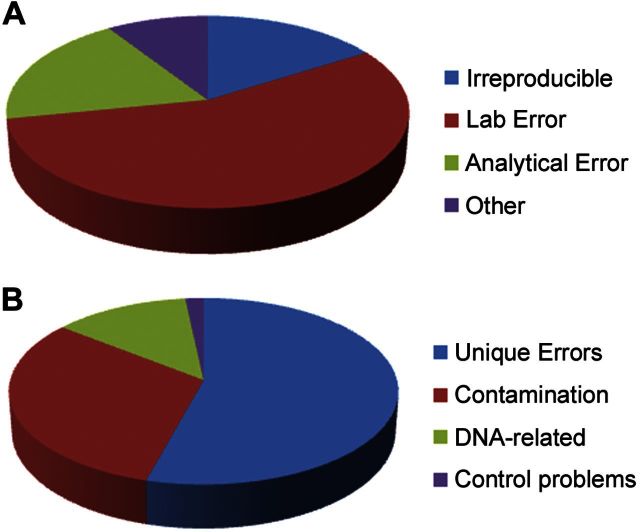
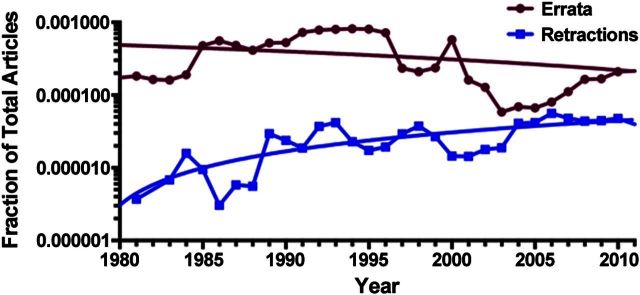
Retraction of flawed articles is an important mechanism for correction of the scientific literature. We recently reported that the majority of retractions are associated with scientific misconduct. In the current study, we focused on the subset of retractions for which no misconduct was identified, in order to identify the major causes of error. Analysis of the retraction notices for 423 articles indexed in PubMed revealed that the most common causes of error-related retraction are laboratory errors, analytical errors, and irreproducible results. The most common laboratory errors are contamination and problems relating to molecular biology procedures (e.g., sequencing, cloning). Retractions due to contamination were more common in the past, whereas analytical errors are now increasing in frequency. A number of publications that have not been retracted despite being shown to contain significant errors suggest that barriers to retraction may impede correction of the literature. In particular, few cases of retraction due to cell line contamination were found despite recognition that this problem has affected numerous publications. An understanding of the errors leading to retraction can guide practices to improve laboratory research and the integrity of the scientific literature. Perhaps most important, our analysis has identified major problems in the mechanisms used to rectify the scientific literature and suggests a need for action by the scientific community to adopt protocols that ensure the integrity of the publication process.
Keywords: bibliometric analysis; biomedical publishing; ethics.
© FASEB.
Figures
References
-
- Jefferson T. (1792) Letter to George Washington, 16 May 1792, Philadelphia, PA
-
- Begley C. G., Ellis L. M. (2012) Drug development: Raise standards for preclinical cancer research. Nature 483, 531–533 - PubMed
-
- Prinz F., Schlange T., Asadullah K. (2011) Believe it or not: how much can we rely on published data on potential drug targets? Nat. Rev. Drug Discov. 10, 712. - PubMed
-
- Dwan K., Altman D. G., Arnaiz J. A., Bloom J., Chan A. W., Cronin E., Decullier E., Easterbrook P. J., Von Elm E., Gamble C., Ghersi D., Ioannidis J. P., Simes J., Williamson P. R. (2008) Systematic review of the empirical evidence of study publication bias and outcome reporting bias. PLoS One 3, e3081. - PMC - PubMed
MeSH terms
LinkOut - more resources
Full Text Sources
Other Literature Sources
Molecular Biology Databases
Miscellaneous
