


TLR signaling controls lethal encephalitis in WNV-infected brain
- PMID: 24928618
- PMCID: PMC4099315
- DOI: 10.1016/j.brainres.2014.05.049
TLR signaling controls lethal encephalitis in WNV-infected brain
Abstract
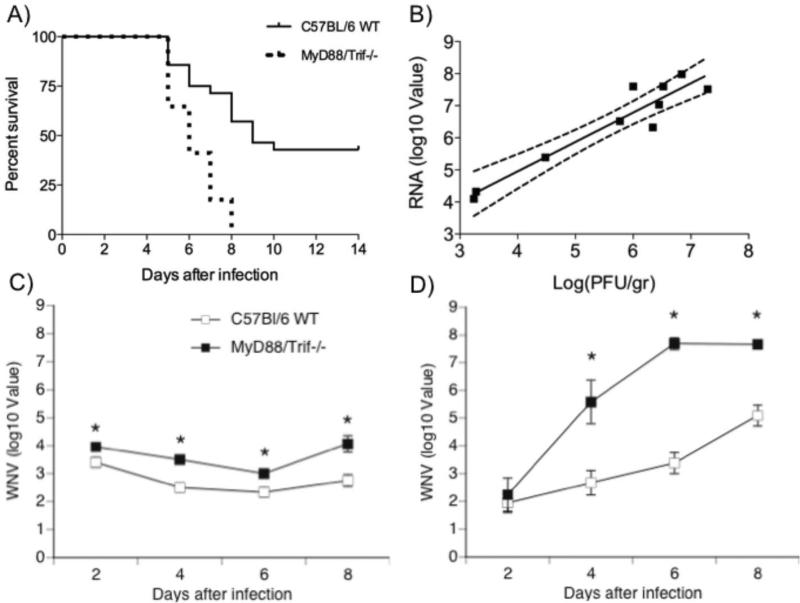
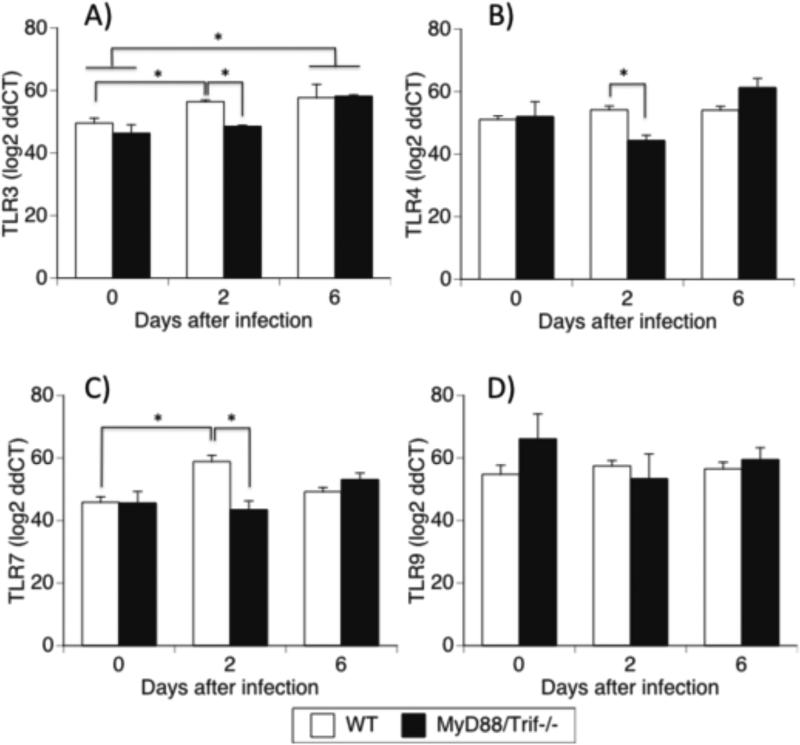
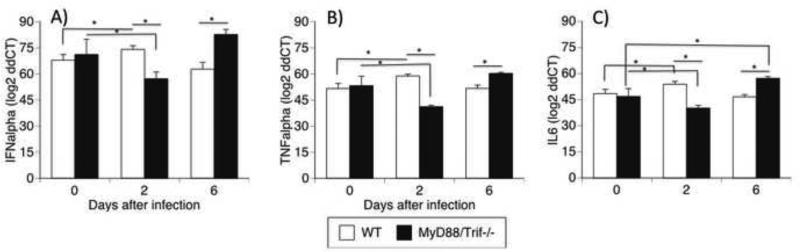
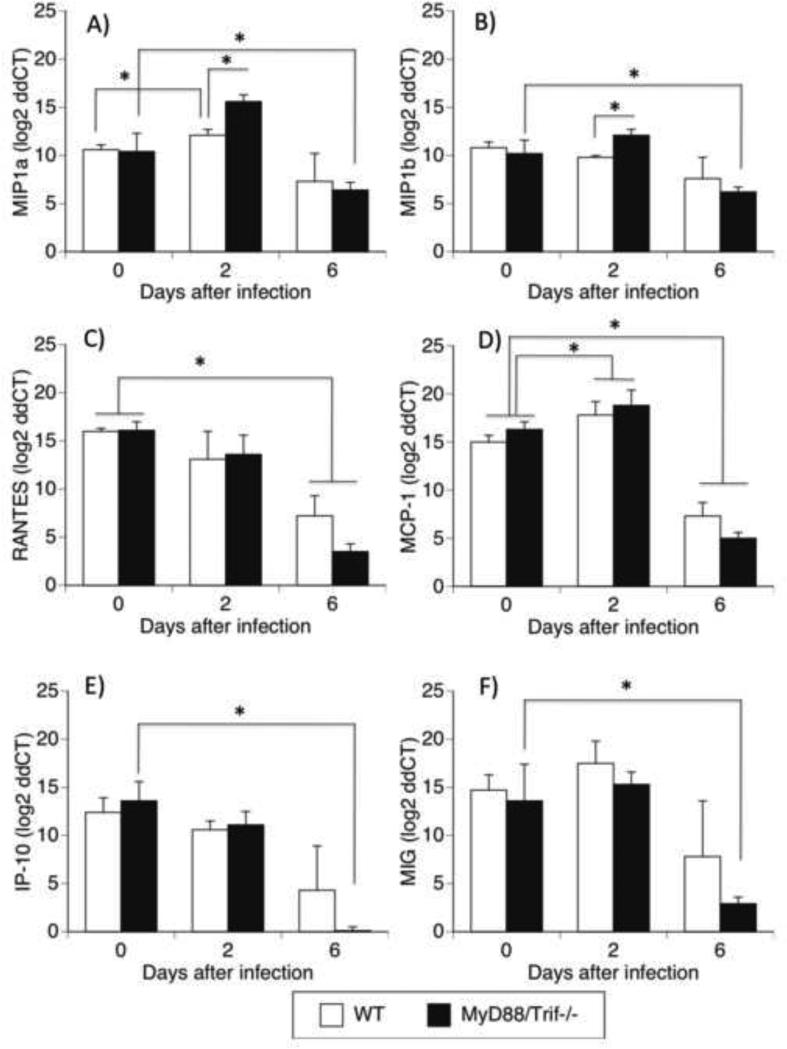
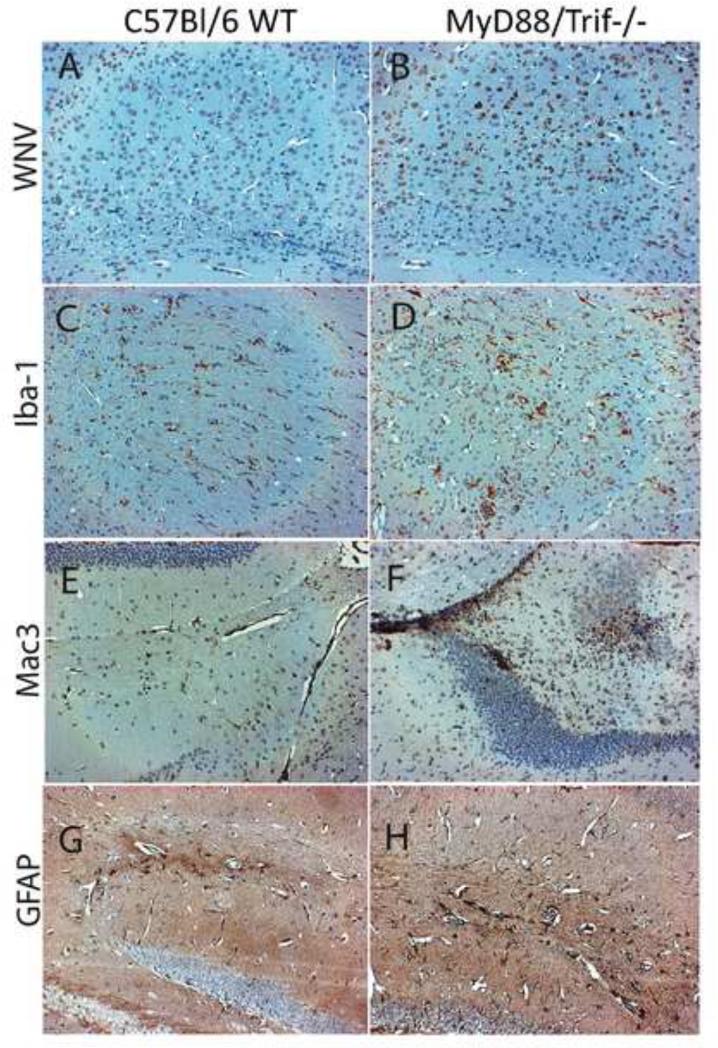
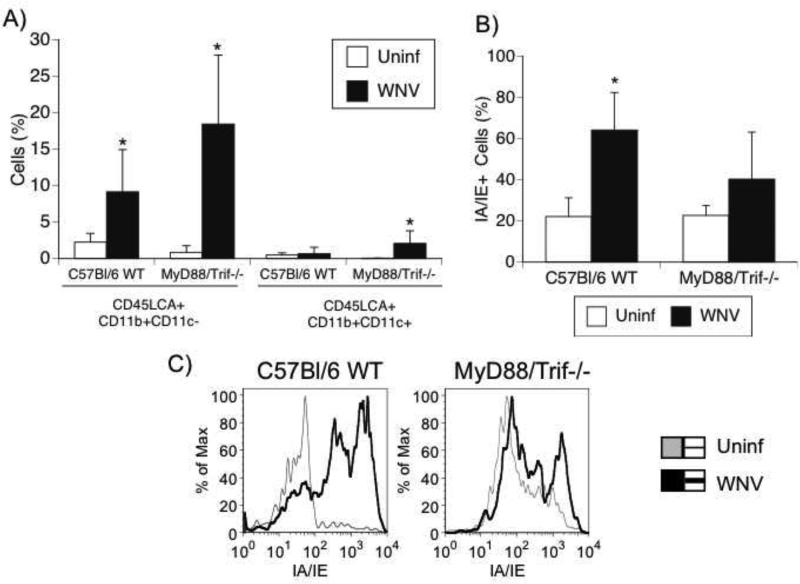
Toll-like receptors (TLRs) are known to be activated in Central Nervous System (CNS) viral infections and are recognized to be a critical component in innate immunity. Several reports state a role for particular TLRs in various CNS viral infections. However, excessive TLR activation was previously reported by us in correlation with a pathogenic, rather than a protective, outcome, in a model of SIV encephalitis. Here we aimed at understanding the impact of TLR-mediated pathways by evaluating the early course of pathogenesis in the total absence of TLR signaling during CNS viral infections. We utilized a mouse model of sublethal West Nile virus (WNV) infection. WNV is an emerging neurotropic flavivirus, and a significant global cause of viral encephalitis. The virus was peripherally injected into animals that simultaneously lacked two key adapter molecules of TLR signaling, MyD88 and TRIF. On day 2 pi (post infection), MyD88/Trif-/- mice showed an increased susceptibility to WNV infection, and revealed an impairment in innate immune cytokines, when compared to wild type mice (WT). By day 6 pi, there was an increase in viral burden and robust expression of inflammatory cytokines as well as higher cell infiltration into the CNS in MyD88/Trif-/-, when compared to infected WT. A drastic increase in microglia activation, astrogliosis, and inflammatory trafficking were also observed on day 6 pi in MyD88/Trif-/-. Our observations show a protective role for TLR signaling pathways in preventing lethal encephalitis at early stages of WNV infection.
Keywords: MyD88; Toll-like receptors (TLRs); Trif; West Nile Virus.
Copyright © 2014 Elsevier B.V. All rights reserved.
Figures
References
-
- Akira S, Uematsu S, Takeuchi O. Pathogen recognition and innate immunity. Cell. 2006;124:783–801. - PubMed
-
- Beasley DW, Li L, Suderman MT, Barrett AD. Mouse neuroinvasive phenotype of West Nile virus strains varies depending upon virus genotype. Virology. 2002;296:17–23. - PubMed
-
- Beverley PC, Merkenschlager M, Terry L. Phenotypic diversity of the CD45 antigen and its relationship to function. Immunol Suppl. 1988;1:3–5. - PubMed
-
- Beverley PC. CD45 isoform expression: implications for recirculation of naive and memory cells. Immunol Res. 1991;10:196–8. - PubMed
Publication types
MeSH terms
Substances
Grants and funding
LinkOut - more resources
Full Text Sources
Other Literature Sources
Medical
Research Materials
Miscellaneous
