


Airway surface mycosis in chronic TH2-associated airway disease
- PMID: 24928648
- PMCID: PMC4119856
- DOI: 10.1016/j.jaci.2014.04.028
Airway surface mycosis in chronic TH2-associated airway disease
Abstract
Background: Environmental fungi have been linked to TH2 cell-related airway inflammation and the TH2-associated chronic airway diseases asthma, chronic rhinosinusitis (CRS) with nasal polyps (CRSwNP), and allergic fungal rhinosinusitis (AFRS), but whether these organisms participate directly or indirectly in disease pathology remains unknown.
Objective: To determine the frequency of fungus isolation and fungus-specific immunity in patients with TH2-associated and non-TH2-associated airway disease.
Methods: Sinus lavage fluid and blood were collected from sinus surgery patients (n = 118) including patients with CRSwNP, patients with CRS without nasal polyps, patients with AFRS, and non-CRS/nonasthmatic control patients. Asthma status was determined from medical history. Sinus lavage fluids were cultured and directly examined for evidence of viable fungi. PBMCs were restimulated with fungal antigens in an enzyme-linked immunocell spot assay to determine total memory fungus-specific IL-4-secreting cells. These data were compared with fungus-specific IgE levels measured from plasma by ELISA.
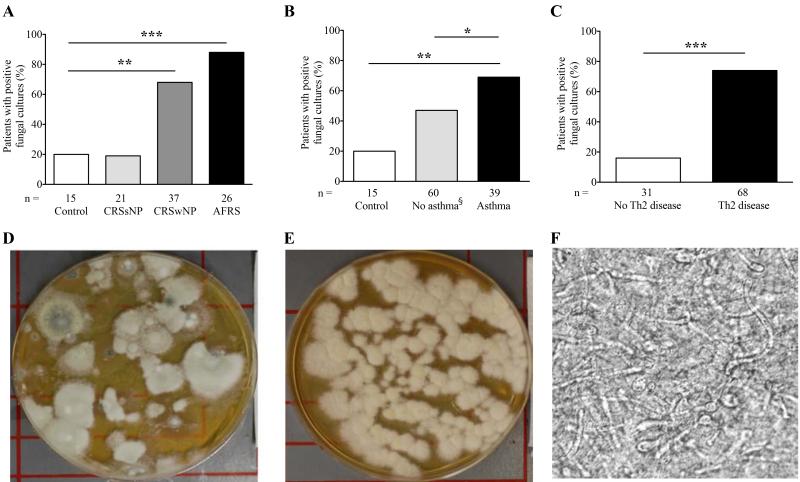
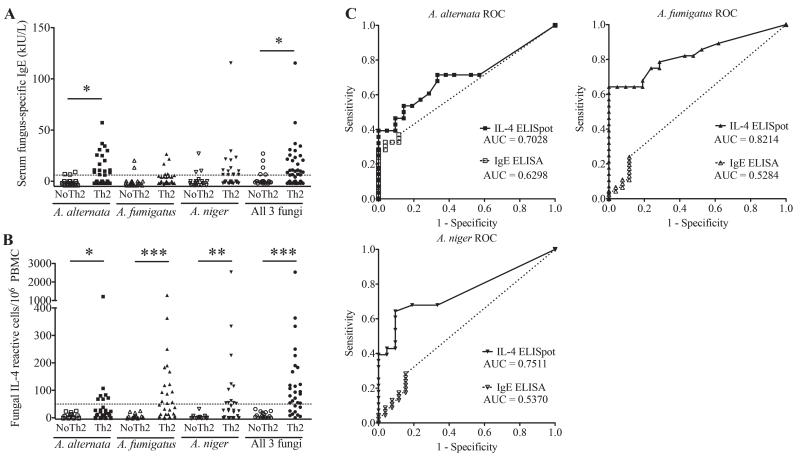
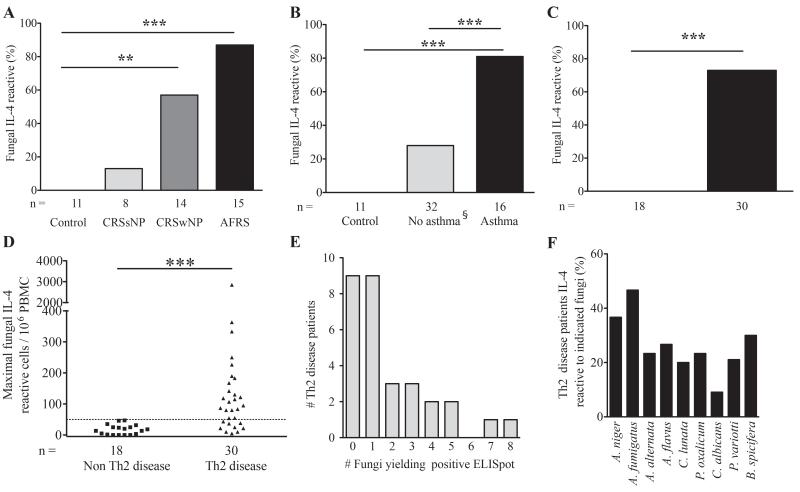
Results: Filamentous fungi were significantly more commonly cultured in patients with TH2-associated airway disease (asthma, CRSwNP, or AFRS: n = 68) than in control patients with non-TH2-associated disease (n = 31): 74% vs 16%, respectively (P < .001). Both fungus-specific IL-4 enzyme-linked immunocell spot (n = 48) and specific IgE (n = 70) data correlated with TH2-associated diseases (sensitivity 73% and specificity 100% vs 50% and 77%, respectively).
Conclusions: The frequent isolation of fungi growing directly within the airways accompanied by specific immunity to these organisms only in patients with TH2-associated chronic airway diseases suggests that fungi participate directly in the pathogenesis of these conditions. Efforts to eradicate airway fungi from the airways should be considered in selected patients.
Keywords: Allergic; T(H)2-associated airway disease; airway; asthma; chronic rhinosinusitis; fungal; mycosis.
Copyright © 2014 American Academy of Allergy, Asthma & Immunology. Published by Mosby, Inc. All rights reserved.
Figures
References
-
- Hamilos DL. Chronic rhinosinusitis: epidemiology and medical management. J Allergy Clin Immunol. 2011;128:693–707. - PubMed
-
- Van Zele T, Claeys S, Gevaert P, et al. Differentiation of chronic sinus diseases by measurement of inflammatory mediators. Allergy. 2006;61:1280–9. - PubMed
-
- Van Crombruggen K, Zhang N, Gevaert P, Tomassen P, Bachert C. Pathogenesis of chronic rhinosinusitis: inflammation. J Allergy Clin Immunol. 2011;128:728–32. - PubMed
-
- Fokkens WJ, Ebbens F, van Drunen CM. Fungus: a role in pathophysiology of chronic rhinosinusitis, disease modifier, a treatment target, or no role at all? Immunol Allergy Clin North Am. 2009;29:677–88. - PubMed
Publication types
MeSH terms
Substances
Grants and funding
LinkOut - more resources
Full Text Sources
Other Literature Sources
Medical
