


Exploration of ecological factors related to the spatial heterogeneity of tuberculosis prevalence in P. R. China
- PMID: 24929074
- PMCID: PMC4057787
- DOI: 10.3402/gha.v7.23620
Exploration of ecological factors related to the spatial heterogeneity of tuberculosis prevalence in P. R. China
Abstract
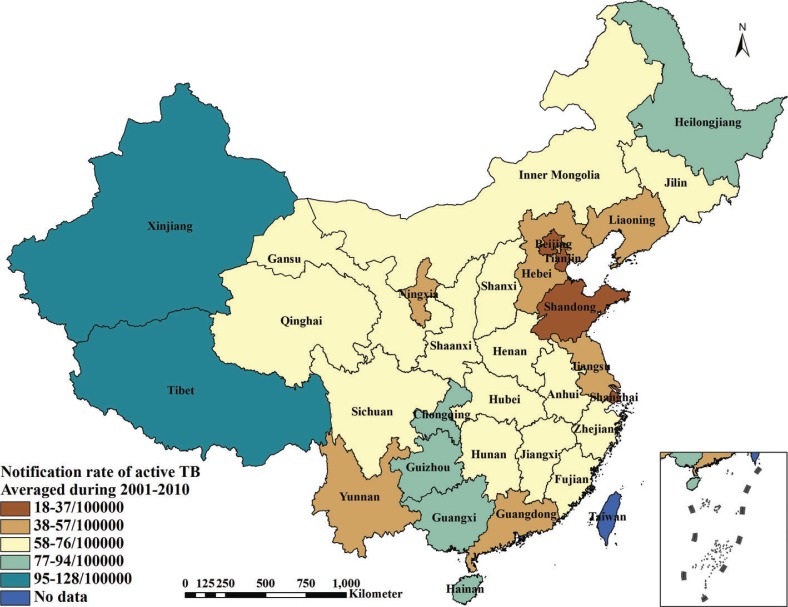
Background: The current prevalence of tuberculosis (TB) in the People's Republic of China (P. R. China) demonstrates geographical heterogeneities, which show that the TB prevalence in the remote areas of Western China is more serious than that in the coastal plain of Eastern China. Although a lot of ecological studies have been applied in the exploration on the regional difference of disease risks, there is still a paucity of ecological studies on TB prevalence in P. R. China.
Objective: To understand the underlying factors contributing to the regional inequity of TB burden in P. R. China by using an ecological approach and, thus, aiming to provide a basis to eliminate the TB spatial heterogeneity in the near future.
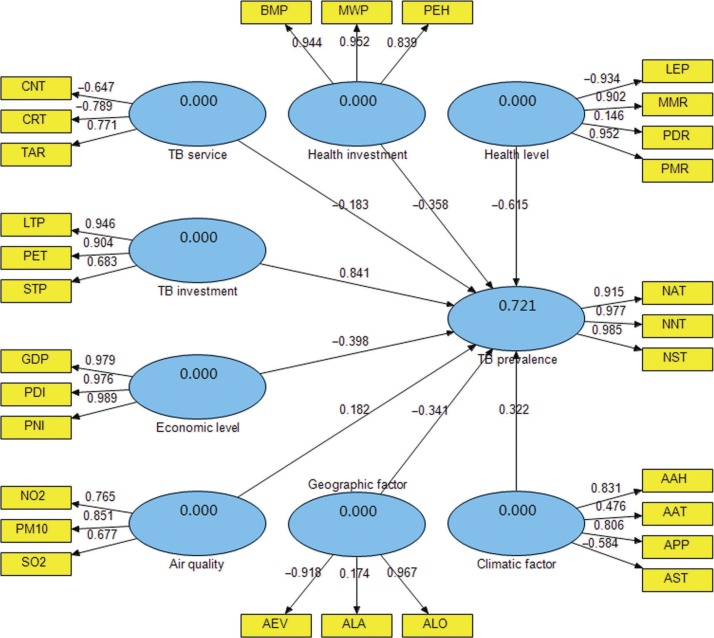
Design: Latent ecological variables were identified by using exploratory factor analysis from data obtained from four sources, i.e. the databases of the National TB Control Programme (2001-2010) in P. R. China, the China Health Statistical Yearbook during 2002-2011, the China Statistical Yearbook during 2002-2011, and the provincial government websites in 2013. Partial least squares path modelling was chosen to construct the structural equation model to evaluate the relationship between TB prevalence and ecological variables. Furthermore, a geographically weighted regression model was used to explore the local spatial heterogeneity in the relationships.
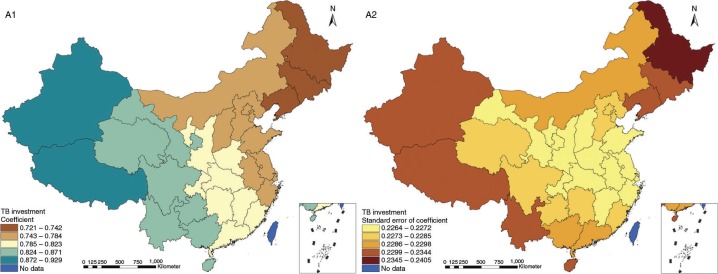
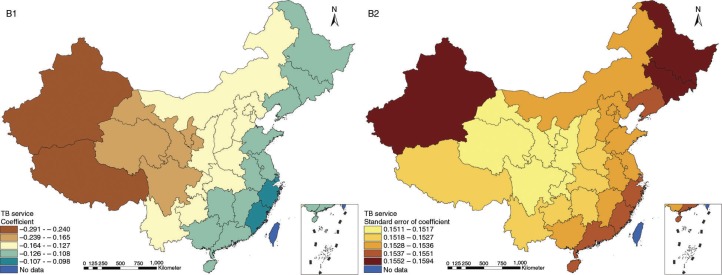
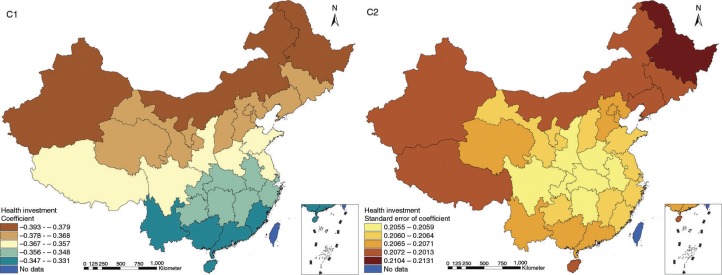
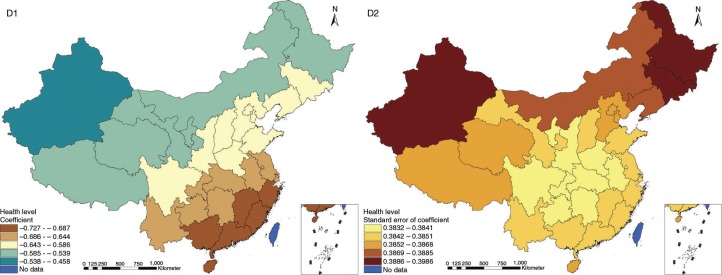
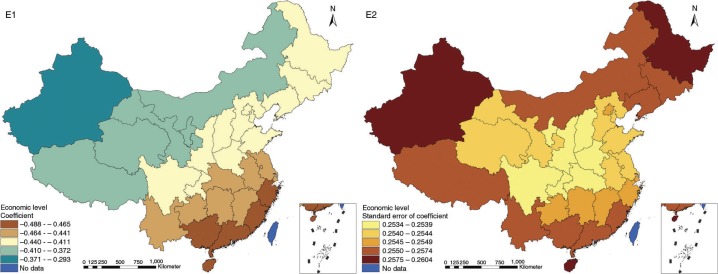
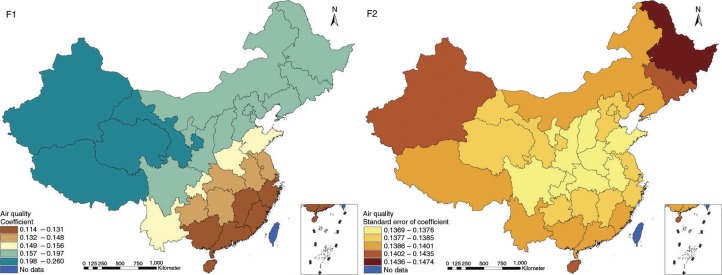
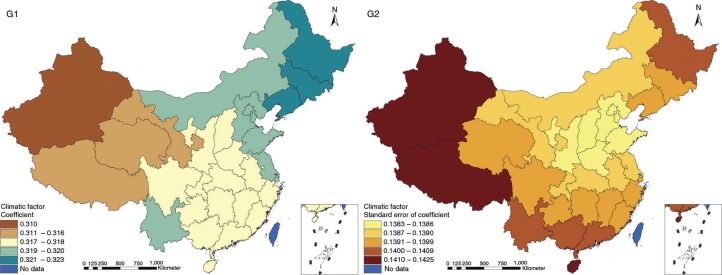
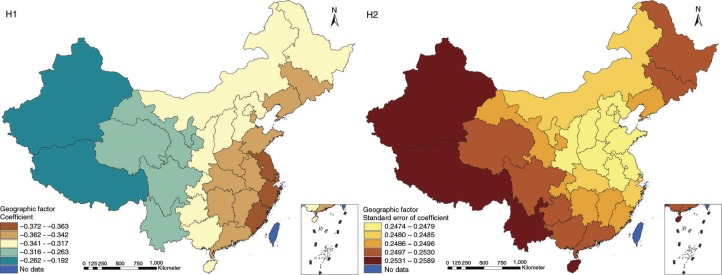
Results: The latent ecological variables in terms of 'TB prevalence', 'TB investment', 'TB service', 'health investment', 'health level', 'economic level', 'air quality', 'climatic factor' and 'geographic factor' were identified. With the exception of TB service and health levels, other ecological factors had explicit and significant impacts on TB prevalence to varying degrees. Additionally, each ecological factor had different impacts on TB prevalence in different regions significantly.
Conclusion: Ecological factors that were found predictive of TB prevalence in P. R. China are essential to take into account in the formulation of locally comprehensive strategies and interventions aiming to tailor the TB control and prevention programme into local settings in each ecozone.
Keywords: P. R. China; ecological factor; prevalence; spatial heterogeneity; tuberculosis.
Figures
References
-
- Ben-Selma W, Harizi H, Letaief M, Boukadida J. Age- and gender-specific effects on NRAMP1 gene polymorphisms and risk of the development of active tuberculosis in Tunisian populations. Int J Infect Dis. 2012;16:e543–50. - PubMed
-
- Donald PR, Marais BJ, Barry CE. Age and the epidemiology and pathogenesis of tuberculosis. Lancet. 2010;375:1852–4. - PubMed
-
- Rhines AS. The role of sex differences in the prevalence and transmission of tuberculosis. Tuberculosis (Edinb) 2013;93:104–7. - PubMed
Publication types
MeSH terms
LinkOut - more resources
Full Text Sources
Other Literature Sources
