


Chemically defined generation of human cardiomyocytes
- PMID: 24930130
- PMCID: PMC4169698
- DOI: 10.1038/nmeth.2999
Chemically defined generation of human cardiomyocytes
Abstract
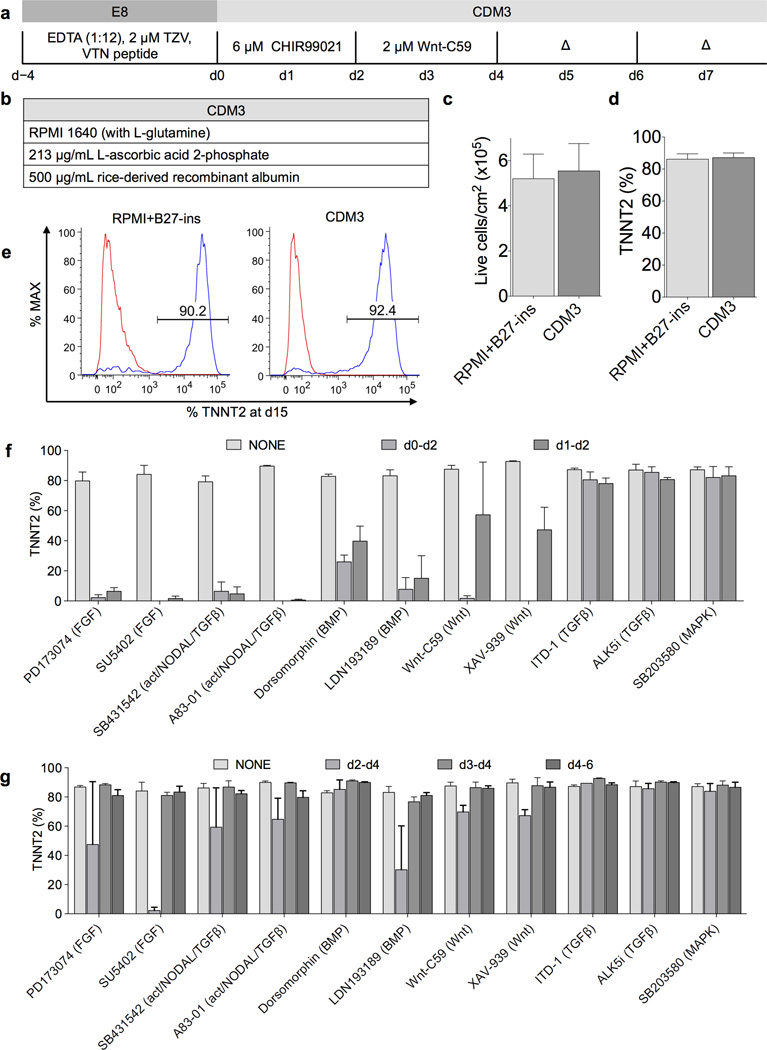
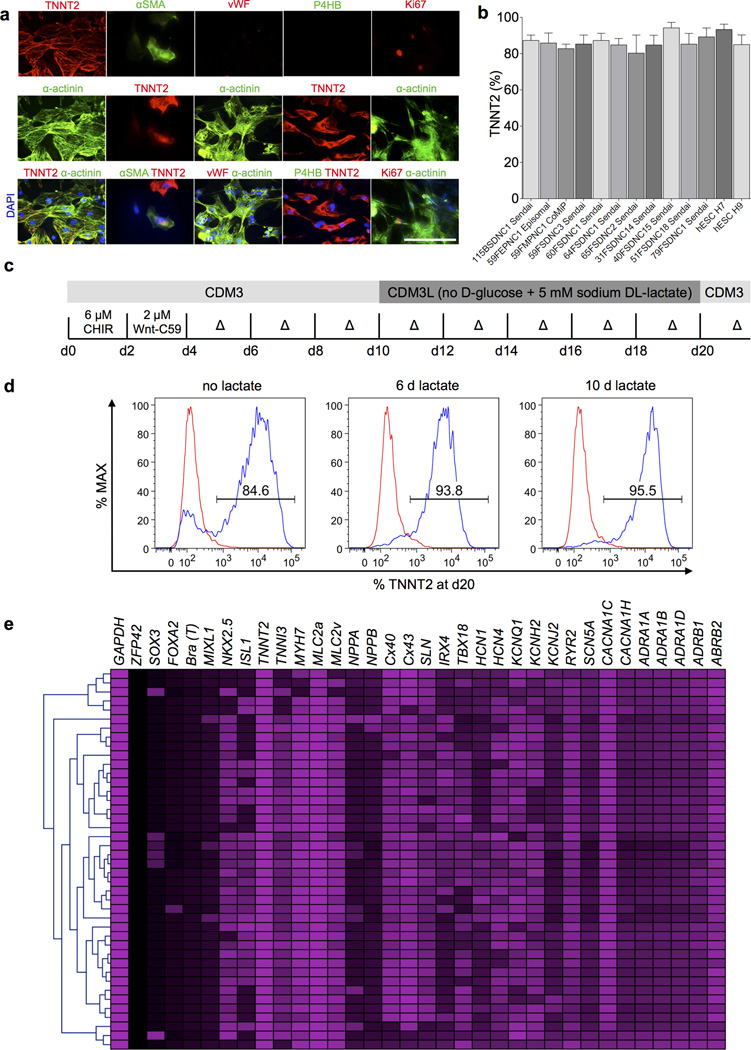
Existing methods for human induced pluripotent stem cell (hiPSC) cardiac differentiation are efficient but require complex, undefined medium constituents that hinder further elucidation of the molecular mechanisms of cardiomyogenesis. Using hiPSCs derived under chemically defined conditions on synthetic matrices, we systematically developed an optimized cardiac differentiation strategy, using a chemically defined medium consisting of just three components: the basal medium RPMI 1640, L-ascorbic acid 2-phosphate and rice-derived recombinant human albumin. Along with small molecule-based induction of differentiation, this protocol produced contractile sheets of up to 95% TNNT2(+) cardiomyocytes at a yield of up to 100 cardiomyocytes for every input pluripotent cell and was effective in 11 hiPSC lines tested. This chemically defined platform for cardiac specification of hiPSCs will allow the elucidation of cardiomyocyte macromolecular and metabolic requirements and will provide a minimal system for the study of maturation and subtype specification.
Figures
References
-
- Kattman SJ, et al. Stage-specific optimization of activin/nodal and BMP signaling promotes cardiac differentiation of mouse and human pluripotent stem cell lines. Cell Stem Cell. 2011;8:228–240. - PubMed
Publication types
MeSH terms
Substances
Grants and funding
LinkOut - more resources
Full Text Sources
Other Literature Sources
Research Materials
Miscellaneous
