


Cognitive deficits specific to depression-prone smokers during abstinence
- PMID: 24932895
- PMCID: PMC4274744
- DOI: 10.1037/a0037072
Cognitive deficits specific to depression-prone smokers during abstinence
Abstract
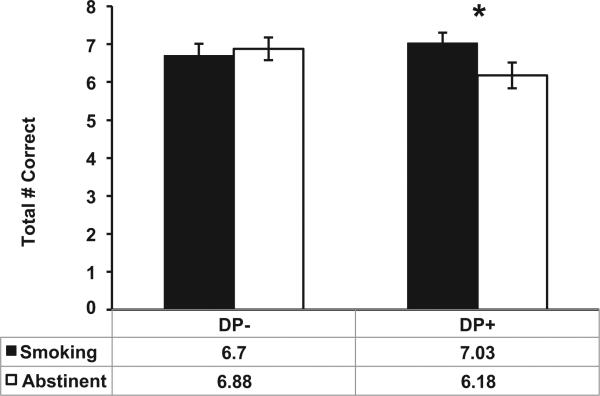
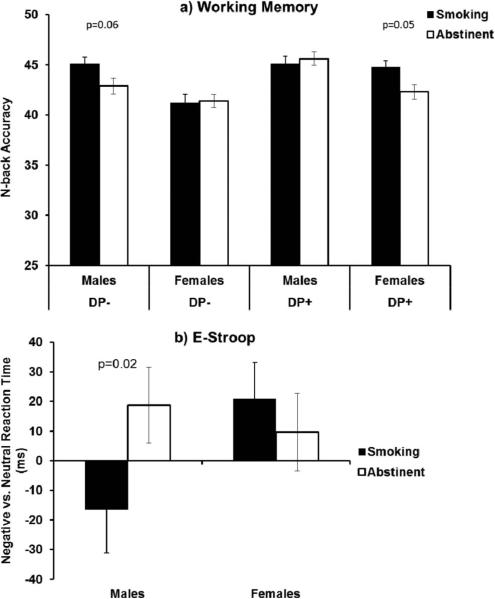
Cigarette smoking is associated with a higher prevalence of depressive symptoms and individuals with elevated symptoms of depression have more difficulty quitting smoking. Depression is accompanied by cognitive deficits similar to those observed during nicotine withdrawal. Depressed smokers may smoke to alleviate these cognitive symptoms, which are exacerbated upon smoking abstinence. We hypothesized that following overnight abstinence, depression-prone smokers (DP+; past history and current depression symptoms; n = 34) would exhibit deficits in short-term and working memory, and experience greater attentional bias for affective stimuli, compared with smokers with no history or current symptoms of depression (DP-; n = 34). All participants underwent two laboratory sessions, once while smoking abstinent and once while smoking ad libitum (order counterbalanced, abstinence biochemically verified). Smokers completed measures of short-term memory (STM; word recognition task), working memory (N-back task), and attentional bias (Emotional Stroop task). The DP+ group showed declines in STM during abstinence compared with smoking, whereas the DP- group did not (interaction p = .02). There were small decrements in working memory accuracy during abstinence (p = .05), but this did not interact with depression status. During the Emotional Stroop task, the DP+ group showed an attentional bias toward positive versus neutral stimuli during abstinence compared with smoking (interaction p = .01). This study provides initial evidence that depressive symptoms may moderate abstinence-induced deficits in STM and shift attentional bias toward emotionally salient stimuli during abstinence. These cognitive changes may prompt relapse and may help identify novel targets for nicotine dependence treatment aimed at attenuating these deficits to improve cessation rates.
Figures

References
-
- Bora E, Harrison BJ, Yucel M, Pantelis C. Cognitive impairment in euthymic major depressive disorder: A meta-analysis. Psychological Medicine. 2013;43:2017–2026. - PubMed
-
- Bradley BP, Mogg K, Lee SC. Attentional biases for negative information in induced and naturally occurring dysphoria. Behaviour Research and Therapy. 1997;35:911–927. doi:10.1016/S0005-7967(97)00053-3. - PubMed
Publication types
MeSH terms
Grants and funding
LinkOut - more resources
Full Text Sources
Other Literature Sources
Medical
Miscellaneous
