


Infant cortical electrophysiology and perception of vowel contrasts
- PMID: 24933411
- PMCID: PMC4265317
- DOI: 10.1016/j.ijpsycho.2014.06.002
Infant cortical electrophysiology and perception of vowel contrasts
Abstract
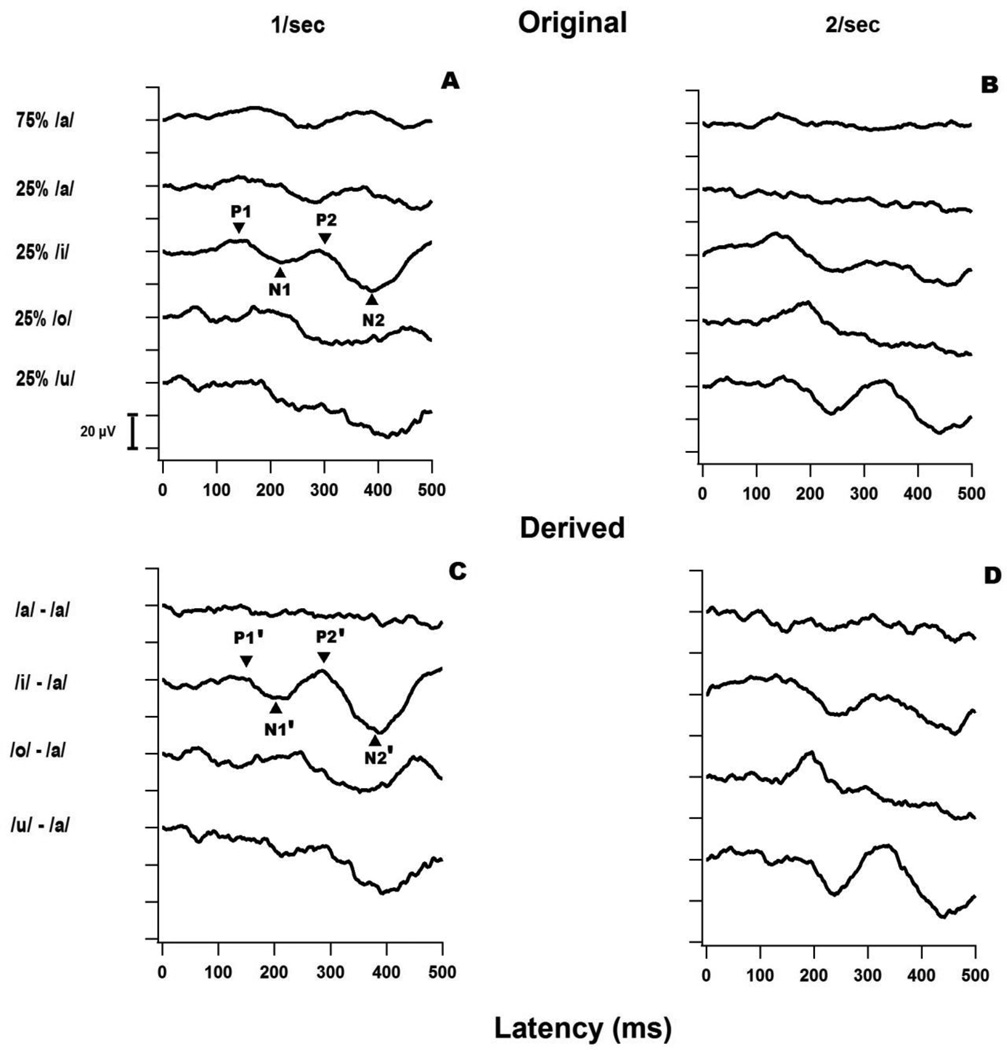
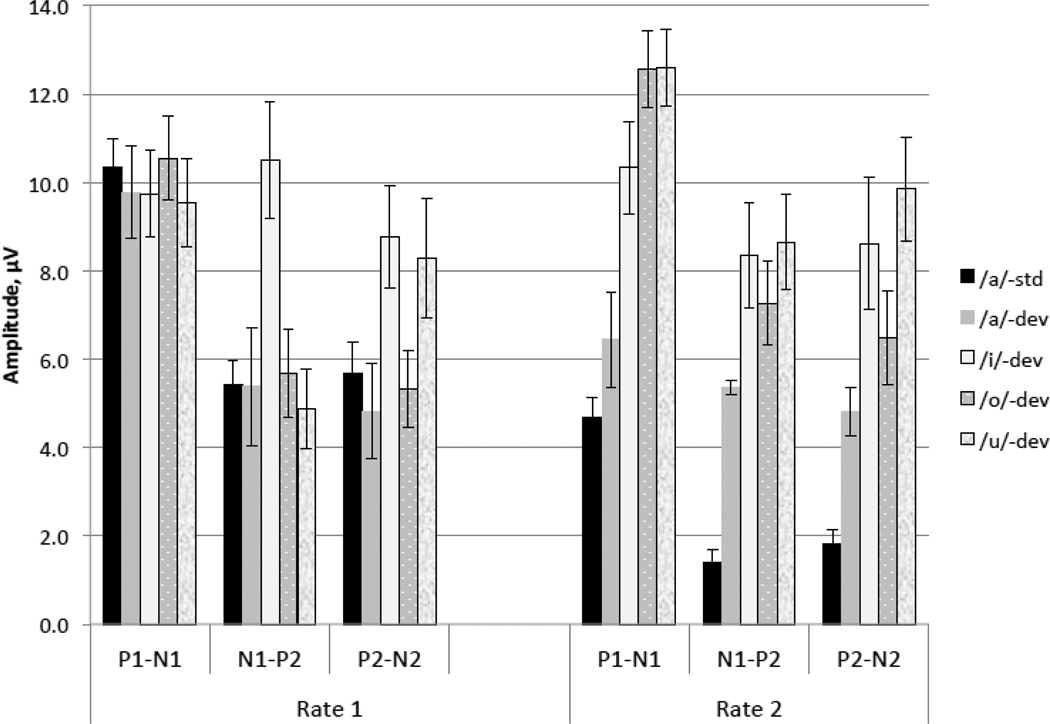
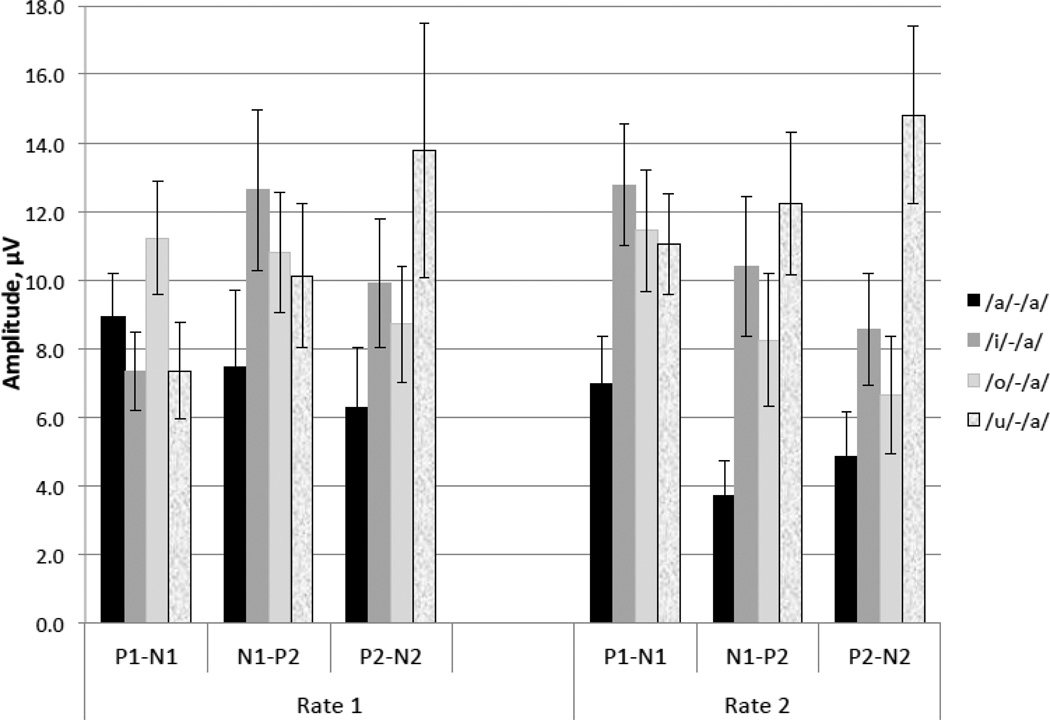
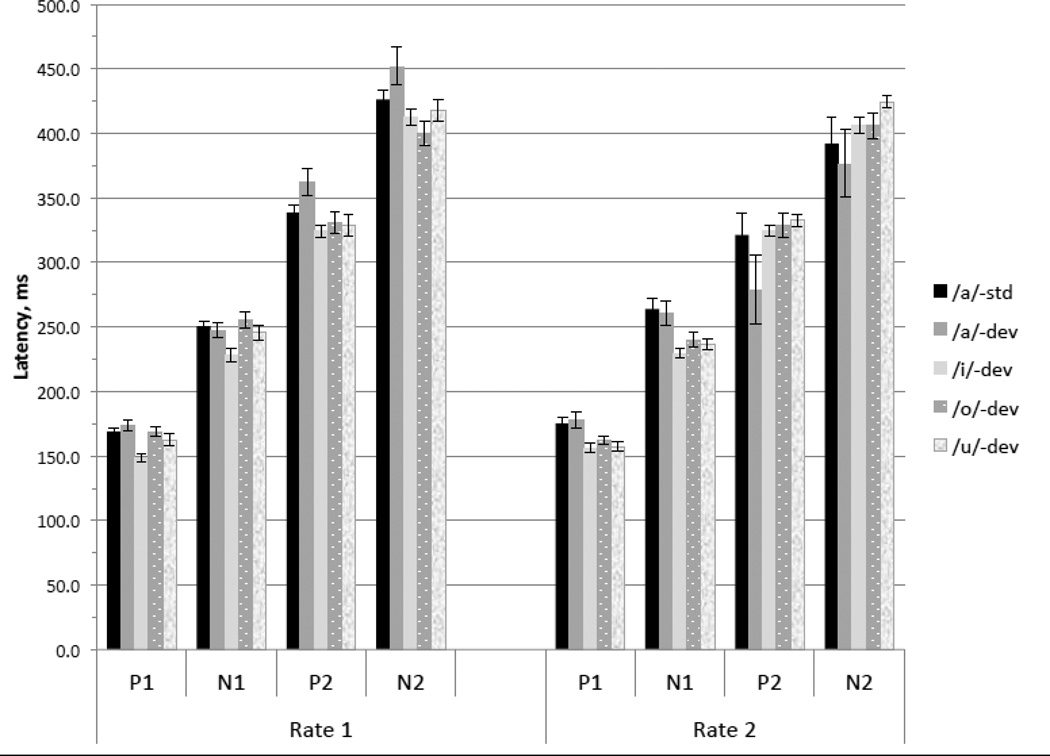
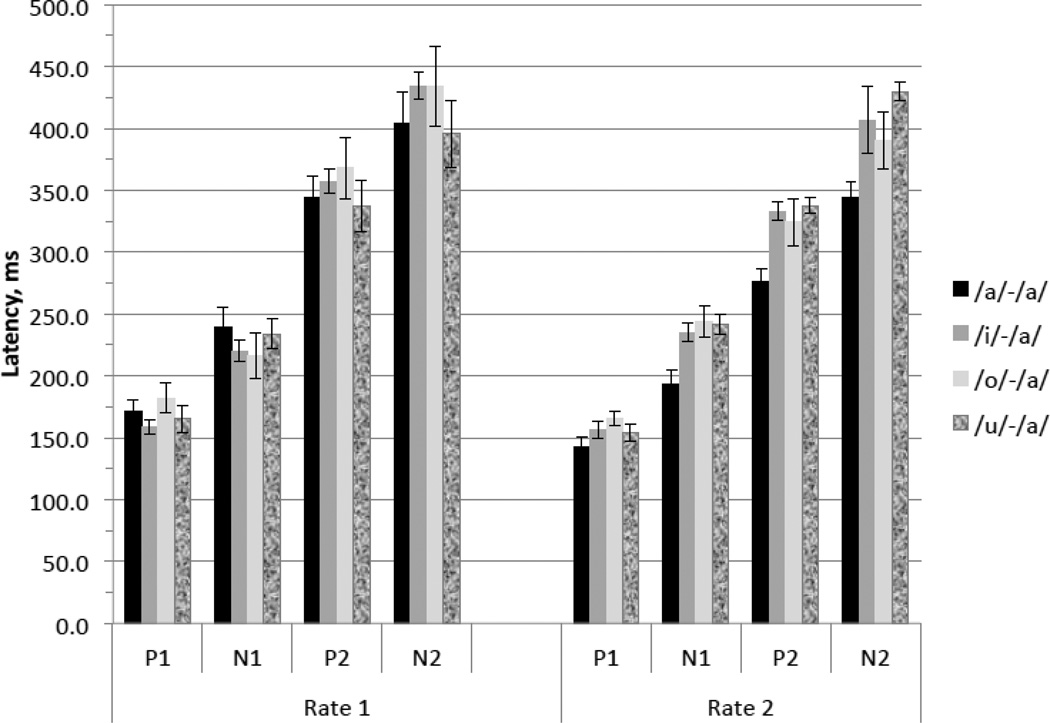
Cortical auditory evoked potentials (CAEPs) were obtained for vowel tokens presented in an oddball stimulus paradigm. Perceptual measures of vowel discrimination were obtained using a visually-reinforced head-turn paradigm. The hypothesis was that CAEP latencies and amplitudes would differ as a function of vowel type and be correlated with perceptual performance. Twenty normally hearing infants aged 4-12 months were evaluated. CAEP component amplitudes and latencies were measured in response to the standard, frequent token /a/ and for infrequent, deviant tokens /i/, /o/ and /u/, presented at rates of 1 and 2 tokens/s. The perceptual task required infants to make a behavioral response for trials that contained two different vowel tokens, and ignore those in which the tokens were the same. CAEP amplitudes were larger in response to the deviant tokens, when compared to the control condition in which /a/ served as both standard and deviant. This was also seen in waveforms derived by subtracting the response to standard /a/ from the responses to deviant tokens. CAEP component latencies in derived responses at 2/s also demonstrated some sensitivity to vowel contrast type. The average hit rate for the perceptual task was 68.5%, with a 25.7% false alarm rate. There were modest correlations of CAEP amplitudes and latencies with perceptual performance. The CAEP amplitude differences for vowel contrasts could be used as an indicator of the underlying neural capacity to encode spectro-temporal differences in vowel sounds. This technique holds promise for translation to clinical methods for evaluating speech perception.
Keywords: Auditory evoked potential; Infant; Speech perception.
Copyright © 2014 Elsevier B.V. All rights reserved.
Figures
References
-
- Berg KM. Auditory temporal summation in infants and adults: Effects of stimulus bandwidth and masking noise. Percept Psychophys. 1991;50(4):324–320. - PubMed
-
- Berg KM, Boswell AE. Temporal summation of 500-Hz tones and octave band noise bursts in infants and adults. Percept and Psychophys. 1995;57(2):183–190. - PubMed
-
- Carter L, Golding M, Dillon H, Seymour J. The detection of infant cortical auditory evoked potentials (CAEPs) using statistical and visual detection techniques. J Am Acad Audiol. 2010;21(5):347–356. - PubMed
Publication types
MeSH terms
Grants and funding
LinkOut - more resources
Full Text Sources
Other Literature Sources
