


A genome-wide survey of CD4(+) lymphocyte regulatory genetic variants identifies novel asthma genes
- PMID: 24934276
- PMCID: PMC4253878
- DOI: 10.1016/j.jaci.2014.04.011
A genome-wide survey of CD4(+) lymphocyte regulatory genetic variants identifies novel asthma genes
Abstract
Background: Genome-wide association studies have yet to identify the majority of genetic variants involved in asthma. We hypothesized that expression quantitative trait locus (eQTL) mapping can identify novel asthma genes by enabling prioritization of putative functional variants for association testing.
Objective: We evaluated 6706 cis-acting expression-associated variants (eSNPs) identified through a genome-wide eQTL survey of CD4(+) lymphocytes for association with asthma.
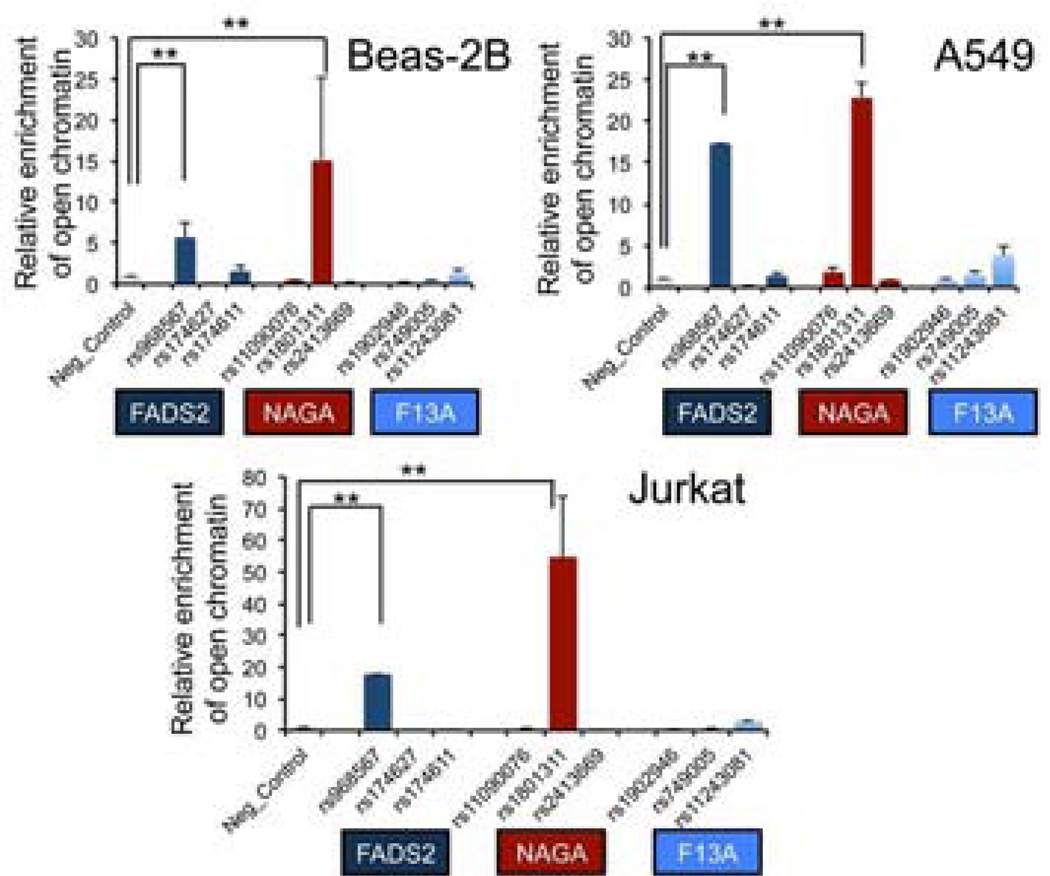
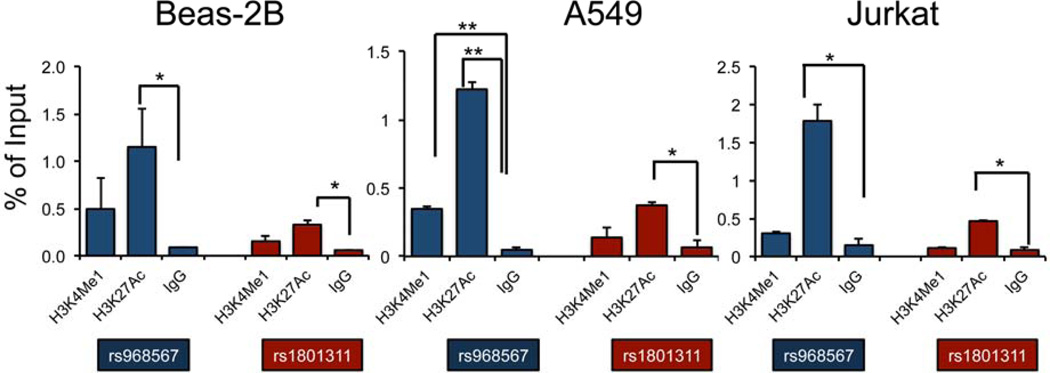
Methods: eSNPs were tested for association with asthma in 359 asthmatic patients and 846 control subjects from the Childhood Asthma Management Program, with verification by using family-based testing. Significant associations were tested for replication in 579 parent-child trios with asthma from Costa Rica. Further functional validation was performed by using formaldehyde-assisted isolation of regulatory elements (FAIRE) quantitative PCR and chromatin immunoprecipitation PCR in lung-derived epithelial cell lines (Beas-2B and A549) and Jurkat cells, a leukemia cell line derived from T lymphocytes.
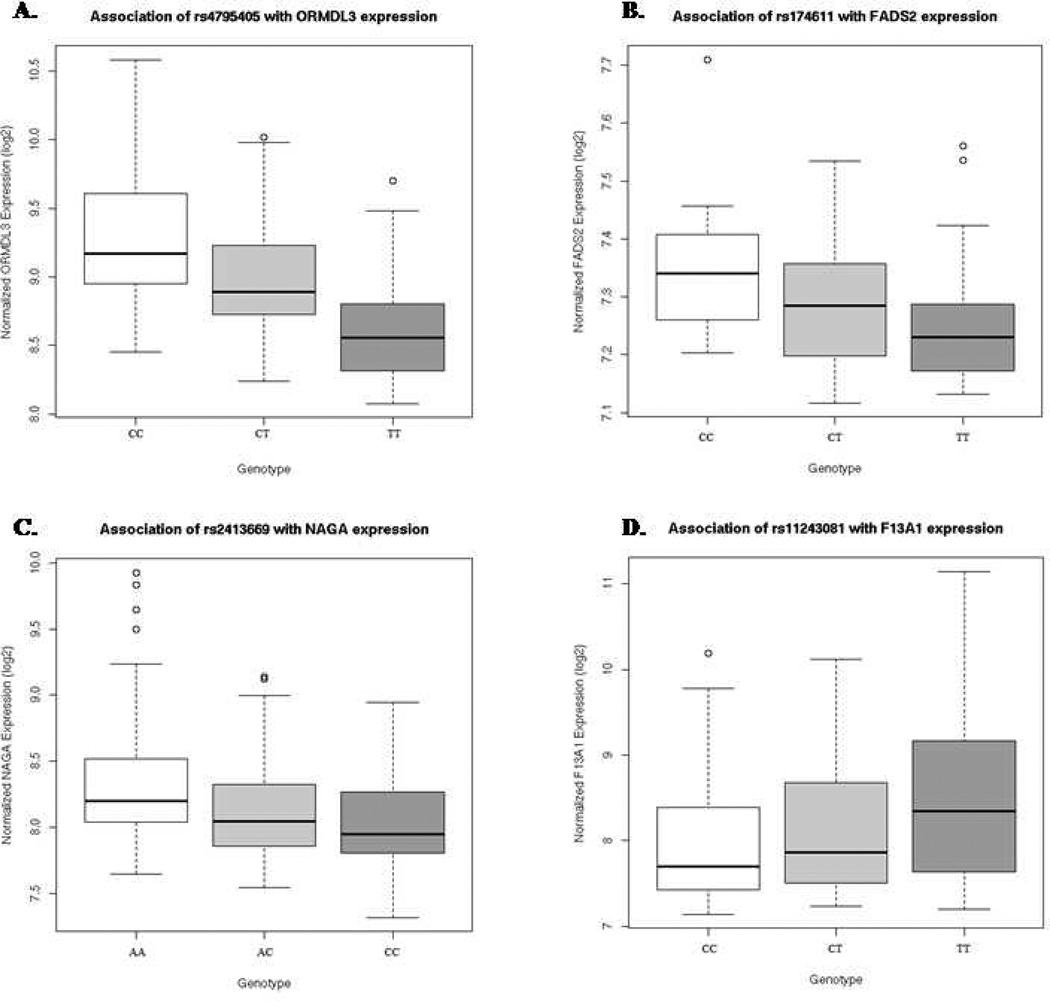
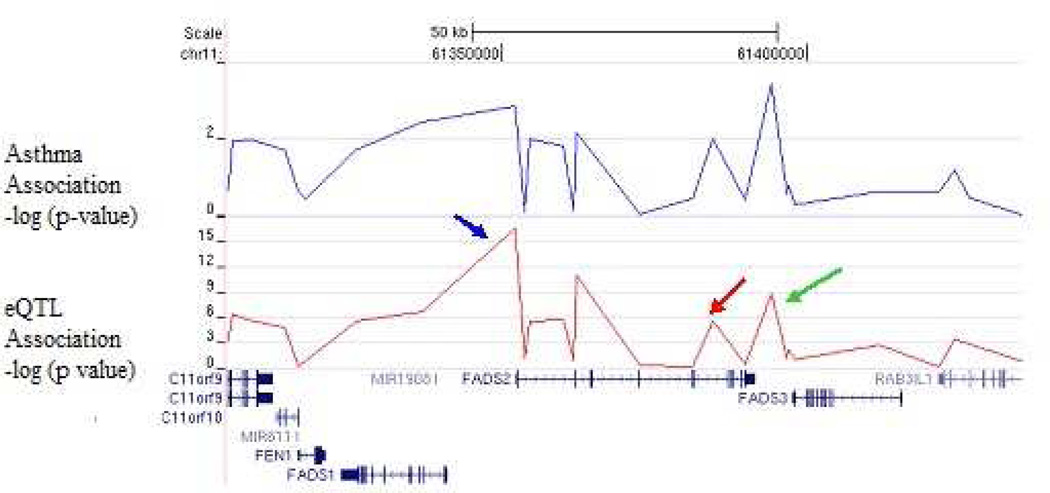
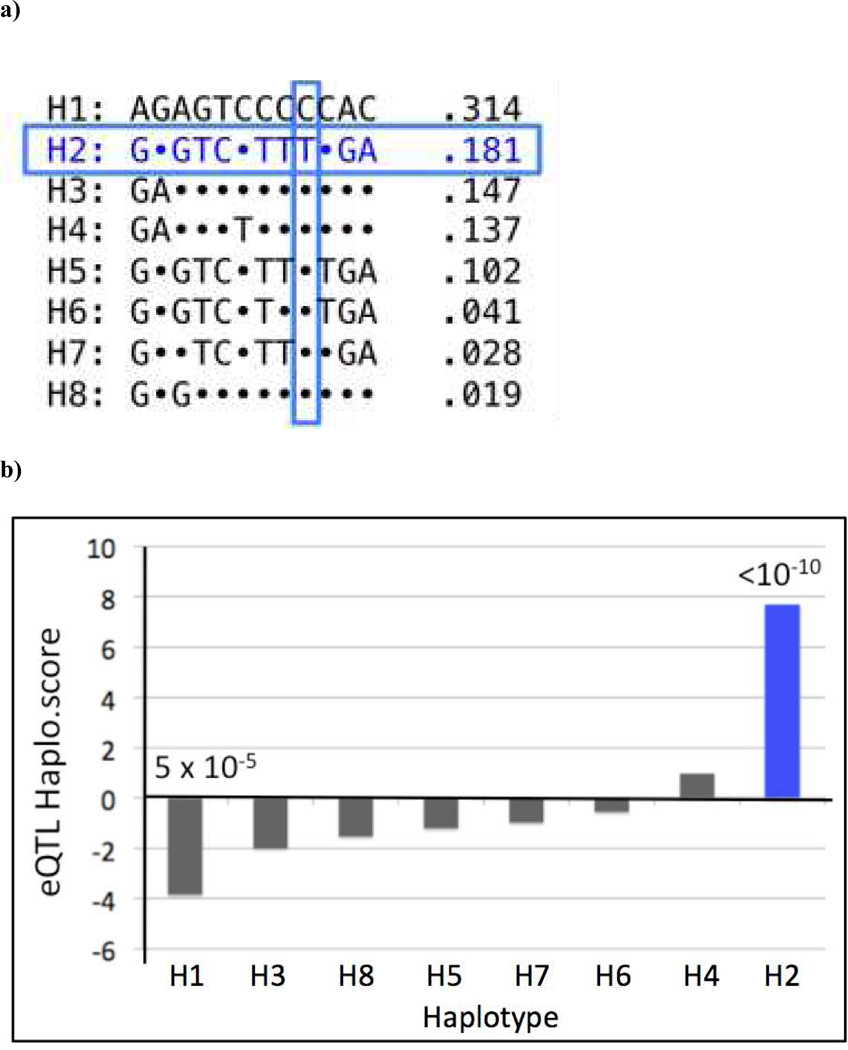
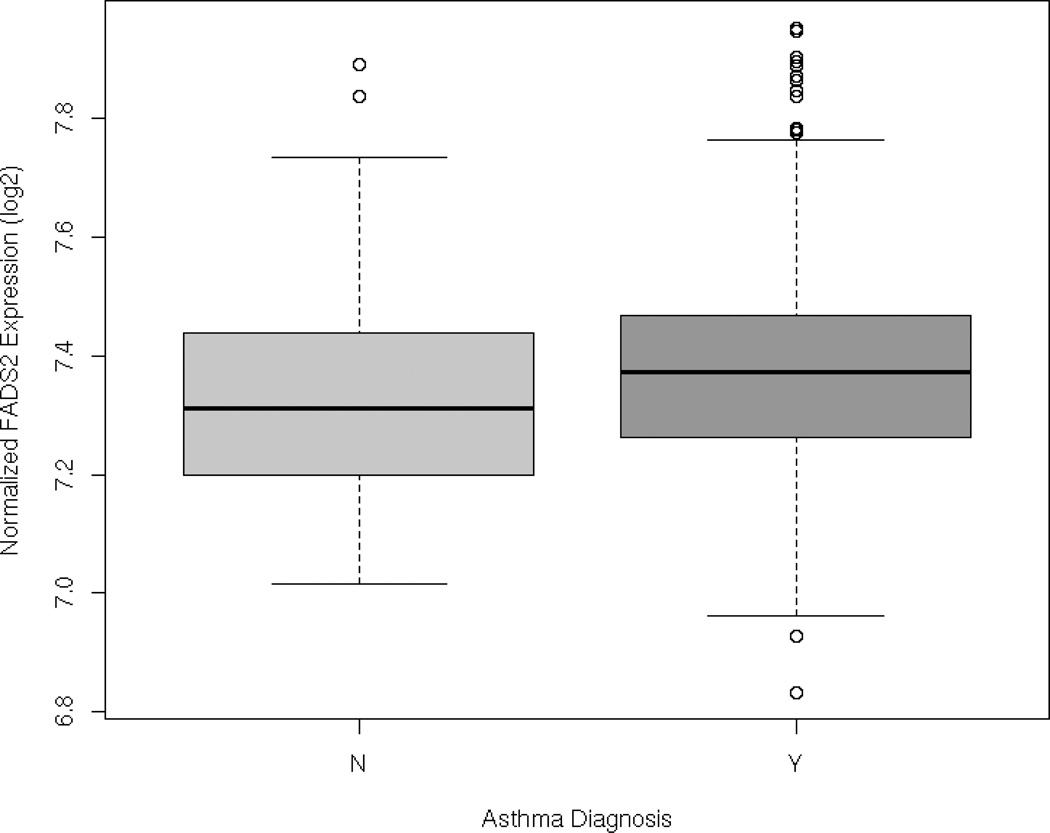
Results: Cis-acting eSNPs demonstrated associations with asthma in both cohorts. We confirmed the previously reported association of ORMDL3/GSDMB variants with asthma (combined P = 2.9 × 10(-8)). Reproducible associations were also observed for eSNPs in 3 additional genes: fatty acid desaturase 2 (FADS2; P = .002), N-acetyl-α-D-galactosaminidase (NAGA; P = .0002), and Factor XIII, A1 (F13A1; P = .0001). Subsequently, we demonstrated that FADS2 mRNA is increased in CD4(+) lymphocytes in asthmatic patients and that the associated eSNPs reside within DNA segments with histone modifications that denote open chromatin status and confer enhancer activity.
Conclusions: Our results demonstrate the utility of eQTL mapping in the identification of novel asthma genes and provide evidence for the importance of FADS2, NAGA, and F13A1 in the pathogenesis of asthma.
Keywords: Asthma; CD4(+) lymphocytes; expression quantitative trait locus; haplotype; integrative genomics; regulatory variants.
Copyright © 2014 American Academy of Allergy, Asthma & Immunology. All rights reserved.
Figures
References
-
- Schadt EE, Monks SA, Drake TA, Lusis AJ, Che N, Colinayo V, et al. Genetics of gene expression surveyed in maize, mouse and man. Nature. 2003;422:297–302. - PubMed
Publication types
MeSH terms
Substances
Grants and funding
- P01 HL083069/HL/NHLBI NIH HHS/United States
- U01 HL65899/HL/NHLBI NIH HHS/United States
- UL1 RR025780/RR/NCRR NIH HHS/United States
- RC2 HL101543/HL/NHLBI NIH HHS/United States
- K99 HL105663/HL/NHLBI NIH HHS/United States
- U01 HL065899/HL/NHLBI NIH HHS/United States
- R01HL086601/HL/NHLBI NIH HHS/United States
- U01 HL075419/HL/NHLBI NIH HHS/United States
- ImNIH/Intramural NIH HHS/United States
- K08 HL096833/HL/NHLBI NIH HHS/United States
- UL1 TR001082/TR/NCATS NIH HHS/United States
- 1 UL1 RR025780/RR/NCRR NIH HHS/United States
- R01 HL086601/HL/NHLBI NIH HHS/United States
- UL1 TR000430/TR/NCATS NIH HHS/United States
- R00 HL105663/HL/NHLBI NIH HHS/United States
- R37 HL066289/HL/NHLBI NIH HHS/United States
- P01ES011627/ES/NIEHS NIH HHS/United States
- K24 ES021098/ES/NIEHS NIH HHS/United States
- P01 ES011627/ES/NIEHS NIH HHS/United States
LinkOut - more resources
Full Text Sources
Other Literature Sources
Medical
Molecular Biology Databases
Research Materials
Miscellaneous
