. 2014 Sep;171(9):979-89.
doi: 10.1176/appi.ajp.2014.13111518.

Effects of schizophrenia risk variation in the NRG1 gene on NRG1-IV splicing during fetal and early postnatal human neocortical development

Effects of schizophrenia risk variation in the NRG1 gene on NRG1-IV splicing during fetal and early postnatal human neocortical development

Clare Paterson et al. Am J Psychiatry. 2014 Sep.

Abstract

Objective: Neuregulin 1 (NRG1) is a multifunctional neurotrophin that mediates neurodevelopment and schizophrenia risk. The NRG1 gene undergoes extensive alternative splicing, and association of brain NRG1 type IV isoform expression with the schizophrenia-risk polymorphism rs6994992 is a potential mechanism of risk. Novel splice variants of NRG1-IV (NRG1-IVNV), with predicted unique signaling capabilities, have been cloned in fetal brain tissue. The authors investigated the temporal dynamics of transcription of NRG1-IVNV, compared with the major NRG1 isoforms, across human prenatal and postnatal prefrontal cortical development, and they examined the association of rs6994992 with NRG1-IVNV expression.

Method: NRG1 type I-IV and NRG1-IVNV isoforms were evaluated with quantitative real-time polymerase chain reaction in human postmortem prefrontal cortex tissue samples at 14 to 39 weeks gestation and postnatal ages 0-83 years. The association of rs6994992 genotype with NRG1-IVNV expression and the subcellular distribution and proteolytic processing of NRG1-IVNV isoforms were also determined.

Results: Expression of NRG1 types I, II, and III was temporally regulated during prenatal and postnatal neocortical development. NRG1-IVNV was expressed from 16 weeks gestation until age 3. Homozygosity for the schizophrenia risk allele (T) of rs6994992 conferred lower cortical NRG1-IVNV levels. Assays showed that NRG1-IVNV is a novel nuclear-enriched, truncated NRG1 protein resistant to proteolytic processing.

Conclusions: To the authors' knowledge, this study provides the first quantitative map of NRG1 isoform expression during human neocortical development and aging. It identifies a potential mechanism of early developmental risk for schizophrenia at the NRG1 locus, involving a novel class of NRG1 proteins.


Conflict of interest statement

Drs. Paterson, Wang, Kleinman and Law report no competing interests.

Figures
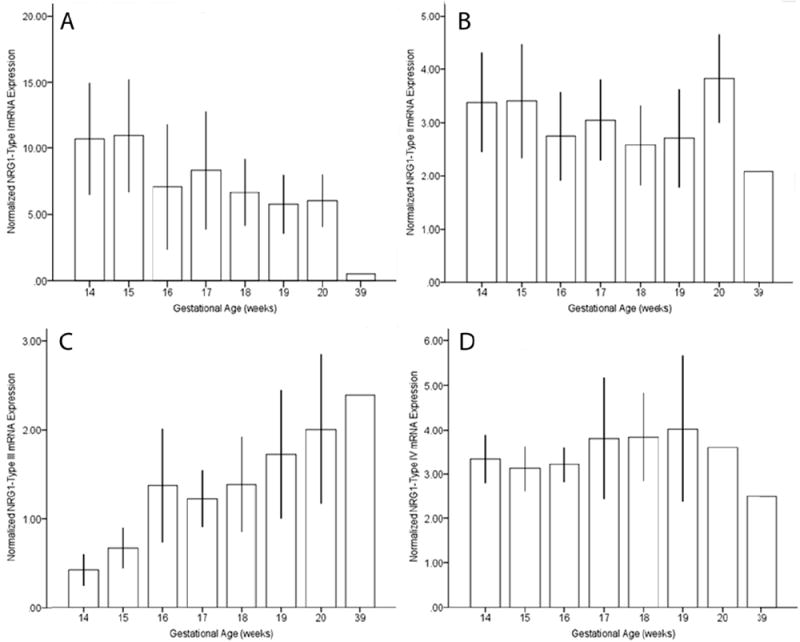
Figure 1
Figure 1. Temporal dynamics of NRG1 type I-IV mRNA expression in the human prefrontal cortex during fetal brain development
Quantitative PCR analysis of NRG1 type I (Panel A), type II (Panel B), type III (Panel C) and type IV (Panel D) mRNA expression in human fetal prefrontal cortex from gestational ages 14-39 weeks. (Gestational age (weeks) 14, n=4; 15, n=3; 16, n=2; 17, n=5; 18, n=12; 19, n=12; 20, n=2; 39, n=1). Data represent mean and standard deviation. Data are normalized to the geometric mean of three housekeeping genes (β-actin, GAPDH, PBGD).
Figure 2
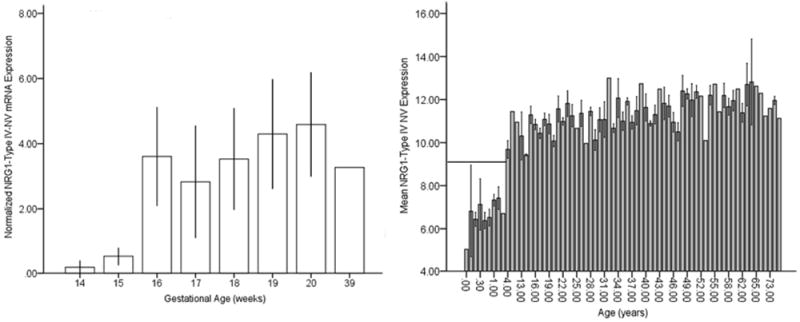
Figure 2. Temporal dynamics of NRG1-IVNV mRNA expression in the human prefrontal cortex during fetal and postnatal life
Quantitative PCR analysis of NRG1-IVNV mRNA expression in human fetal prefrontal cortex from gestational ages 14-39 weeks (Gestational age (weeks) 14, n=4; 15, n=3; 16, n=2; 17, n=5; 18, n=12; 19, n=12; 20, n=2; 39, n=1) (Panel A), and dorsolateral prefrontal cortex from postnatal samples ranging in age from 0-83 years (n=195) (Panel B). In Panel A data represent quantitative mean mRNA normalized to the geometric mean of three housekeeping genes (β-actin, GAPDH, PBGD), in Panel B data represent normalized ΔCT values. In Panel B, the bar graph is inverse to the relative amounts of NRG1-IVNV expression; higher bars indicate lower expression since the figure uses Ct values. Samples with Ct values greater than 31 were denoted as having undetectable levels and not included in the regression analysis. Absence of detectable NRG1-IVNV expression is observed after 3 years of age and denoted by the black bar.
Figure 3
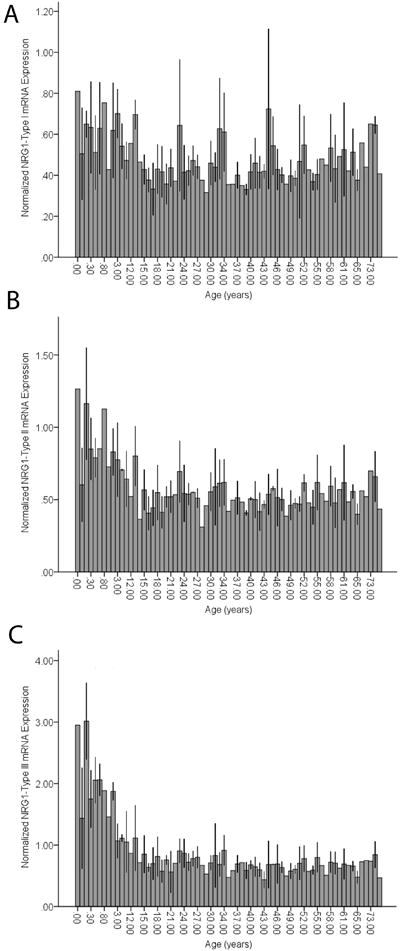
Figure 3. Temporal dynamics of NRG1 isoform expression during postnatal human brain development and aging
Quantification of human NRG1 Type I (Panel A), II (Panel B) and III (Panel C) isoform expression by real-time PCR in human dorsolateral prefrontal cortex across the postnatal lifespan, ranging in age from 0-83 years (n=189, Note. RNA from 6 samples used in Fig.2 panel B were not available for study). Data represent quantitative mean and standard deviation mRNA expression normalized to the geometric mean of three housekeeping genes (β-actin, GAPDH, PBGD).
Figure 4
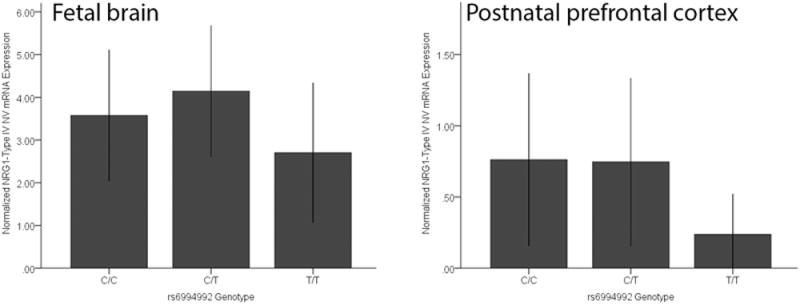
Figure 4. Association between rs6994992 genotype and NRG1-IVNV variant expression
Effect of rs6994992 genotype on NRG1-IVNV expression in fetal brain (Genotype C/C, n=8; C/T, n=20; T/T, n=6) is shown in Panel A and in postnatal prefrontal cortex (ages 0-3 years), Panel B (Genotype C/C, n=7; C/T, n=14; T/T, n=2). Subjects homozygous for the risk allele at rs6994992 (T) in both age groups have the lowest level of NRG1-IVNV mRNA expression. Data represent the mean and standard deviation NRG1-IVNV mRNA expression. Panel B shows normalized expression relative to CC genotype (fold change=2-ΔΔCT).
Figure 5
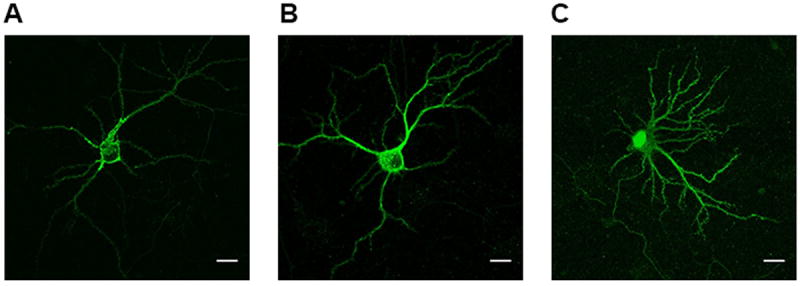
Figure 5. Subcellular localization of NRG1-IV-β1a and NRG1-IVNV in rat primary hippocampal neurons
Rat hippocampal neurons expressing N-terminal c-Myc tagged human NRG1-I-β1 (Panel A), NRG1-IV-β1a (Panel B), or NRG1-IVNV (Panel C) were stained with a c-Myc antibody to determine subcellular protein distribution. NRG1-I-β1 and NRG1-IV-β1a proteins are expressed predominantly at the cell membrane and dendritic processes; whereas NRG1-IVNV is highly localized to the nucleus. Scale bar represents 20μM.

Comment in

References

    1. Falls DL. Neuregulins: functions, forms, and signaling strategies. Exp Cell Res. 2003;284:14–30. - PubMed
    1. Steinthorsdottir V, Stefansson H, Ghosh S, Birgisdottir B, Bjornsdottir S, Fasquel AC, Olafsson O, Stefansson K, Gulcher JR. Multiple novel transcription initiation sites for NRG1. Gene. 2004;342:97–105. - PubMed
    1. Mei L, Xiong WC. Neuregulin 1 in neural development, synaptic plasticity and schizophrenia. Nat Rev Neurosci. 2008;9:437–452. - PMC - PubMed
    1. Liu X, Bates R, Yin DM, Shen C, Wang F, Su N, Kirov SA, Luo Y, Wang JZ, Xiong WC, Mei L. Specific regulation of NRG1 isoform expression by neuronal activity. J Neurosci. 2011;31:8491–8501. - PMC - PubMed
    1. Deakin IH, Law AJ, Oliver PL, Schwab MH, Nave KA, Harrison PJ, Bannerman DM. Behavioural characterization of neuregulin 1 type I overexpressing transgenic mice. Neuroreport. 2009;20:1523–1528. - PMC - PubMed

Publication types

MeSH terms

LinkOut - more resources