Treatment progress indicator: application of a new assessment tool to objectively monitor the therapeutic progress of patients with depression, anxiety, or behavioral health impairment
- PMID: 24937147
- PMCID: PMC4116266
- DOI: 10.7812/TPP/13-091
Treatment progress indicator: application of a new assessment tool to objectively monitor the therapeutic progress of patients with depression, anxiety, or behavioral health impairment
Abstract
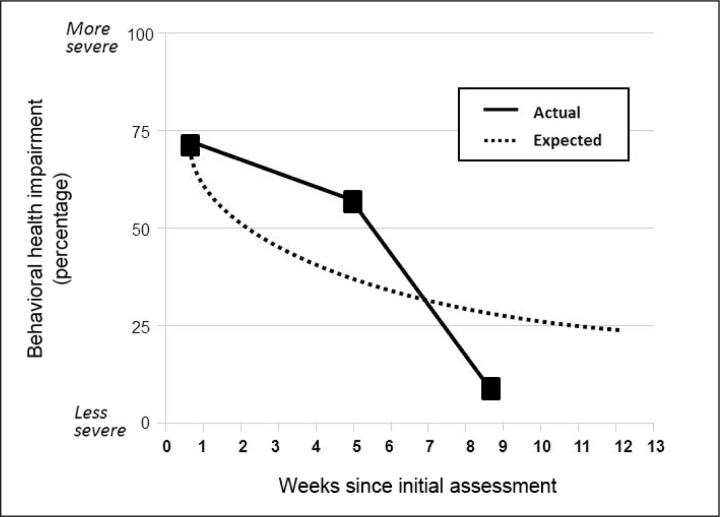
Depression, anxiety, and behavioral health impairment are common in the US. Efforts to treat patients with depression, anxiety, and chemical dependency are surpassed by the great demand for psychiatrist and therapist appointments. Unlike other specialties, psychiatry lacks a vital sign or tests (eg, blood pressure for hypertension and hemoglobin A1c for diabetes) to objectively measure a patient's response to therapy. A new tool called the Treatment Progress Indicator (TPI) appears to offer clinicians an objective approach to assess patients and to monitor therapy over time. The TPI report shows an Expected Treatment Response that allows clinicians to compare their patients' responses to therapy with those of a cohort of patients with a similar diagnosis and severity. The TPI allows for objective population-level management of disease. This should result in sharing of best practices that will lead to more effective and efficient care plans. Widespread implementation of the TPI has the potential to improve the time required to diagnose conditions and triage patients. As a result, implementation of the tool has the potential to improve behavioral health access and affordability.
Figures
References
-
- Kasper J, O’Malley Watts M, Lyons B. Chronic disease and co-morbidity among dual eligibles: implications for patterns of Medicaid and Medicare service use and spending. Washington, DC: The Kaiser Commission on Medicaid and the Uninsured; 2010. Jul, Pub no. 8081.
-
- Moussavi S, Chatterji S, Verdes E, Tandon A, Patel V, Ustun B. Depression, chronic diseases, and decrements in health: results from the World Health Surveys. Lancet. 2007 Sep;370(9590):851–8. DOI: http://dx.doi.org/10.1016/S0140-6736(07)61415-9. - DOI - PubMed
-
- Wang PS, Simon GE, Kessler RC. Making the business case for enhanced depression care: the National Institute of Mental Health-Harvard Work Outcomes Research and Cost-effectiveness Study. J Occup Environ Med. 2008 Apr;50(4):468–75. DOI: http://dx.doi.org/10.1097/JOM.0b013e31816a8931. - DOI - PubMed
-
- Katon W. The impact of depression on workplace functioning and disability costs. Am J Manag Care. 2009 Dec;15(11 Suppl):S322–7. - PubMed
-
- Daumit GL, Anthony CB, Ford DE, et al. Pattern of mortality in a sample of Maryland residents with severe mental illness. Psychiatry Res. 2010 Apr 30;176(2–3):242–5. DOI: http://dx.doi.org/10.1016/j.psychres.2009.01.006. - DOI - PMC - PubMed
MeSH terms
LinkOut - more resources
Full Text Sources
Other Literature Sources
Medical
Research Materials
Miscellaneous