


The efficacy of a behavioral activation intervention among depressed US Latinos with limited English language proficiency: study protocol for a randomized controlled trial
- PMID: 24938081
- PMCID: PMC4074338
- DOI: 10.1186/1745-6215-15-231
The efficacy of a behavioral activation intervention among depressed US Latinos with limited English language proficiency: study protocol for a randomized controlled trial
Abstract
Background: Major depressive disorder is highly prevalent among Latinos with limited English language proficiency in the United States. Although major depressive disorder is highly treatable, barriers to depression treatment have historically prevented Latinos with limited English language proficiency from accessing effective interventions. The project seeks to evaluate the efficacy of behavioral activation treatment for depression, an empirically supported treatment for depression, as an intervention that may address some of the disparities surrounding the receipt of efficacious mental health care for this population.
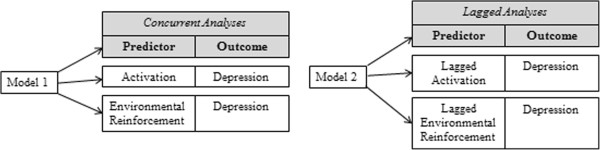
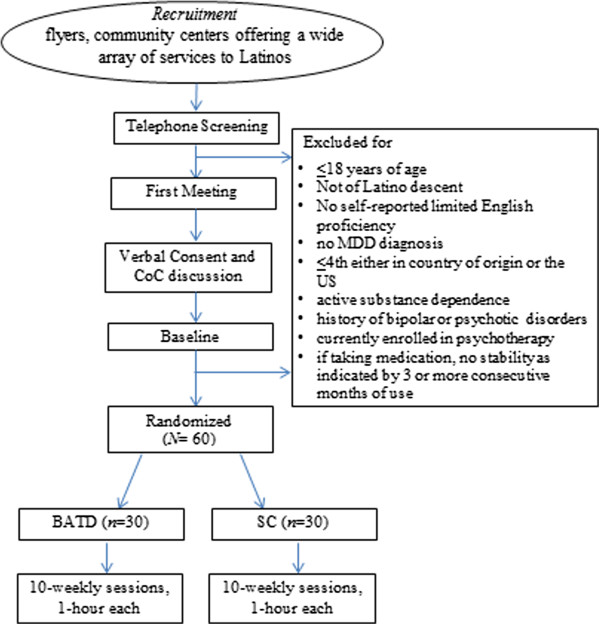
Methods/design: Following a pilot study of behavioral activation treatment for depression with 10 participants which yielded very promising results, the current study is a randomized control trial testing behavioral activation treatment for depression versus a supportive counseling treatment for depression. We are in the process of recruiting 60 Latinos with limited English language proficiency meeting criteria for major depressive disorder according to the Diagnostic and Statistical Manual of Mental Disorders 4th and 5th Edition for participation in a single-center efficacy trial. Participants are randomized to receive 10 sessions of behavioral activation treatment for depression (n = 30) or 10 sessions of supportive counseling (n = 30). Assessments occur prior to each session and at 1 month after completing treatment. Intervention targets include depressive symptomatology and the proposed mechanisms of behavioral activation treatment for depression: activity level and environmental reward. We will also examine other factors related to treatment outcome such as treatment adherence, treatment satisfaction, and therapeutic alliance.
Discussion: This randomized controlled trial will allow us to determine the efficacy of behavioral activation treatment for depression in a fast-growing, yet highly underserved population in US mental health services. The study is also among the first to examine the effect of the proposed mechanisms of change of behavioral activation treatment for depression (that is, activity level and environmental reward) on depression over time. To our knowledge, this is the first randomized controlled trial to compare an empirical-supported treatment to a control supportive counseling condition in a sample of depressed, Spanish-speaking Latinos in the United States.
Trial registration: Clinical Trials Register: NCT01958840; registered 8 October 2013.
Figures
References
-
- Mendelson T, Rehkopf DH, Kubzansky LD. Depression among Latinos in the United States: a meta-analytic review. J Consult Clin Psychol. 2008;76:355–366. - PubMed
-
- Kessler RC, Berglund P, Demler O, Jin R, Koretz D, Merikangas K, Rush J, Walters EE, Wang PS. The epidemiology of major depressive disorder: results from the National Comorbidity Survey Replication (NCS-R) JAMA. 2003;289:3095–3105. - PubMed
-
- Vega WA, Kolody B, Aguilar-Gaxiola S, Alderete E, Catalano R, Caraveo-Anduaga J. Lifetime prevalence of DSM-III-R psychiatric disorders among urban and rural Mexican Americans in California. Arch Gen Psychiatry. 1998;55:771–778. - PubMed
-
- Folsom D, Gilmer T, Barrio C, Moore D, Bucardo J, Lindamer L, Garcia P, Hawthorne W, Hough R, Patterson T, Jeste DV. A longitudinal study of the use of mental health services by persons with serious mental illness: do Spanish-speaking Latinos differ from English-speaking Latinos and Caucasians? Am J Psychiatry. 2007;164:1173–1180. - PubMed
Publication types
MeSH terms
Associated data
Grants and funding
LinkOut - more resources
Full Text Sources
Other Literature Sources
Medical
