Comparative effects of two different forms of selenium on oxidative stress biomarkers in healthy men: a randomized clinical trial
- PMID: 24938534
- PMCID: PMC4125492
- DOI: 10.1158/1940-6207.CAPR-14-0042
Comparative effects of two different forms of selenium on oxidative stress biomarkers in healthy men: a randomized clinical trial
Abstract
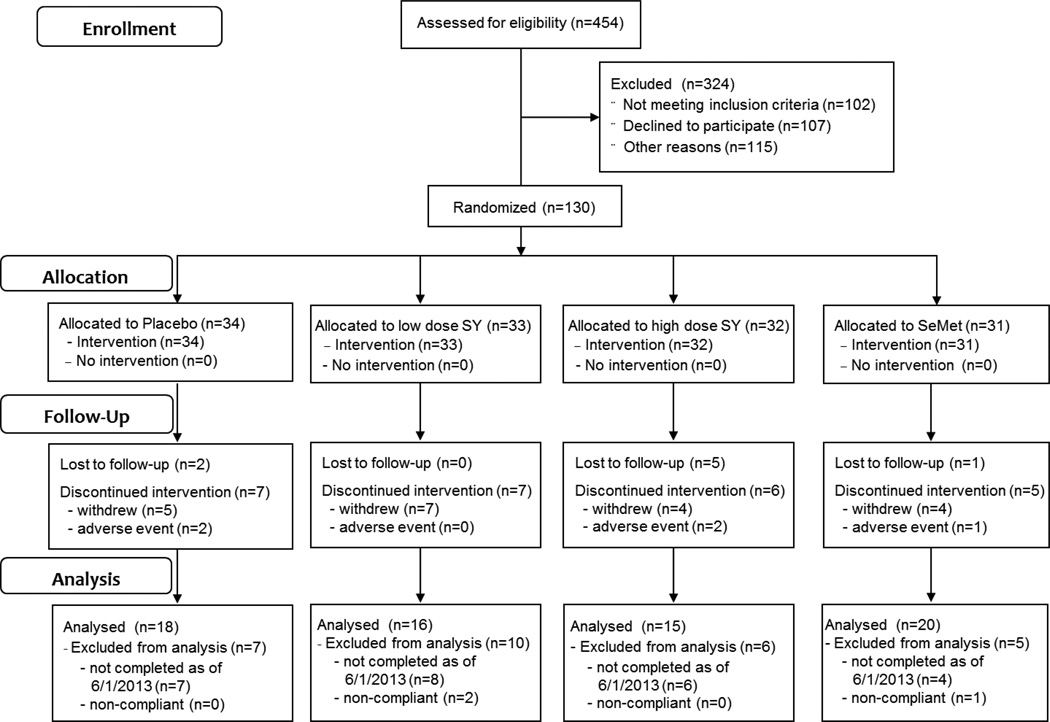
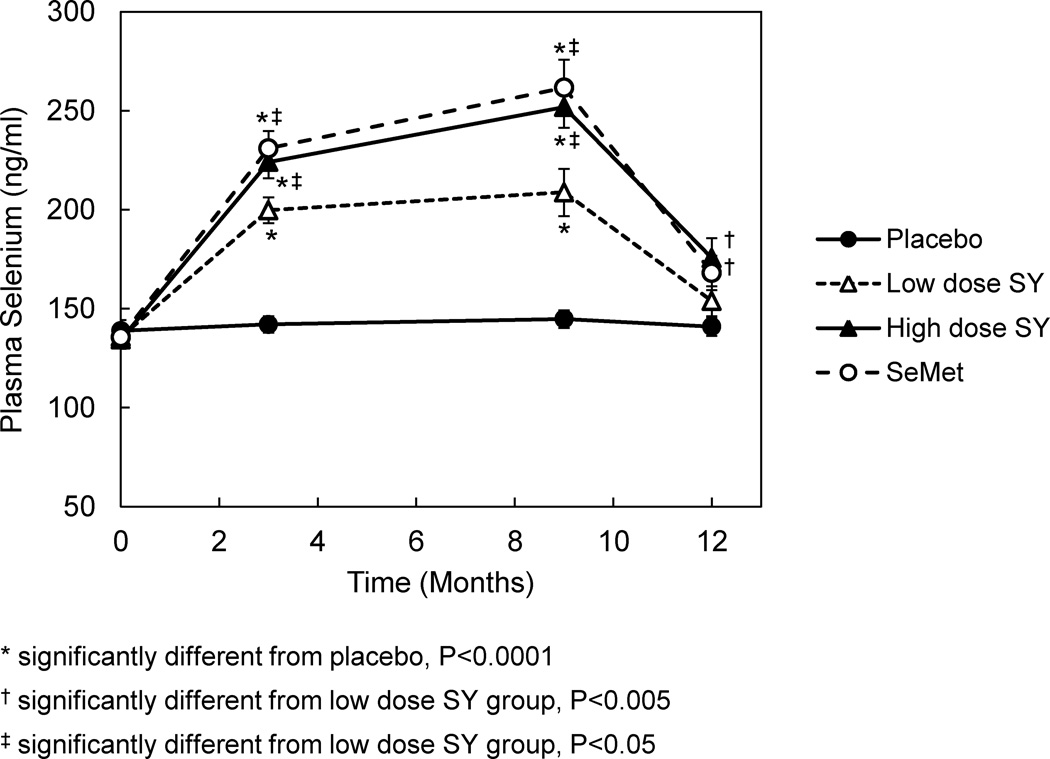
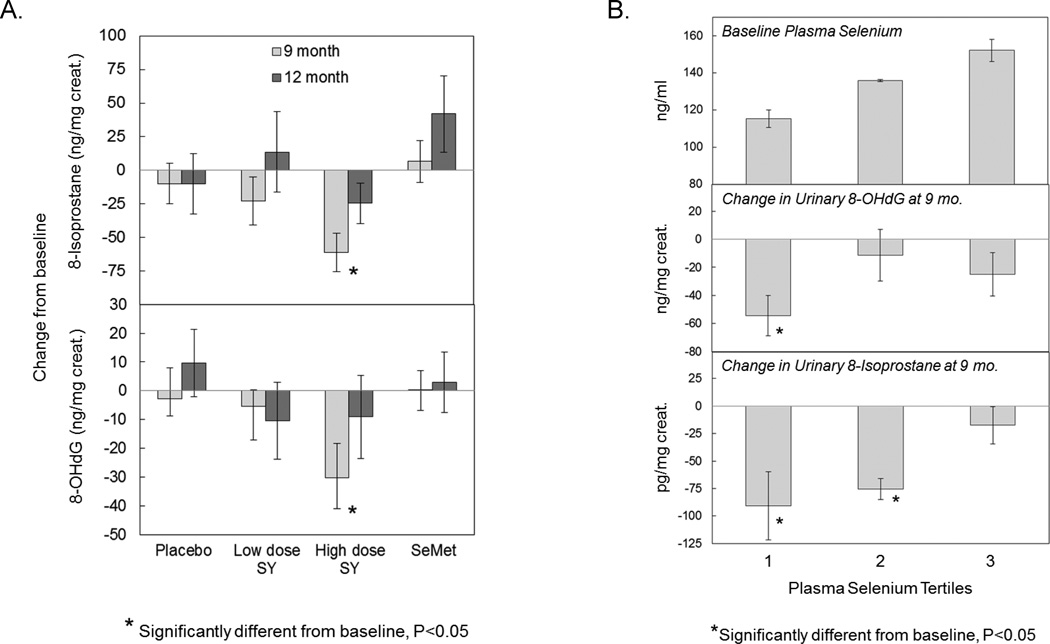
Epidemiologic and laboratory studies indicate that dietary selenium protects against prostate cancer. Results from clinical trials suggest that selenium-enriched yeast (SY) but not selenomethionine (SeMet) may be effective at reducing prostate cancer risk. Our objectives were to directly compare for the first time the effects of SeMet and SY on prostate cancer relevant biomarkers in men. We performed a randomized double blind, placebo-controlled trial of SY (200 or 285 μg/day) and SeMet (200 μg/day) administered for 9 months in 69 healthy men. Primary endpoints included blood levels of selenium-containing compounds and oxidative stress biomarkers [urine 8-hydroxy-2'-deoxyguanosine (8-OHdG) and 8-iso-prostaglandin-F2α (8-iso-PGF2α) and blood glutathione (GSH)]. Secondary endpoints included plasma glucose and PSA levels. Compliance was high in all groups (>95%). Plasma selenium levels were increased 93%, 54%, and 86% after 9 months in SeMet and low- and high-dose SY groups, respectively, and returned to baseline levels after a 3-month washout (P < 0.05). Levels of 8-OHdG and 8-iso-PGF2α were decreased 34% and 28%, respectively, after 9 months in the high-dose SY group (P < 0.05). These decreases were greatest in individuals with low baseline plasma levels of selenium (<127 ng/mL). No changes in serum PSA or blood glucose and GSH were observed. Overall, we showed for the first time, reductions in biomarkers of oxidative stress following supplementation with SY but not SeMet in healthy men. These findings suggest that selenium-containing compounds other than SeMet may account for the decrease in oxidative stress.
Trial registration: ClinicalTrials.gov NCT01112449.
©2014 American Association for Cancer Research.
Conflict of interest statement
Figures
Comment in
-
Selenium and prostate cancer prevention: what next--if anything?Cancer Prev Res (Phila). 2014 Aug;7(8):781-5. doi: 10.1158/1940-6207.CAPR-14-0197. Epub 2014 Jul 3. Cancer Prev Res (Phila). 2014. PMID: 24994662
References
-
- Siegel R, Naishadham D, Jemal A. Cancer statistics, 2013. CA Cancer J Clin. 2013;63:11–30. - PubMed
-
- Syed DN, Khan N, Afaq F, Mukhtar H. Chemoprevention of prostate cancer through dietary agents: progress and promise. Cancer Epidemiol Biomarkers Prev. 2007;16:2193–2203. - PubMed
-
- El-Bayoumy K. The protective role of selenium on genetic damage and on cancer. Mutation research. 2001;475:123–139. - PubMed
-
- El-Bayoumy K, Sinha R. Molecular chemoprevention by selenium: a genomic approach. Mutation research. 2005;591:224–236. - PubMed
Publication types
MeSH terms
Substances
Associated data
Grants and funding
LinkOut - more resources
Full Text Sources
Other Literature Sources
Medical
Research Materials
Miscellaneous