


Routine clinical evaluation of cerebrovascular reserve capacity using carbogen in patients with intracranial stenosis
- PMID: 24938845
- PMCID: PMC4118584
- DOI: 10.1161/STROKEAHA.114.005975
Routine clinical evaluation of cerebrovascular reserve capacity using carbogen in patients with intracranial stenosis
Abstract
Background and purpose: A promising method for identifying hemodynamic impairment that may serve as a biomarker for stroke risk in patients with intracranial stenosis is cerebrovascular reactivity (CVR) mapping using noninvasive MRI. Here, abilities to measure CVR safely in the clinic using hypercarbic hyperoxic (carbogen) gas challenges, which increase oxygen delivery to tissue, are investigated.
Methods: In sequence with structural and angiographic imaging, blood oxygenation level-dependent carbogen-induced CVR scans were performed in patients with symptomatic intracranial stenosis (n=92) and control (n=10) volunteers, with a subgroup of patients (n=57) undergoing cerebral blood flow-weighted pseudocontinuous arterial spin labeling CVR. Subjects were stratified for 4 substudies to evaluate relationships between (1) carbogen and hypercarbic normoxic CVR in healthy tissue (n=10), (2) carbogen cerebral blood flow CVR and blood oxygenation level-dependent CVR in intracranial stenosis patients (n=57), (3) carbogen CVR and clinical measures of disease in patients with asymmetrical intracranial atherosclerotic (n=31) and moyamoya (n=29) disease, and (4) the CVR scan and immediate and longer-term complications (n=92).
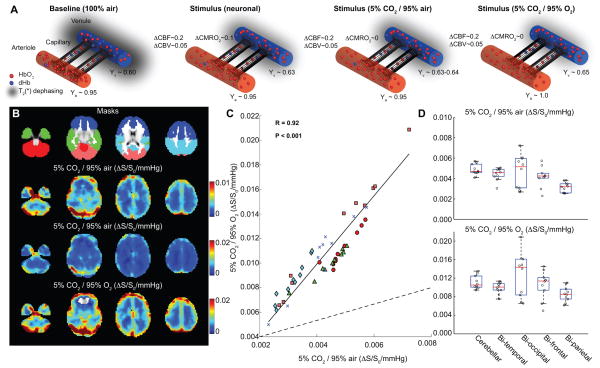
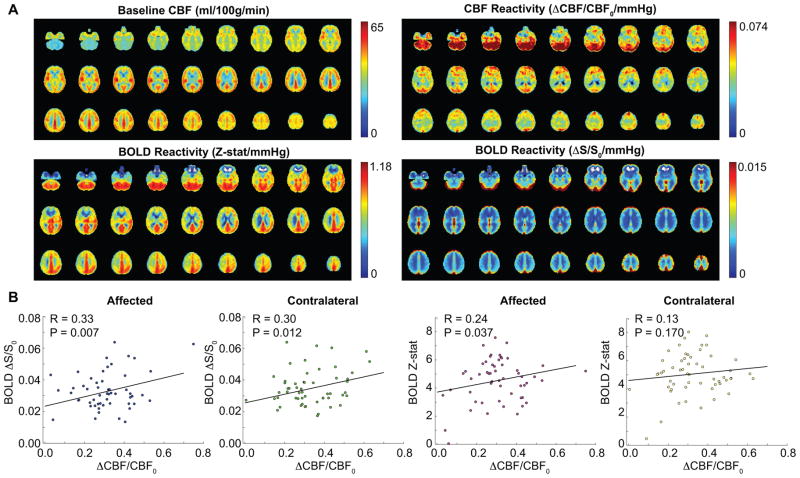
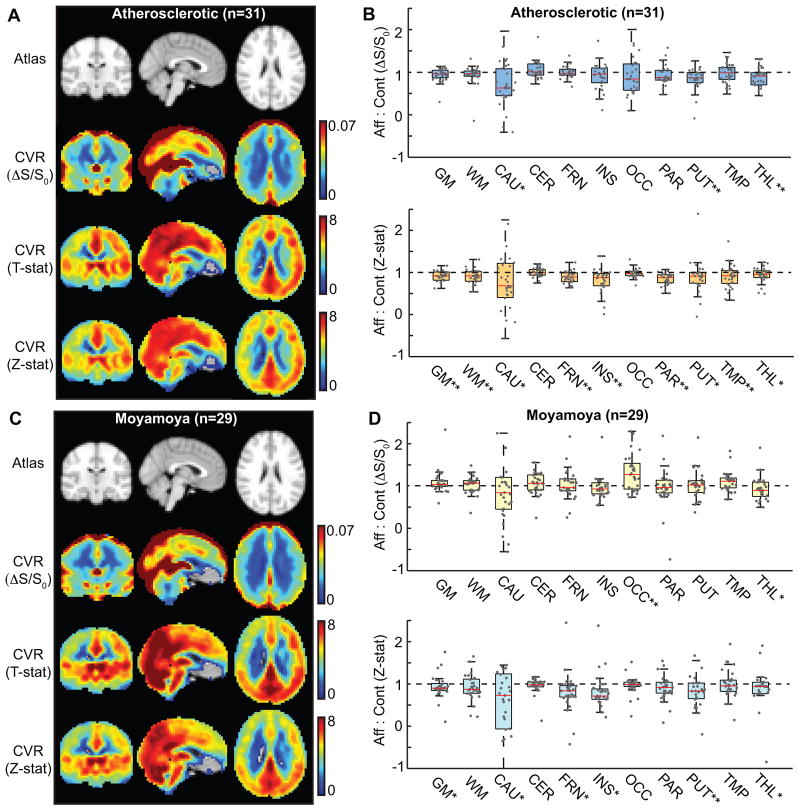
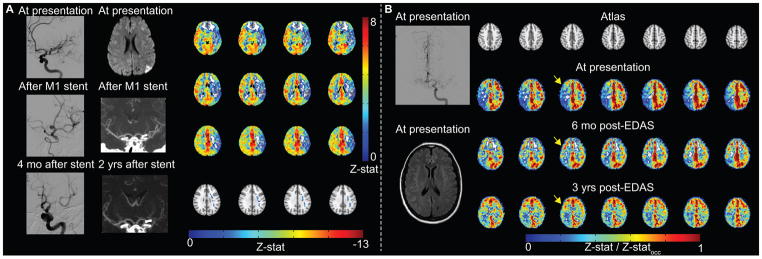
Results: Noninvasive blood oxygenation level-dependent carbogen-induced CVR values correlate with (1) lobar hypercarbic normoxic gas stimuli in healthy tissue (R=0.92; P<0.001), (2) carbogen-induced cerebral blood flow CVR in patients with intracranial stenosis (R=0.30-0.33; P<0.012), and (3) angiographic measures of disease severity both in atherosclerotic and moyamoya patients after appropriate processing. No immediate stroke-related complications were reported in response to carbogen administration; longer-term neurological events fell within the range for expected events in this patient population.
Conclusions: Carbogen-induced CVR elicited no added adverse events and provided a surrogate marker of cerebrovascular reserve consistent with intracranial vasculopathy.
Keywords: constriction, pathologic; hypercapnia; magnetic resonance imaging; regional blood flow; stroke.
© 2014 American Heart Association, Inc.
Figures
References
-
- Zaidat OO, Castonguay AC, Fitzsimmons BF, Woodward BK, Wang Z, Killer-Oberpfalzer M, et al. Design of the Vitesse Intracranial Stent Study for Ischemic Therapy (VISSIT) trial in symptomatic intracranial stenosis. J Stroke Cerebrovasc Dis. 2013;22:1131–1139. - PubMed
-
- Mazighi M, Tanasescu R, Ducrocq X, Vicaut E, Bracard S, Houdart E, et al. Prospective study of symptomatic atherothrombotic intracranial stenoses: the GESICA study. Neurology. 2006;66:1187–1191. - PubMed
Publication types
MeSH terms
Substances
Grants and funding
LinkOut - more resources
Full Text Sources
Other Literature Sources
