Acrolein- and 4-Aminobiphenyl-DNA adducts in human bladder mucosa and tumor tissue and their mutagenicity in human urothelial cells
- PMID: 24939871
- PMCID: PMC4116500
- DOI: 10.18632/oncotarget.1954
Acrolein- and 4-Aminobiphenyl-DNA adducts in human bladder mucosa and tumor tissue and their mutagenicity in human urothelial cells
Abstract
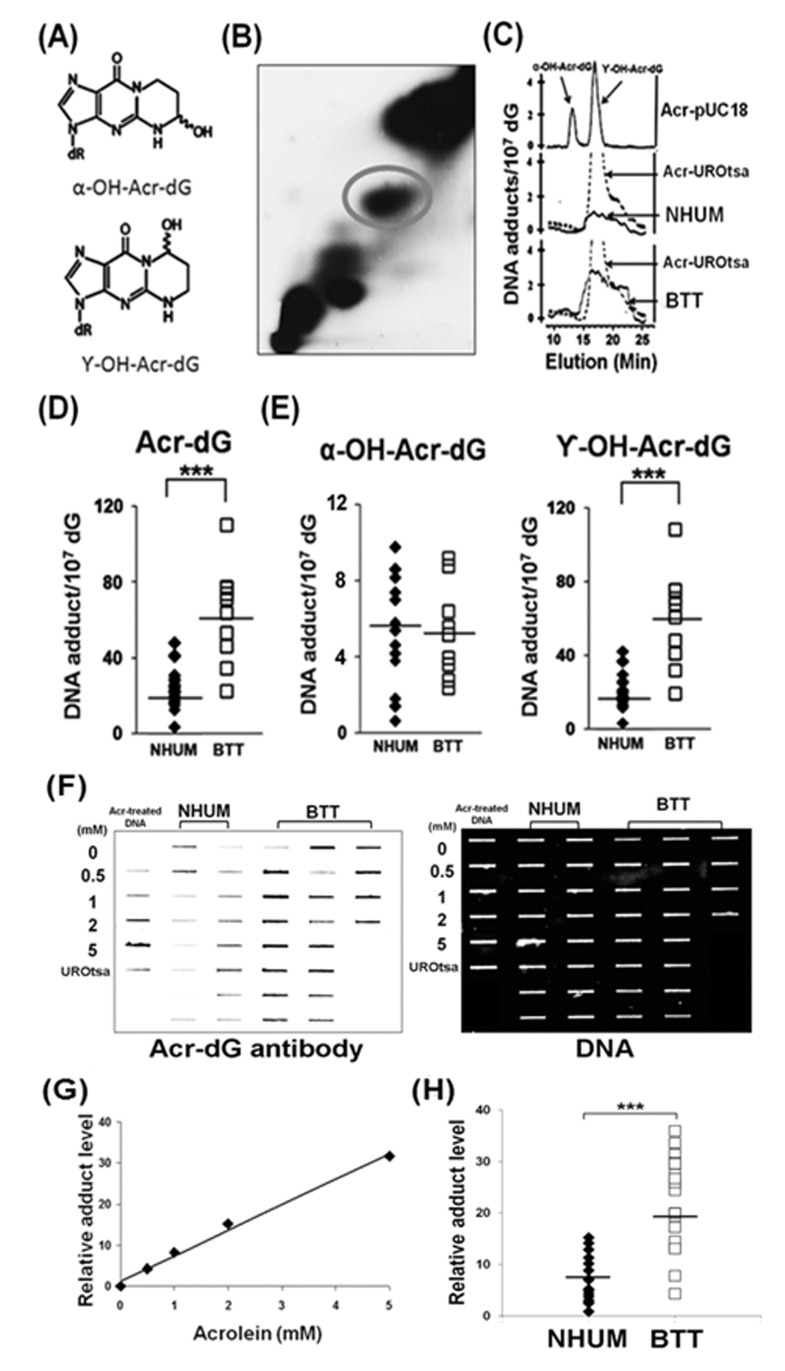
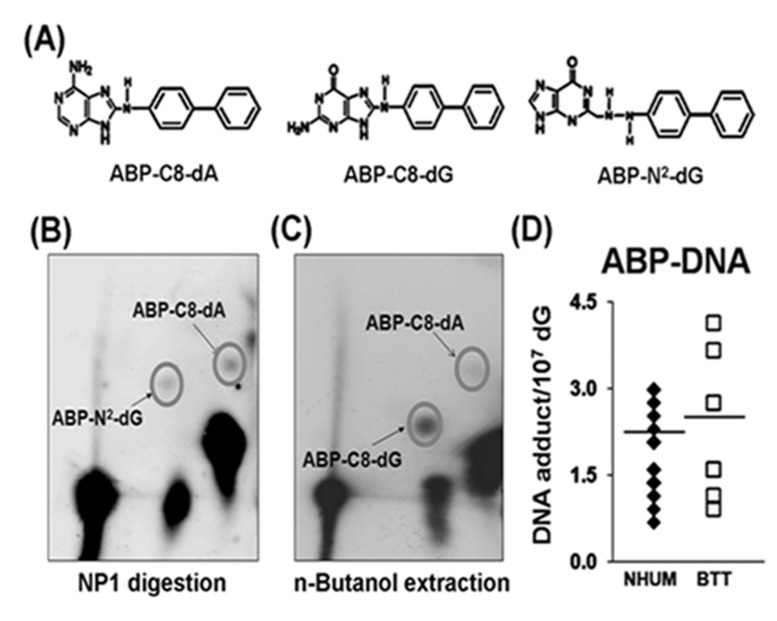
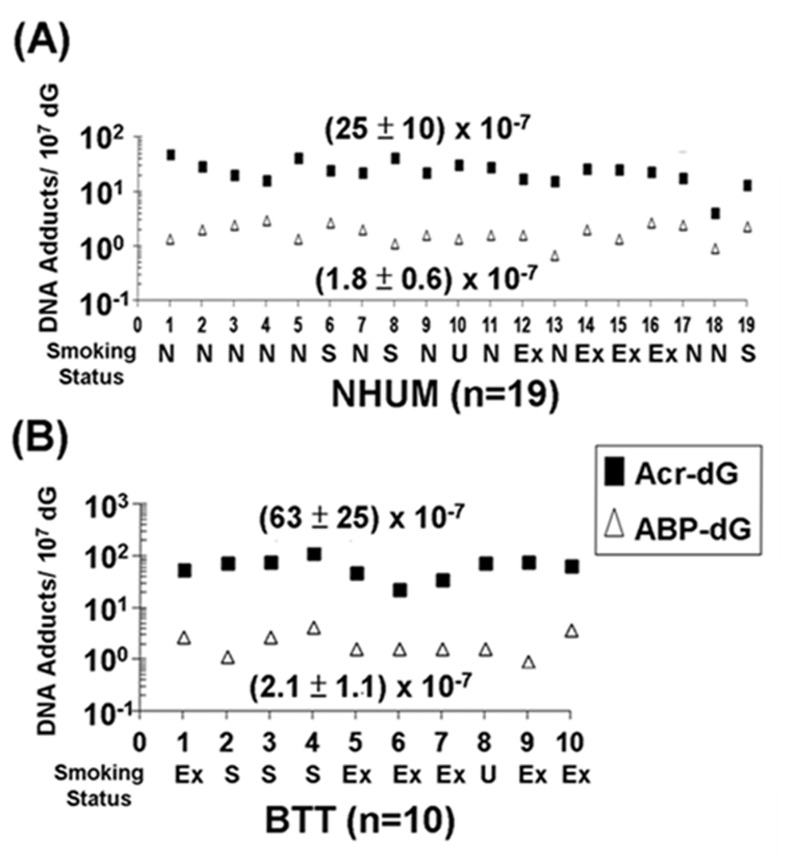
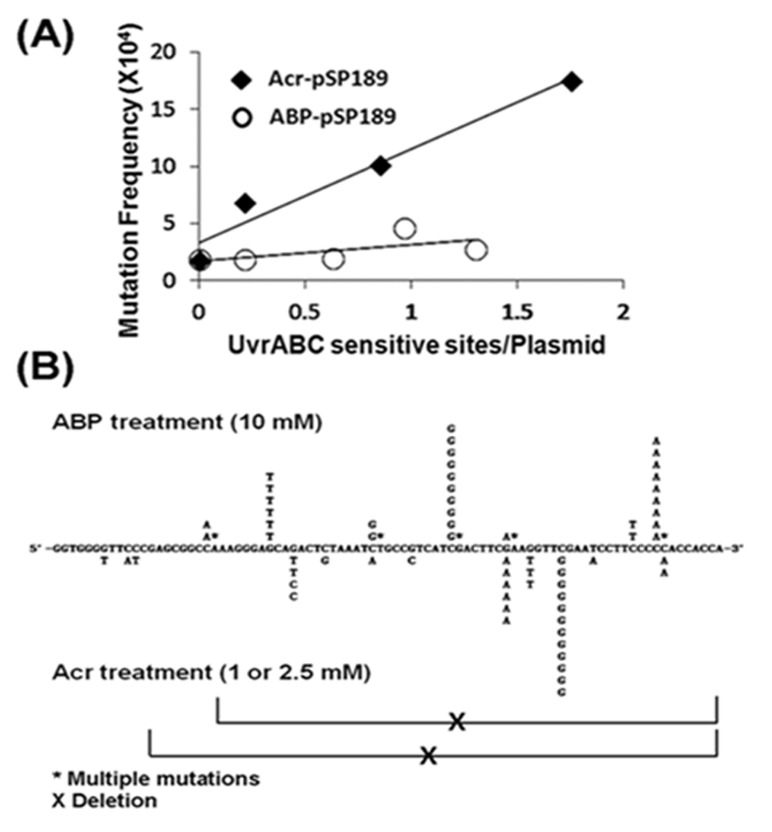
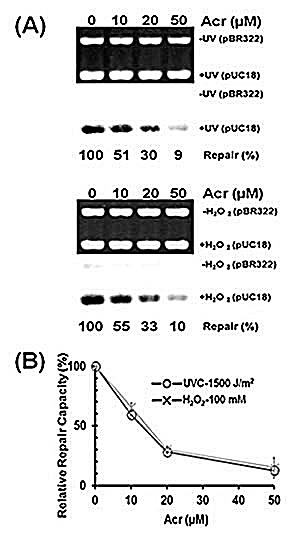
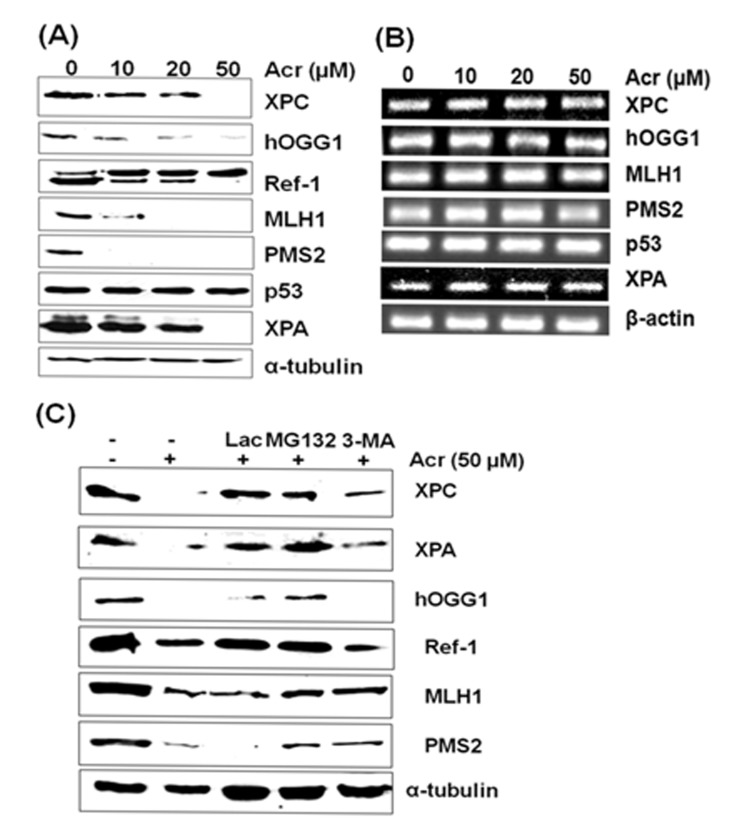
Tobacco smoke (TS) is a major cause of human bladder cancer (BC). Two components in TS, 4-aminobiphenyl (4-ABP) and acrolein, which also are environmental contaminants, can cause bladder tumor in rat models. Their role in TS related BC has not been forthcoming. To establish the relationship between acrolein and 4-ABP exposure and BC, we analyzed acrolein-deoxyguanosine (dG) and 4-ABP-DNA adducts in normal human urothelial mucosa (NHUM) and bladder tumor tissues (BTT), and measured their mutagenicity in human urothelial cells. We found that the acrolein-dG levels in NHUM and BTT are 10-30 fold higher than 4-ABP-DNA adduct levels and that the acrolein-dG levels in BTT are 2 fold higher than in NHUM. Both acrolein-dG and 4-ABP-DNA adducts are mutagenic; however, the former are 5 fold more mutagenic than the latter. These two types of DNA adducts induce different mutational signatures and spectra. We found that acrolein inhibits nucleotide excision and base excision repair and induces repair protein degradation in urothelial cells. Since acrolein is abundant in TS, inhaled acrolein is excreted into urine and accumulates in the bladder and because acrolein inhibits DNA repair and acrolein-dG DNA adducts are mutagenic, we propose that acrolein is a major bladder carcinogen in TS.
Figures
References
-
- Wu XR. Urothelial tumorigenesis: a tale of divergent pathways. Nat Rev Cancer. 2005;5(9):713–725. - PubMed
-
- Siegel R, Naishadham D, Jemal A. Cancer statistics, 2013. CA Cancer J Clin. 2013;63(1):11–30. - PubMed
-
- Talaska G. Aromatic amines and human urinary bladder cancer: exposure sources and epidemiology. J Environ Sci Health C Environ Carcinog Ecotoxicol Rev. 2003;21(1):29–43. - PubMed
Publication types
MeSH terms
Substances
Grants and funding
LinkOut - more resources
Full Text Sources
Other Literature Sources
Medical