Review
. 2014 Jul;260(1):35-49.
doi: 10.1111/imr.12186.

Anatomical localization of commensal bacteria in immune cell homeostasis and disease

Affiliations
Review

Anatomical localization of commensal bacteria in immune cell homeostasis and disease

Thomas C Fung et al. Immunol Rev. 2014 Jul.

Abstract

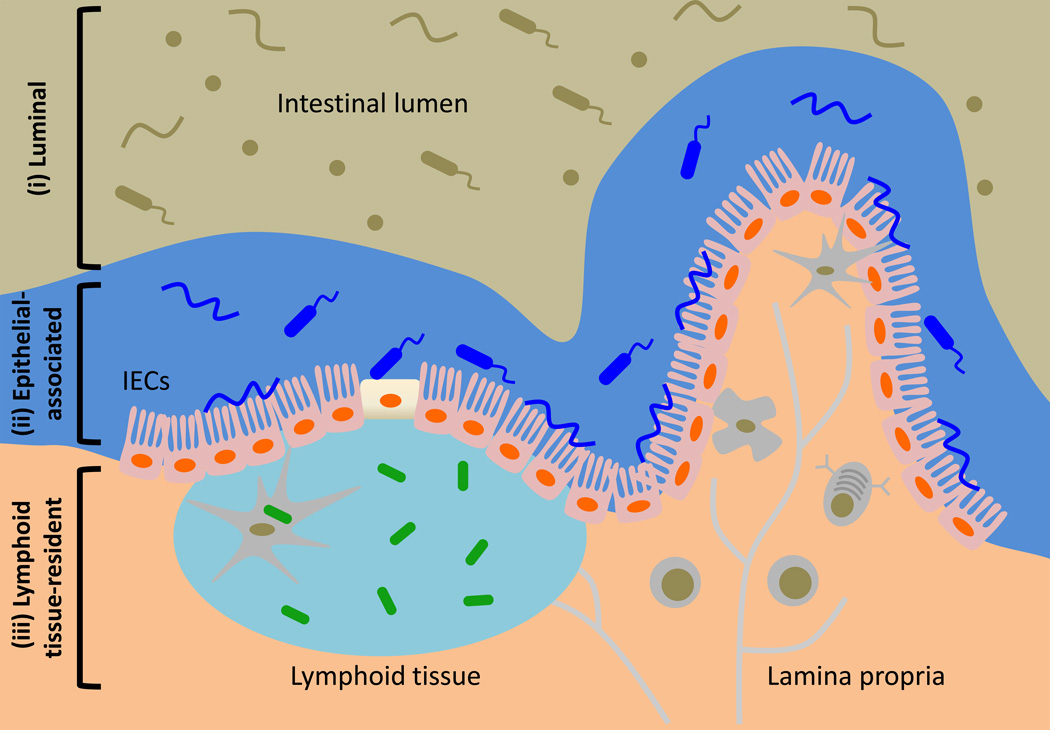
The mammalian gastrointestinal (GI) tract is colonized by trillions of beneficial commensal bacteria that are essential for promoting normal intestinal physiology. While the majority of commensal bacteria are found in the intestinal lumen, many species have also adapted to colonize different anatomical locations in the intestine, including the surface of intestinal epithelial cells (IECs) and the interior of gut-associated lymphoid tissues. These distinct tissue localization patterns permit unique interactions with the mammalian immune system and collectively influence intestinal immune cell homeostasis. Conversely, dysregulated localization of commensal bacteria can lead to inappropriate activation of the immune system and is associated with numerous chronic infectious, inflammatory, and metabolic diseases. Therefore, regulatory mechanisms that control proper anatomical containment of commensal bacteria are essential to maintain tissue homeostasis and limit pathology. In this review, we propose that commensal bacteria associated with the mammalian GI tract can be anatomically defined as (i) luminal, (ii) epithelial-associated, or (iii) lymphoid tissue-resident, and we discuss the role and regulation of these microbial populations in health and disease.

Keywords: T cells; bacterial; cytokines; inflammation; inflammatory bowel disease; mucosa.


Figures

Figure 1
Figure 1
Commensal bacteria in the mammalian GI tract can be classified by their anatomical localization as (i) luminal, (ii) epithelial-associated or (iii) lymphoid tissue-resident. Commensal bacteria are important for promoting normal host physiology. In the healthy mammals, most commensal bacteria occupy the lumen of the intestine while some are found associated with the intestinal epithelium. Recent studies have identified that commensal bacteria can also inhabit gut-associated lymphoid tissues in the steady state.
Figure 2
Figure 2
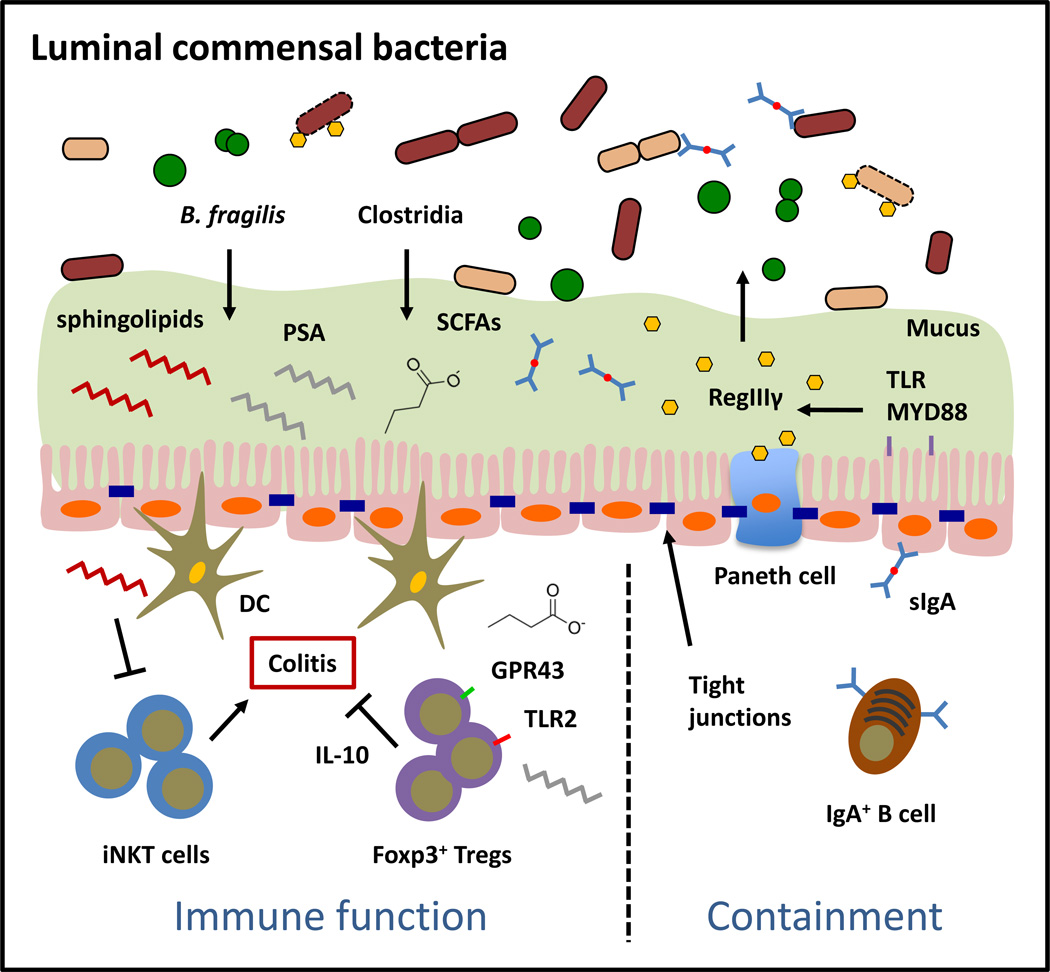
Luminal commensal bacteria comprise of the majority of commensal bacteria in the mammalian intestine and are physically separated from immune cells. Colonization of the GI tract by luminal commensal bacteria promotes tissue protective and inhibits pathological immune responses. Anatomical containment of luminal commensal populations is mediated by physical and biochemical barriers such as IECs, tight junctions, mucus, antimicrobial peptides (AMPs) and secretory immunoglobulin A.
Figure 3
Figure 3
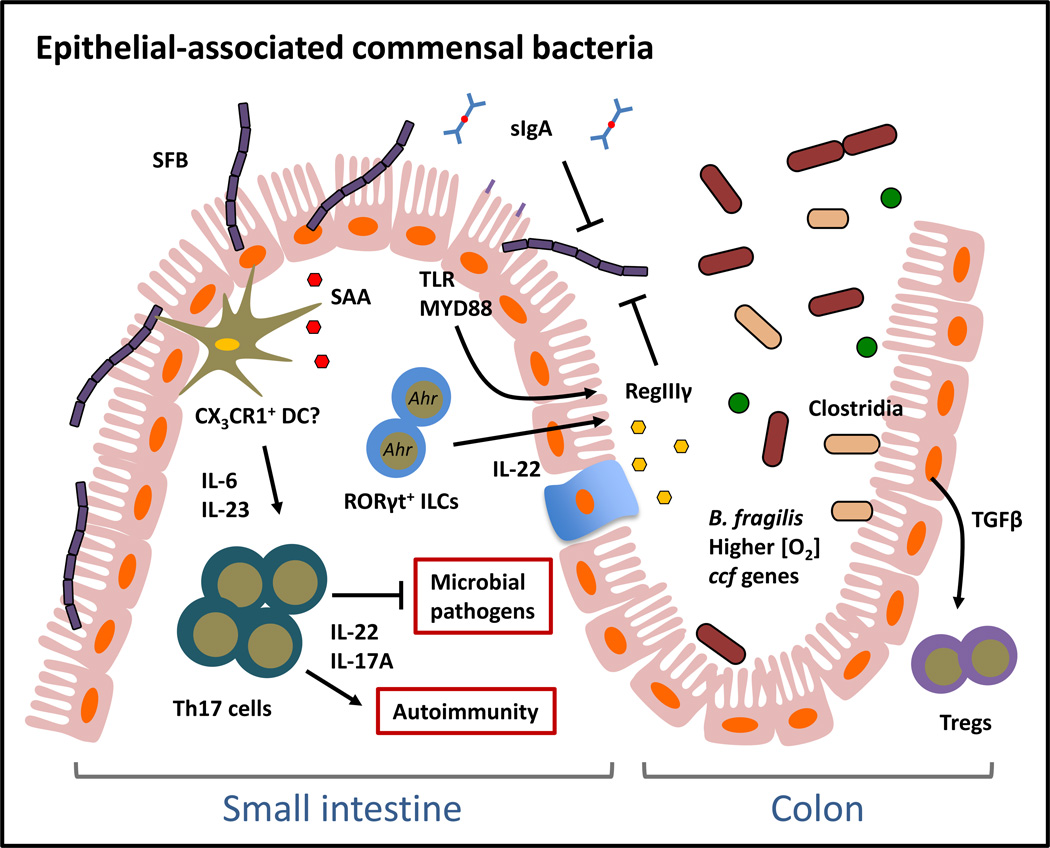
Colonization of the mammalian GI tract by epithelial-associated commensal bacteria promotes pro-inflammatory immune responses and is regulated by distinct host mechanisms. SFB is a model epithelial-associated commensal bacterium that colonizes the small intestine by adhering to IECs. SFB can promote pro-inflammatory immune responses that are associated with both pathogen immunity and autoimmunity. Some members of the luminal commensal flora such as B. fragilis and Clostridia can also colonize the epithelial surface of the colon and may interact with IECs.
Figure 4
Figure 4
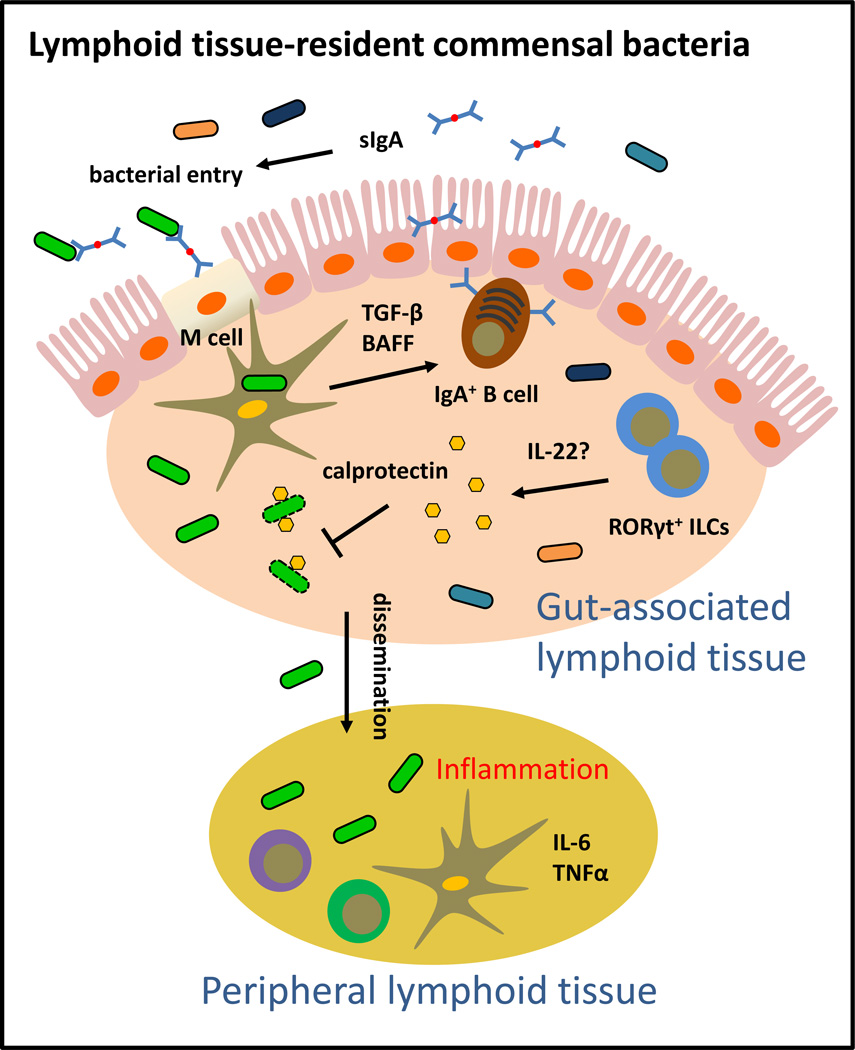
Lymphoid-tissue resident commensal bacteria can colonize gut-associated lymphoid tissues such as Peyer’s patches, isolated lymphoid follicles and mesenteric lymph nodes. Lymphoid tissue-resident commensal bacteria share many properties: they are typically aerobic, environmental microbes that are broadly resistant to antibiotics. One member of this group, Alcaligenes spp., is a potent inducer of intestinal IgA responses. Anatomical containment of Alcaligenes spp. is mediated by IL-22-producing RORγt+ innate lymphoid cells. Loss of this pathway results in dissemination of Alcaligenes spp., systemic inflammation and tissue pathology.

References

    1. Ley RE, Turnbaugh PJ, Klein S, Gordon JI. Microbial ecology: human gut microbes associated with obesity. Nature. 2006;444:1022–1023. - PubMed
    1. Turnbaugh PJ, Ley RE, Hamady M, Fraser-Liggett CM, Knight R, Gordon JI. The human microbiome project. Nature. 2007;449:804–810. - PMC - PubMed
    1. Buffie CG, Pamer EG. Microbiota-mediated colonization resistance against intestinal pathogens. Nature reviews Immunology. 2013;13:790–801. - PMC - PubMed
    1. Kamada N, Chen GY, Inohara N, Nunez G. Control of pathogens and pathobionts by the gut microbiota. Nature immunology. 2013;14:685–690. - PMC - PubMed
    1. Musso G, Gambino R, Cassader M. Interactions between gut microbiota and host metabolism predisposing to obesity and diabetes. Annual review of medicine. 2011;62:361–380. - PubMed