Review
. 2014 Sep;1839(9):743-50.
doi: 10.1016/j.bbagrm.2014.05.028. Epub 2014 Jun 3.

The epigenome of Trypanosoma brucei: a regulatory interface to an unconventional transcriptional machine

Affiliations
Review

The epigenome of Trypanosoma brucei: a regulatory interface to an unconventional transcriptional machine

Johannes P Maree et al. Biochim Biophys Acta. 2014 Sep.

Abstract

The epigenome represents a major regulatory interface to the eukaryotic genome. Nucleosome positions, histone variants, histone modifications and chromatin associated proteins all play a role in the epigenetic regulation of DNA function. Trypanosomes, an ancient branch of the eukaryotic evolutionary lineage, exhibit some highly unusual transcriptional features, including the arrangement of functionally unrelated genes in large, polymerase II transcribed polycistronic transcription units, often exceeding hundreds of kilobases in size. It is generally believed that transcription initiation plays a minor role in regulating the transcript level of genes in trypanosomes, which are mainly regulated post-transcriptionally. Recent advances have revealed that epigenetic mechanisms play an essential role in the transcriptional regulation of Trypanosoma brucei. This suggested that the modulation of gene activity, particularly that of pol I transcribed genes, is, indeed, an important control mechanism, and that the epigenome is critical in regulating gene expression programs that allow the successful migration of this parasite between hosts, as well as the continuous evasion of the immune system in mammalian hosts. A wide range of epigenetic signals, readers, writers and erasers have been identified in trypanosomes, some of which have been mapped to essential genetic functions. Some epigenetic mechanisms have also been observed to be unique to trypanosomes. We review recent advances in our understanding of epigenetic control mechanisms in T. brucei, the causative agent of African sleeping sickness, and highlight the utility of epigenetic targets in the possible development of new therapies for human African trypanosomiasis.

Keywords: African sleeping sickness; Chromatin; Epigenetics; Gene regulation; Transcription.


Figures

Figure 1
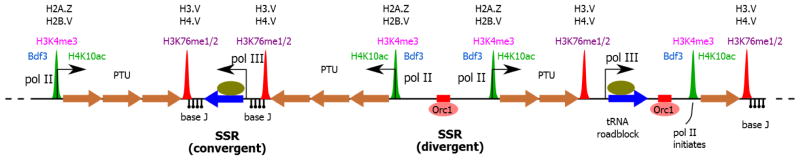
Figure 1. The epigenetic signals that demarcate transcription units and regulate the expression of genes in T. brucei
Pol II transcription initiates from weakly defined promoters in divergent SSRs as well as at some internal positions in PTUs. These initiation loci are enriched for TbBDF3, H4K10ac, H3K4me3 and the H2A.Z and H2B.V histone variants. Transcription proceeds through polycistronic units that may span hundreds of kilobases that contain functionally unrelated genes. Transcription terminates in a region enriched for the modified thymidine base J, H3K76me1/2, and the H3.V and H4.V histone variants. TTSs often contain an active pol III transcribed tRNA gene. Replication origins, nucleated by TbORC1, occur at the boundaries of PTUs and have an effect on the expression level of adjacent genes.
Figure 2
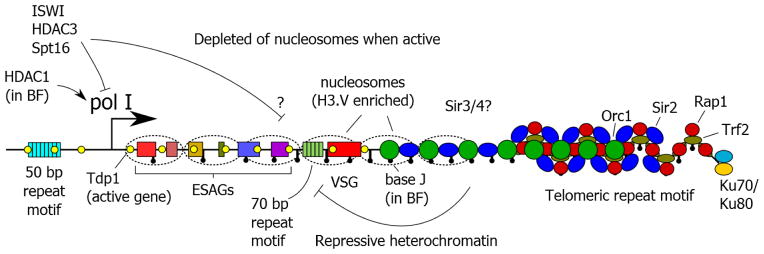
Figure 2. The epigenetic marks that define the transcriptional state of an ES
A repressive chromatin structure is formed by TbTRF2 and TbRAP1 (which may recruit Sir2) as well as TbORC1, propagating to sub-telomeric regions. It is not known whether other proteins fulfil the roles of yeast Sir3 and Sir4, for which orthologues are absent in T. brucei. Base J is present at an increasing density towards the telomere termini, and is required for ES silencing. Nucleosomes present on a silent ES are enriched for the transcriptional terminating variant H3.V, and are depleted on an active ES. The HMG box protein TbTDP1 is present on the active ES, and is associated with chromatin decondensation. The histone deacetylase TbHDAC3 and the chromatin remodeller TbISWI is required for efficient ES silencing, and TbHDAC1 is required for activated expression.
Figure 3
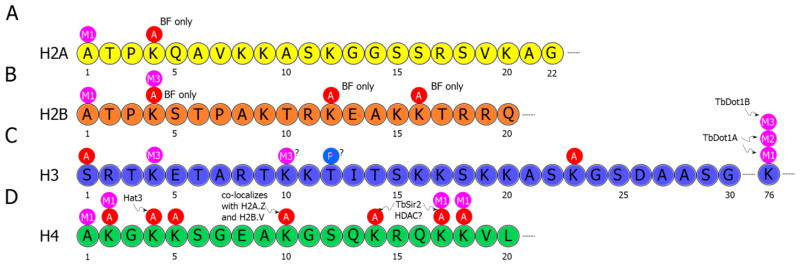
Figure 3. Epigenetic modifications of the T. brucei core histone N-terminal tails
Modifications mapped to specific residues and enzymes involved in the modulation of some modifications are shown. Life stage specific modifications of the parasite are also identified. It is not currently known whether H3K10 or H3K11 is the equivalent of the highly conserved H3K9 present in other eukaryotes, and whether H3T12 is the equivalent of H3S11, a known phosphorylation target. A = Acetylation, Me = Methylation, P = Phosphorylation.

References

    1. Hide G, Tait A. Molecular epidemiology of African sleeping sickness. Parasitology. 2009;136:1491–1500. doi: 10.1017/S0031182009990333. - DOI - PubMed
    1. Barry JD, Graham SV, Fotheringham M, Graham VS, Kobryn K, et al. VSG gene control and infectivity strategy of metacyclic stage Trypanosoma brucei. Mol Biochem Parasitol. 1998;91:93–105. - PubMed
    1. Daniels J-P, Gull K, Wickstead B. Cell biology of the trypanosome genome. Microbiol Mol Biol Rev. 2010;74:552–569. doi: 10.1128/MMBR.00024-10. - DOI - PMC - PubMed
    1. Kouzarides T. Chromatin modifications and their function. Cell. 2007;128:693–705. doi: 10.1016/j.cell.2007.02.005. - DOI - PubMed
    1. Fischle W, Wang Y, Allis CD. Histone and chromatin cross-talk. Curr Opin Cell Biol. 2003;15:172–183. doi: 10.1016/S0955-0674(03)00013-9. - DOI - PubMed

Publication types

LinkOut - more resources