


Predatory fish sounds can alter crab foraging behaviour and influence bivalve abundance
- PMID: 24943367
- PMCID: PMC4083791
- DOI: 10.1098/rspb.2014.0715
Predatory fish sounds can alter crab foraging behaviour and influence bivalve abundance
Abstract
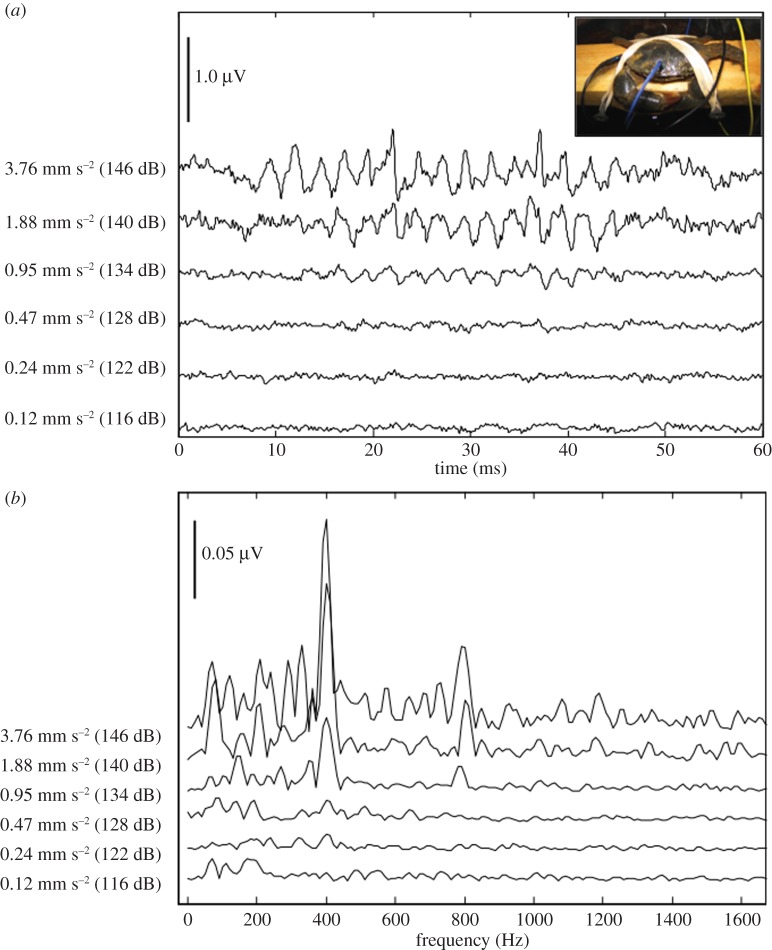
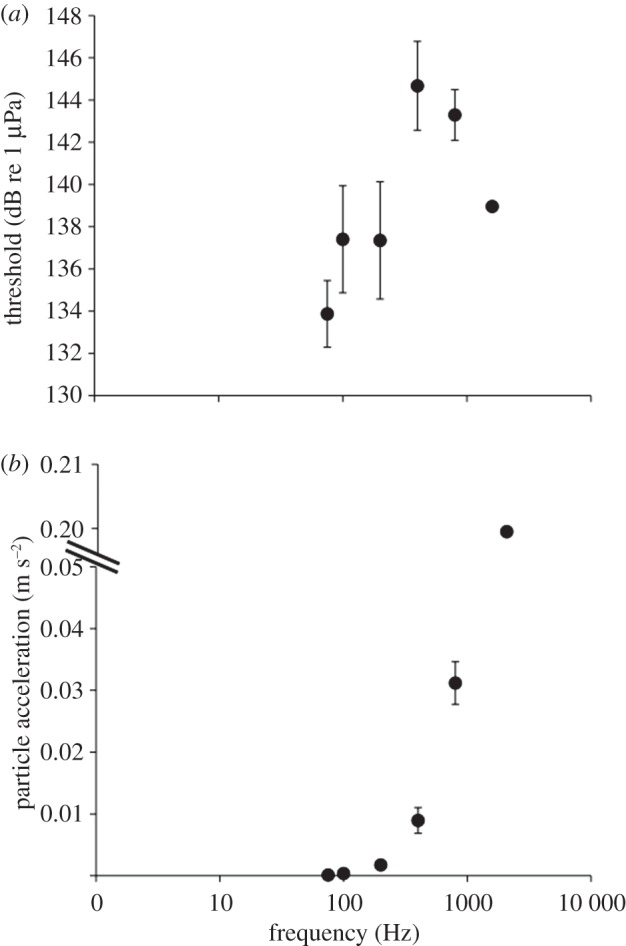
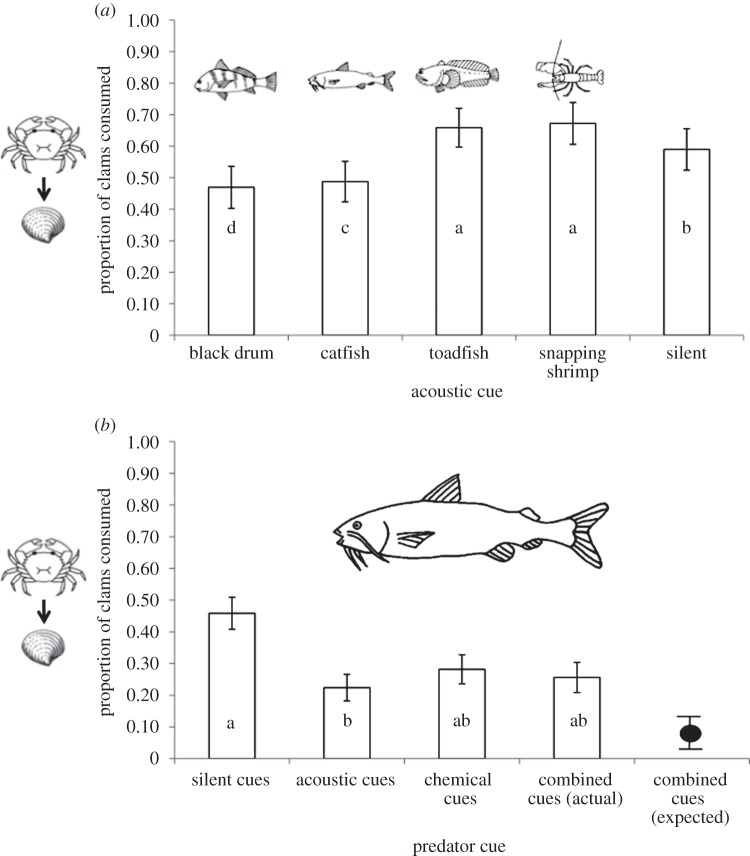
The risk of predation can have large effects on ecological communities via changes in prey behaviour, morphology and reproduction. Although prey can use a variety of sensory signals to detect predation risk, relatively little is known regarding the effects of predator acoustic cues on prey foraging behaviour. Here we show that an ecologically important marine crab species can detect sound across a range of frequencies, probably in response to particle acceleration. Further, crabs suppress their resource consumption in the presence of experimental acoustic stimuli from multiple predatory fish species, and the sign and strength of this response is similar to that elicited by water-borne chemical cues. When acoustic and chemical cues were combined, consumption differed from expectations based on independent cue effects, suggesting redundancies among cue types. These results highlight that predator acoustic cues may influence prey behaviour across a range of vertebrate and invertebrate taxa, with the potential for cascading effects on resource abundance.
Keywords: bioacoustics; invertebrate; non-consumptive effect; predation; trophic cascade.
© 2014 The Author(s) Published by the Royal Society. All rights reserved.
Figures
References
-
- Lima SL. 1998. Nonlethal effects in the ecology of predator-prey interactions. Bioscience 48, 25–34. ( 10.2307/1313225) - DOI
-
- Preisser EL, Bolnick DI, Benard MF. 2005. Scared to death? The effects of intimidation and consumption in predator–prey interactions. Ecology 86, 501–509. ( 10.1890/04-0719) - DOI
Publication types
MeSH terms
LinkOut - more resources
Full Text Sources
Other Literature Sources
