


'As above, so below' examining the interplay between emotion and the immune system
- PMID: 24943894
- PMCID: PMC4212945
- DOI: 10.1111/imm.12341
'As above, so below' examining the interplay between emotion and the immune system
Abstract
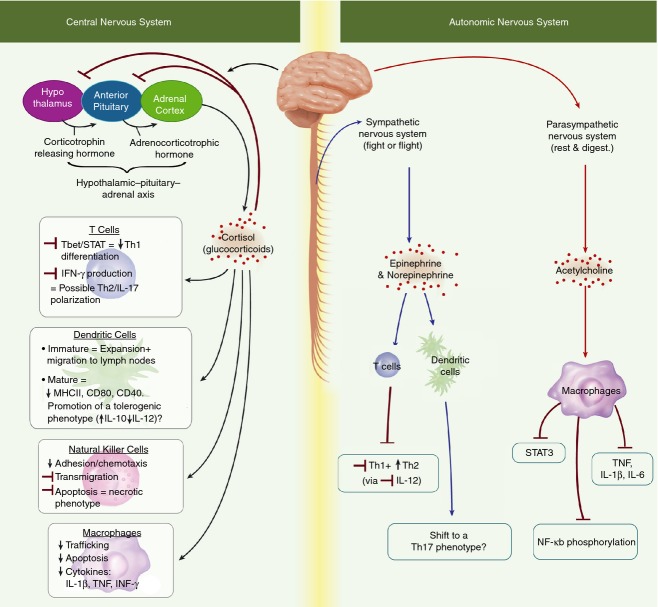
While the concept of a palpable relationship between our mental and physical well-being is certainly not new, it is only in the light of modern scientific research that we have begun to realize how deeply connected our emotional and immune states may be. We begin this review with a series of studies demonstrating how four fundamental emotional responses: anger, anxiety, mirth and relaxation are able modulate cytokine production and cellular responses to a variety of immune stimuli. These modulations are shown to be either detrimental or beneficial to a patient's health dependent on the context and duration of the emotion. We also discuss the reverse, highlighting research demonstrating how the loss of key immune cells such as T lymphocytes in clinical and animal studies can negatively impact both emotional well-being and cognition. Additionally, to give a more complete picture of the manifold pathways that link emotion and the immune system, we give a brief overview of the influence the digestive system has upon mental and immunological health. Finally, throughout this review we attempt to highlight the therapeutic potential of this burgeoning field of research in both the diagnosis and treatment of immune and disorders. As well as identifying some of the key obstacles the field must address in order to put this potential into practice.
Keywords: autoimmunity; emotion; immunosuppression; inflammation; mental health.
© 2014 John Wiley & Sons Ltd.
Figures
References
-
- Equitani F, Equitani F, Fernandez-Real J, Menichella G, Koch M, Calvani M, Nobili V, Mingrone G, Manco M. Bloodletting ameliorates insulin sensitivity and secretion in parallel to reducing liver iron in carriers of HFE gene mutations. Diabetes Care. 2008;31:3–8. - PubMed
-
- Steinman L. Elaborate interactions between the immune and nervous systems. Nat Immunol. 2004;5:575–81. - PubMed
-
- Ziemssen T, Kern S. Psychoneuroimmunology – cross-talk between the immune and nervous systems. J Neurol. 2007;254:II8–11. - PubMed
-
- Uvnäs-Moberg K. Oxytocin may mediate the benefits of positive social interaction and emotions. Psychoneuroendocrinology. 1998;23:819–35. - PubMed
Publication types
MeSH terms
LinkOut - more resources
Full Text Sources
Other Literature Sources
Medical
Research Materials
