


Green tea catechin, epigallocatechin-3-gallate, attenuates the cell viability of human non-small-cell lung cancer A549 cells via reducing Bcl-xL expression
- PMID: 24944597
- PMCID: PMC4061191
- DOI: 10.3892/etm.2014.1719
Green tea catechin, epigallocatechin-3-gallate, attenuates the cell viability of human non-small-cell lung cancer A549 cells via reducing Bcl-xL expression
Abstract
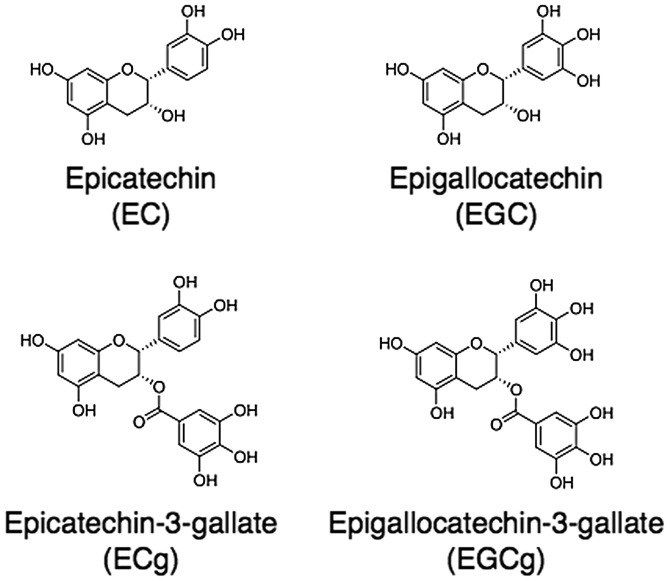
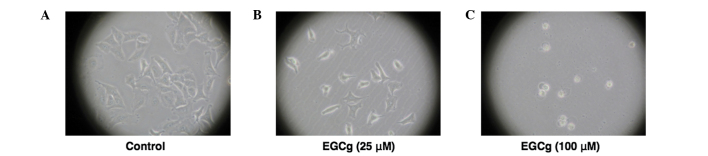
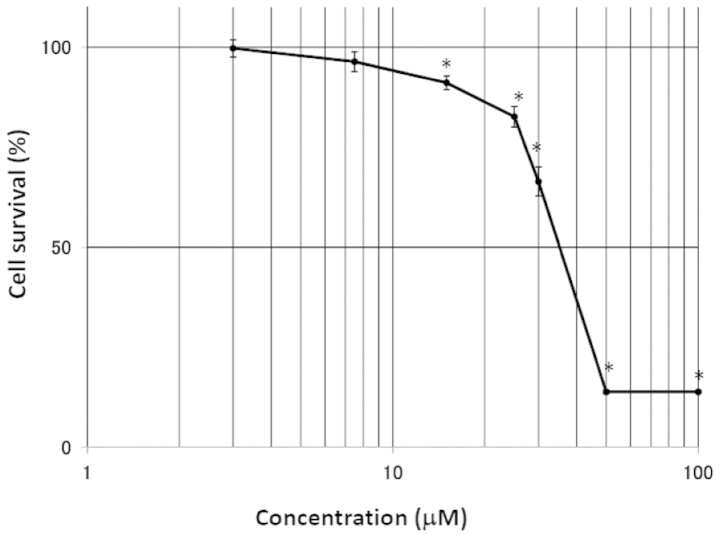
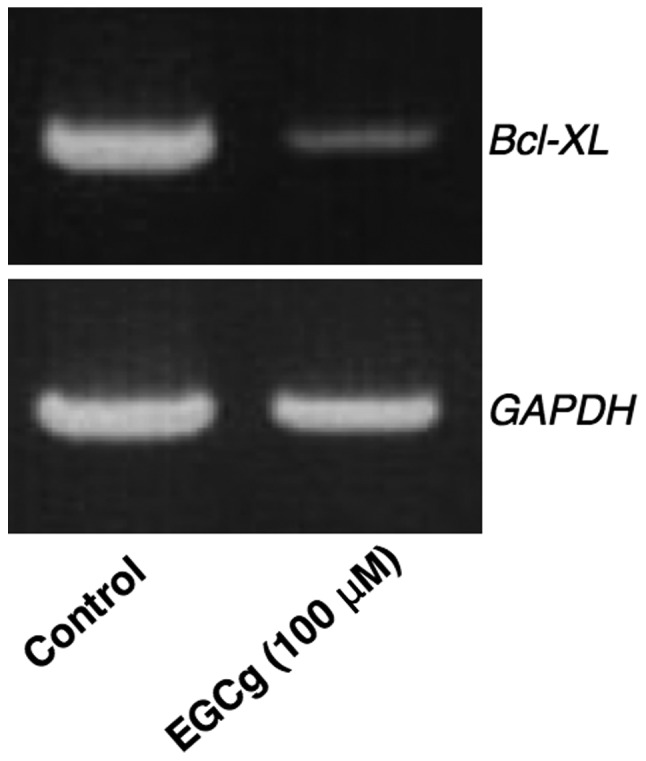
Clinical and epidemiological studies have indicated that the consumption of green tea has a number of beneficial effects on health. Epigallocatechin-3-gallate (EGCg), the major polyphenolic compound present in green tea, has received much attention as an active ingredient. Among the numerous promising profiles of EGCg, the present study focused on the anticancer effects. Apoptosis induced by EGCg and subsequent cell growth suppression have been demonstrated in a number of cell culture studies. However, the underlying mechanism of apoptotic cell death remains unclear. Thus, the aim of the present study was to identify the major molecule that mediates proapoptotic cell death by EGCg. The effect of EGCg on cell proliferation and the induction of mRNA that modulates apoptotic cell death was evaluated in the A549 human non-small-cell lung cancer cell line. In addition, morphological changes were assessed by microscopy in A549 cells that had been treated with 100 μM EGCg for 24 h. The MTT assay revealed that cell proliferation was significantly reduced by EGCg in a dose-dependent manner (3-100 μM). The mRNA expression level of B-cell lymphoma-extra large (Bcl-xL) was decreased in A549 cells following 24 h incubation with 100 μM EGCg. Therefore, the results indicated that the inhibition of cell proliferation by EGCg may be achieved via suppressing the expression of the cell death-inhibiting gene, Bcl-xL.
Keywords: A549 cells; B-cell lymphoma-extra large; apoptosis; epigallocatechin-3-gallate.
Figures
References
-
- Lee IP, Kim YH, Kang MH, et al. Chemopreventive effect of green tea (Camellia sinensis) against cigarette smoke-induced mutations (SCE) in humans. J Cell Biochem Suppl. 1997;27:68–75. - PubMed
-
- Shimizu M, Fukutomi Y, Ninomiya M, et al. Green tea extracts for the prevention of metachronous colorectal adenomas: a pilot study. Cancer Epidemiol Biomarkers Prev. 2008;17:3020–3025. - PubMed
-
- Suganuma M, Saha A, Fujiki H. New cancer treatment strategy using combination of green tea catechins and anticancer drugs. Cancer Sci. 2011;102:317–323. - PubMed
LinkOut - more resources
Full Text Sources
Other Literature Sources
Research Materials