. 2014 Aug;34(8):1704-15.
doi: 10.1161/ATVBAHA.114.303848. Epub 2014 Jun 19.

NADPH oxidase 4 is expressed in pulmonary artery adventitia and contributes to hypertensive vascular remodeling

Affiliations

NADPH oxidase 4 is expressed in pulmonary artery adventitia and contributes to hypertensive vascular remodeling

Scott A Barman et al. Arterioscler Thromb Vasc Biol. 2014 Aug.

Abstract

Objective: Pulmonary hypertension (PH) is a progressive disease arising from remodeling and narrowing of pulmonary arteries (PAs) resulting in high pulmonary blood pressure and ultimately right ventricular failure. Elevated production of reactive oxygen species by NADPH oxidase 4 (Nox4) is associated with increased pressure in PH. However, the cellular location of Nox4 and its contribution to aberrant vascular remodeling in PH remains poorly understood. Therefore, we sought to identify the vascular cells expressing Nox4 in PAs and determine the functional relevance of Nox4 in PH.

Approach and results: Elevated expression of Nox4 was detected in hypertensive PAs from 3 rat PH models and human PH using qualititative real-time reverse transcription polymerase chain reaction, Western blot, and immunofluorescence. In the vascular wall, Nox4 was detected in both endothelium and adventitia, and perivascular staining was prominently increased in hypertensive lung sections, colocalizing with cells expressing fibroblast and monocyte markers and matching the adventitial location of reactive oxygen species production. Small-molecule inhibitors of Nox4 reduced adventitial reactive oxygen species generation and vascular remodeling as well as ameliorating right ventricular hypertrophy and noninvasive indices of PA stiffness in monocrotaline-treated rats as determined by morphometric analysis and high-resolution digital ultrasound. Nox4 inhibitors improved PH in both prevention and reversal protocols and reduced the expression of fibroblast markers in isolated PAs. In fibroblasts, Nox4 overexpression stimulated migration and proliferation and was necessary for matrix gene expression.

Conclusion: These findings indicate that Nox4 is prominently expressed in the adventitia and contributes to altered fibroblast behavior, hypertensive vascular remodeling, and development of PH.

Keywords: NADPH oxidase; adventitia; fibroblast; pulmonary artery.


Figures

Figure 1
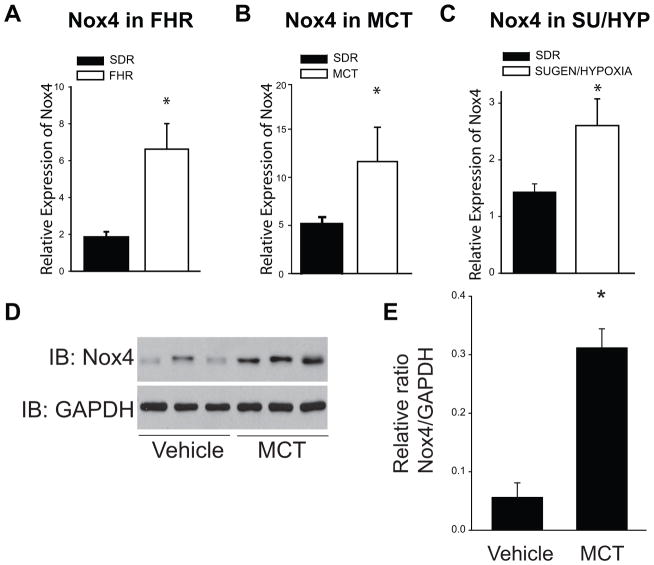
Figure 1. Nox4 expression is increased in rat hypertensive pulmonary arteries (PA)
Nox4 mRNA (measured by qRT-PCR (ΔΔCt) normalized to 18S) is significantly increased in PA from FHR (24week), MCT (4week), and SU/HYP (14week) (1A–C). Western blot analysis shows that Nox4 protein expression is upregulated in 4 week MCT-treated rat PA (1D–E). * Significantly different from SDR/ vehicle controls, p < 0.05 (n = 5–6).
Figure 2
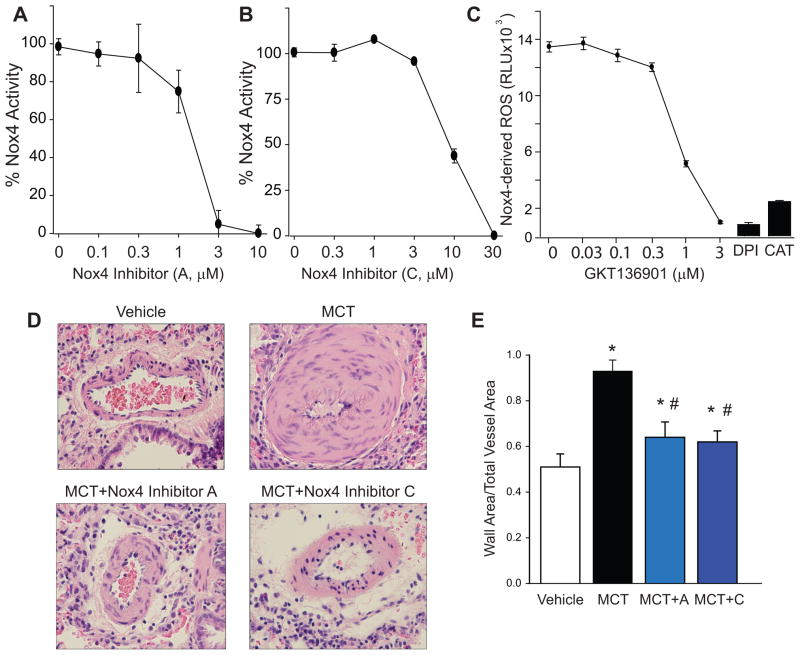
Figure 2. Efficacy of three distinct Nox4 inhibitors and effect on PA remodeling in vivo
(A) Nox4 activity in the presence of inhibitor VCC588646 (A), (B) Nox4 activity with VCC202273 (C), and (C) Nox4 activity with inhibitor GKT136901 (n=5) (D) H & E staining of lung segments from rats treated with vehicle and MCT (60mg/kg, IP) for 4wks in presence/absence of Nox4 inhibitor A or C. Magnification 40X, (E) quantitative PA morphometric analysis of the effect of inhibitor A or C, * Significantly different from Vehicle, # Significantly different from MCT, p < 0.05 (n = 5–6).
Figure 3
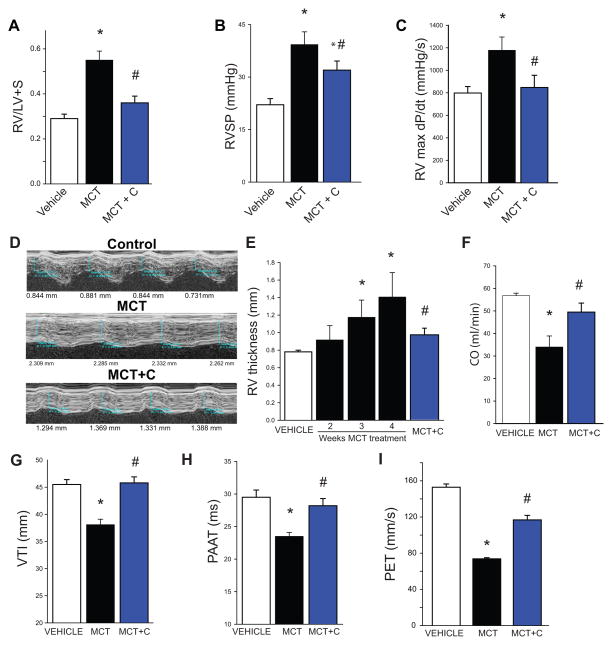
Figure 3. Effect of Nox4 inhibition on cardiac remodeling and cardiopulmonary functional indices in MCT-treated rats
MCT significantly increases right ventricular (RV) hypertrophy as measured by the Fulton Index (RV/LV+S), which is inhibited by VCC202273 (C) (3A). Right ventricular function indices (RVSP; RVmax dp/dt), are abrogated by Nox4 inhibition (3B–C). Non-invasive assessment of RV remodeling using the Vevo 2100 reveals significant time dependent increases in RV thickness in MCT-treated rats (3D–E). 4-week post MCT-treatment shows evidence of reduced PA elasticity as determined by analysis of PA hemodynamics using the velocity time integral (VTI) and pulmonary artery acceleration time (PAAT) parameters as well as a decrease in cardiac output (CO) (3F–H). Inhibition of Nox4 by VCC202273 (C) reduced RV thickness, increased CO, and increased VTI, PAAT and PET (3D–I). * Significantly different from Vehicle, # significantly different from MCT, p < 0.05 (n = 5–6).
Figure 4
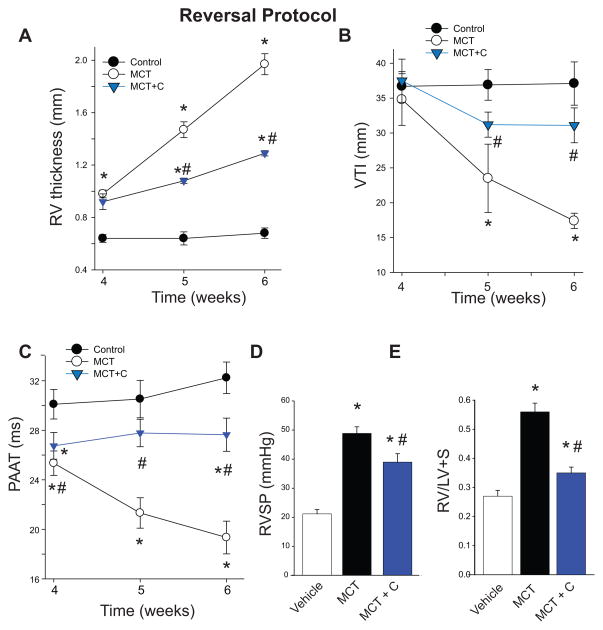
Figure 4. Inhibition of Nox4 slows the progression of established pulmonary hypertension
Rats with established MCT-induced pulmonary hypertension were treated with VCC202273 (C) (1mg/kg/day) starting from week 3 through week 6. Inhibition of Nox4 reduced the thickness of the right ventricle (4A) and improved velocity time integral (VTI, 4B) and pulmonary artery acceleration time (PAAT, 4C) in weeks 4–6 post-MCT treatment. Endpoint measurements of RVSP and Fulton index show a reduction in right ventricular hypertrophy in rats treated with VCC202273 (C) (4D–E). * Significantly different from Vehicle/Control, # significantly different from MCT, p < 0.05 (n = 6 for each group).
Figure 5
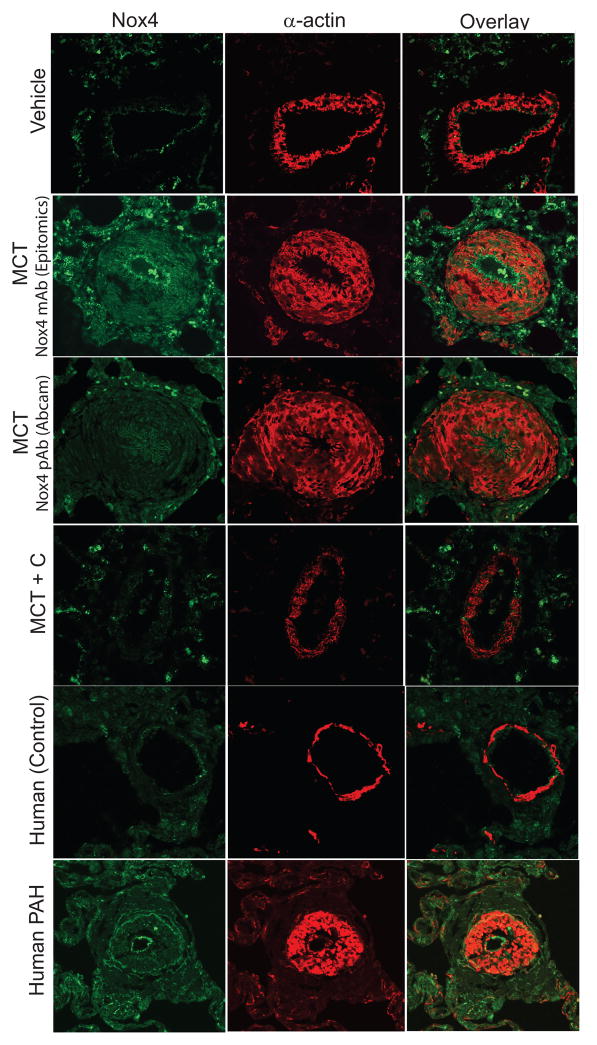
Figure 5. Nox4 is primarily expressed in the adventitia and endothelium of rat and human PA
Confocal images of lung sections from control, experimental PH (4-week MCT), and human PAH (IPAH undergoing lung transplant). Sections were stained with Nox4 and α-actin antibodies. Nox4 is highly expressed in the intima (endothelial cells) and cells of the adventitia in 4-week MCT-treated rats and human PH PA. There is an abundance of Nox4-expressed cells present in the remodeled medial layer but devoid of α-actin expression in the MCT and human PH PA. In the presence of Nox4 VCC202273 (C), (MCT + C), Nox4 expression is similar to vehicle-treated PA in the MCT-treated group.
Figure 6
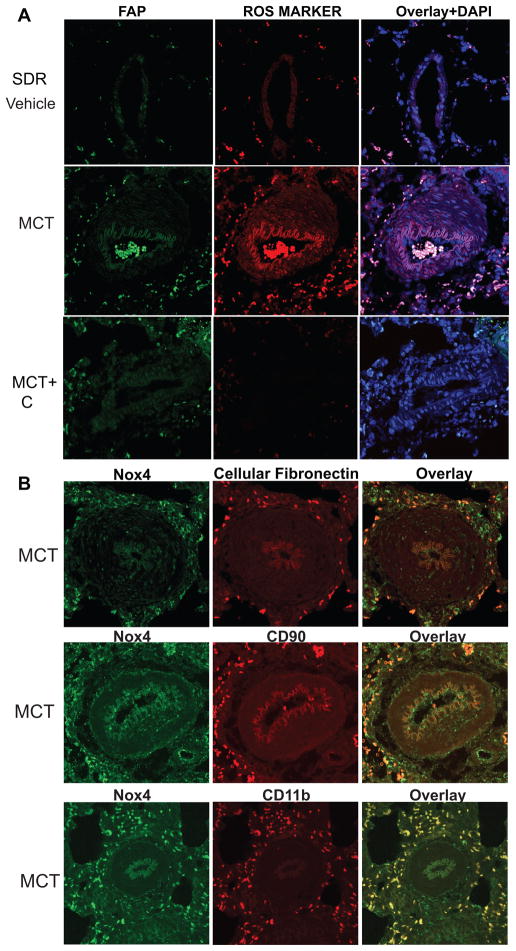
Figure 6. Nox4 expression and reactive oxygen species (ROS) production is localized in the adventitia
(A) Sections of control and 4-week MCT-treated rat lungs costained for fibroblast activation protein (FAP), 8 Hydroxy-2'dexoyguanosine (ROS marker) and DAPI. (B) Co-staining for Nox4 and cellular fibronectin, CD90 and CD11b ROS production is elevated in PA adventitia from 4-week MCT-treated rats, which overlapped significantly with the fibroblast marker fibroblast activating protein (FAP) (A; MCT). ROS are decreased to control (vehicle) levels by the Nox4 inhibitor VCC202273 (C) (A; MCT+C). In MCT-treated PA, there is significant overlap between Nox4-positive cells in the adventitia and cells expressing fibroblast markers (cellular fibronectin, CD90) as well as the monocytic cell marker CD11B (B).
Figure 7
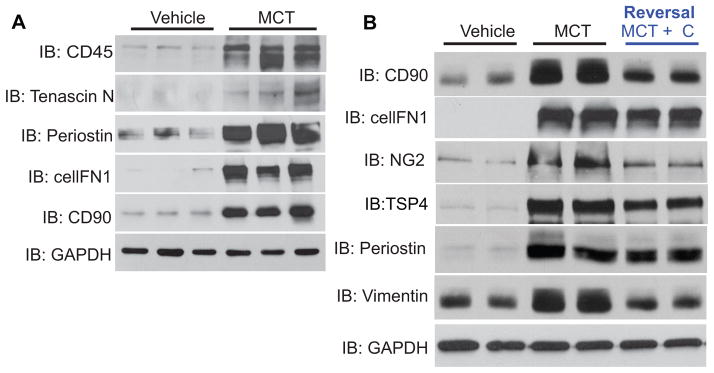
Figure 7. Increased expression of fibroblast markers in hypertensive PA and effect of Nox4 inhibition in established PH
Western blots of PA isolated from control and 4 week MCT-rats (A). MCT-rats were treated with Nox4 inhibitor VCC202273 (C) starting at week 3 post MCT and continuing through week 6 in a reversal protocol (see Methods, B). (TSP4 = thrombospondin-4; NG2 = chondroitin sulfate proteoglycan). (n = 3–4 per group).
Figure 8
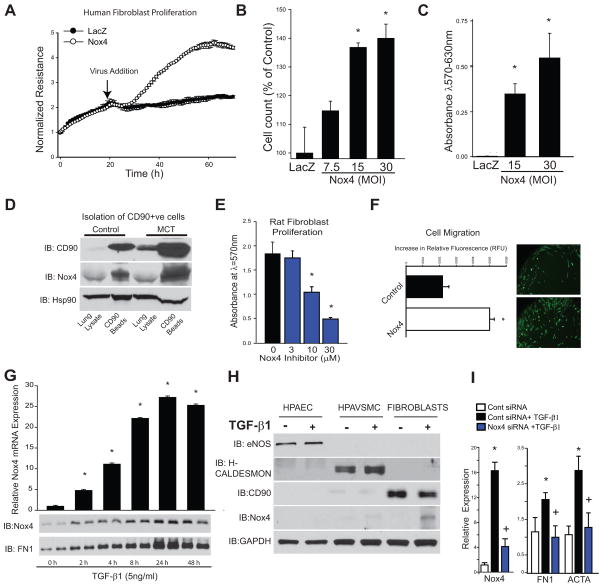
Figure 8. Nox4 stimulates fibroblast proliferation and migration and TGF-β1 expression
(A) Electrical impedance (ECIS) of human lung fibroblasts in the presence/absence of Nox4 adenovirus. Nox4-transduced fibroblasts exhibit a robust increase in cellular proliferation in real time using ECIS. (B) Nox4 increases fibroblast cell number, and (C) the number of viable cells using MTT assay. (D) Magnetic bead isolation of CD90 positive fibroblasts from lungs of control and MCT-treated rats. Western blot analysis revealed enrichment of CD90-positive cells with increased expression of Nox4 relative to the loading control, Hsp90. (E) Fibroblasts (p1) isolated from PA of MCT-treated rats displayed robust proliferation that is decreased by Nox4 inhibitor VCC202273 (C). (F) Adenoviral delivery of Nox4 stimulated an increase in fibroblast motility. (G) 24h. exposure to TGF-β1 robustly increased both Nox4 mRNA and protein levels in human lung fibroblasts while contemporaneously increasing the synthesis of cellular fibronectin. (H) Expression of cell specific markers (eNOS; H-caldesmon; CD90) in cultured HPAEC, HPAVSMC and fibroblasts; TGF-β1 increased CD90 and Nox4 expression in fibroblasts. (I) Transfection of fibroblasts with Nox4 siRNA decreased Nox4 expression and subsequently prevented the expression of TGF-β1-dependent genes such as fibronectin and ACTA. * Significantly different from Lac Z, 0, Control, 0 hr, and Cont siRNA; + Significantly different from Cont siRNA + TGFβ p<0.05 (n=3–6 per group).

References

    1. Tuder RM, Stacher E, Robinson J, Kumar R, Graham BB. Pathology of pulmonary hypertension. Clin Chest Med. 2013;34:639–650. - PubMed
    1. Stenmark KR, Fagan KA, Frid MG. Hypoxia-induced pulmonary vascular remodeling: Cellular and molecular mechanisms. Circ Res. 2006;99:675–691. - PubMed
    1. Crosswhite P, Sun Z. Molecular mechanisms of pulmonary arterial remodeling. Molecular medicine. 2014;20:191–201. - PMC - PubMed
    1. Cogolludo A, Moreno L, Villamor E. Mechanisms controlling vascular tone in pulmonary arterial hypertension: Implications for vasodilator therapy. Pharmacology. 2007;79:65–75. - PubMed
    1. Thenappan T, Shah SJ, Rich S, Gomberg-Maitland M. A USA-based registry for pulmonary arterial hypertension: 1982–2006. Eur Respir J. 2007;30:1103–1110. - PubMed

Publication types

MeSH terms