. 2014 Jun 18;34(25):8605-11.
doi: 10.1523/JNEUROSCI.1204-13.2014.

α2δ-1 signaling in nucleus accumbens is necessary for cocaine-induced relapse

Affiliations

α2δ-1 signaling in nucleus accumbens is necessary for cocaine-induced relapse

Sade Spencer et al. J Neurosci. .

Abstract

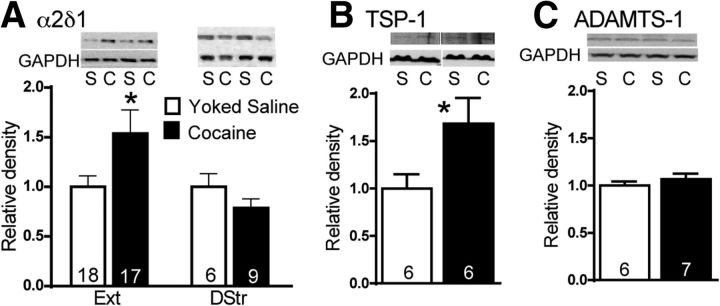
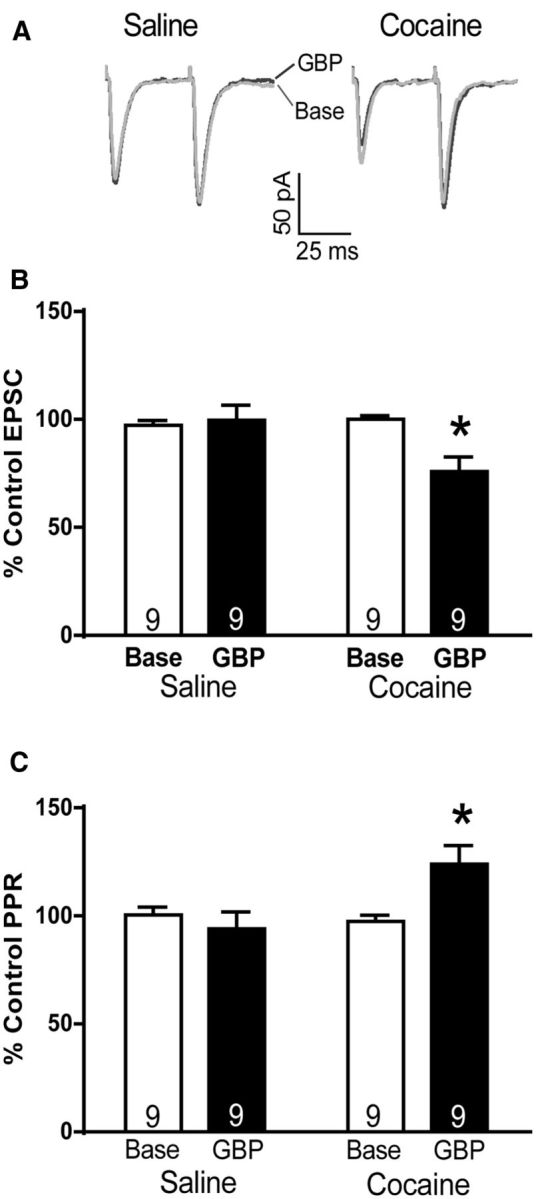
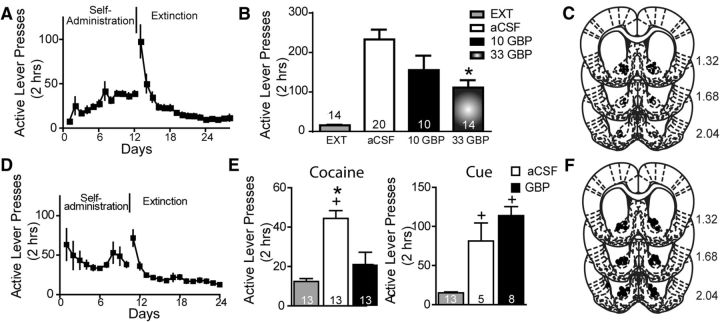
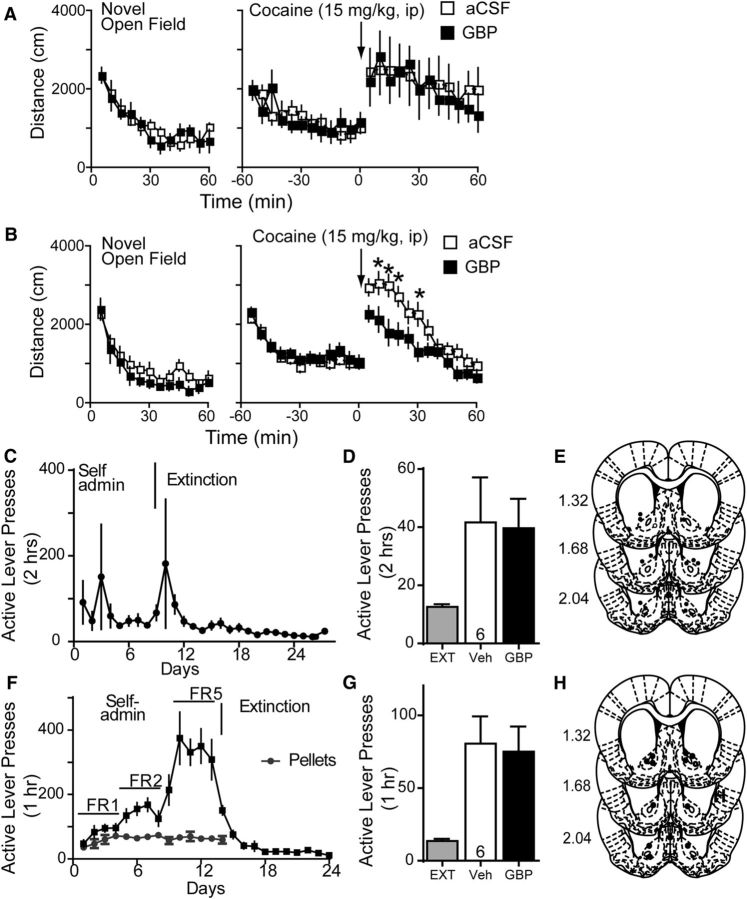
Relapse to cocaine seeking is associated with potentiated excitatory synapses in nucleus accumbens. α2δ-1 is an auxiliary subunit of voltage-gated calcium channels that affects calcium-channel trafficking and kinetics, initiates extracellular signaling cascades, and promotes excitatory synaptogenesis. Previous data demonstrate that repeated exposure to alcohol, nicotine, methamphetamine, and morphine upregulates α2δ-1 in reward-related brain regions, but it was unclear whether this alteration generalized to cocaine. Here, we show that α2δ-1 protein was increased in nucleus accumbens after cocaine self-administration and extinction compared with saline controls. Furthermore, the endogenous ligand thrombospondin-1, responsible for the synaptogenic properties of the α2δ-1 receptor, was likewise elevated. Using whole-cell patch-clamp recordings of EPSCs in nucleus accumbens, we demonstrated that gabapentin, a specific α2δ-1 antagonist, preferentially reduced the amplitude and increased the paired-pulse ratio of EPSCs evoked by electrical stimulation in slices from cocaine-experienced rats compared with controls. In vivo, gabapentin microinjected in the nucleus accumbens core attenuated cocaine-primed but not cue-induced reinstatement. Importantly, gabapentin's effects on drug seeking were not due to a general depression of spontaneous or cocaine-induced locomotor activity. Moreover, gabapentin had no effect on reinstatement of sucrose seeking. These data indicate that α2δ-1 contributes specifically to cocaine-reinstated drug seeking, and identifies this protein as a target for the development of cocaine relapse medications. These results also inform ongoing discussion in the literature regarding efficacy of gabapentin as a candidate addiction therapy.

Keywords: cocaine self-administration; gabapentin; nucleus accumbens; relapse; thrombospondin; α2δ-1.


Figures

Figure 1.
Figure 1.
Cocaine self-administration upregulates α2δ-1. A, α2δ-1 is increased after cocaine self-administration (C) compared with saline (S) in PSD subfractions and whole-cell lysates (left). α2δ-1 was unchanged in the dorsal striatum at this time point (right). B, TSP-1 was elevated after extinction from cocaine self-administration compared with saline. C, ADAMTS-1 was unaltered by cocaine self-administration. Data shown as relative density to yoked-saline values, and N is shown in the bars.
Figure 2.
Figure 2.
Gabapentin reduces evoked EPSC amplitude and increases PPR. A, Representative traces of evoked EPSC recorded from NAcore MSNs of yoked-saline (left) and cocaine-extinguished (right) rats before and after washing with 50 μm gabapentin. B, Gabapentin decreased EPSCs only in cocaine-extinguished rats. C, Gabapentin increased PPR only in cocaine-extinguished rats. *p < 0.05, comparing effect of GBP with baseline.
Figure 3.
Figure 3.
Gabapentin attenuates cocaine-induced reinstatement. A, Active lever pressing during self-administration and extinction training corresponding to data in B. B, Microinjection of gabapentin into the NAcore dose-dependently reduced cocaine plus cue reinstatement compared with vehicle. EXT, Average active lever presses over the 2 d of extinction before each reinstatement trial. C, Histological verification of injection sites corresponding to data in B; numbers are millimeters rostral to bregma. D, Active lever pressing during self-administration and extinction training corresponding to data in E. E, Gabapentin (10 μg/side) significantly reduced cocaine-primed reinstatement (left) but had no impact on cue-induced reinstatement (right). F, Histological verification of injection sites corresponding to data in E. +p < 0.05 compared with extinction levels of active lever pressing using a Bonferroni's post hoc analysis. *p < 0.05, comparing aCSF to gabapentin.
Figure 4.
Figure 4.
Gabapentin control experiments. A, 10 μg/side microinjection of gabapentin did not alter basal locomotor activity or cocaine-induced hyperactivity (10 mg/kg, i.p., cocaine injection at arrow). B, 33 μg/side GBP did not alter basal locomotor activity but blunted cocaine-induced hyperactivity. C, Active lever pressing during self-administration and extinction training for cocaine reinstatement in D. D, Microinjection of GBP (10 μg/side) in dorsal striatum has no effect on cocaine-induced reinstatement. E, Histological verification of injection placement in dorsal striatum corresponding to data in D; numbers refer to millimeters rostral to bregma. F, Active lever pressing during self-administration and extinction training for sucrose reinstatement in G. G, Microinjection of GBP (10 μg/side) in NAcore had no effect on sucrose pellet plus cue-primed reinstatement of sucrose seeking. H, Histological verification of injection placement in NAcore corresponding to data in G. *p < 0.05, comparing GBP with aCSF microinjection using a Bonferroni's post hoc analysis.

References

    1. Anderson SM, Famous KR, Sadri-Vakili G, Kumaresan V, Schmidt HD, Bass CE, Terwilliger EF, Cha JH, Pierce RC. CaMKII: a biochemical bridge linking accumbens dopamine and glutamate systems in cocaine seeking. Nat Neurosci. 2008;11:344–353. doi: 10.1038/nn2054. - DOI - PubMed
    1. Bockbrader HN, Wesche D, Miller R, Chapel S, Janiczek N, Burger P. A comparison of the pharmacokinetics and pharmacodynamics of pregabalin and gabapentin. Clin Pharmacokinet. 2010;49:661–669. doi: 10.2165/11536200-000000000-00000. - DOI - PubMed
    1. de Guglielmo G, Cippitelli A, Somaini L, Gerra G, Li H, Stopponi S, Ubaldi M, Kallupi M, Ciccocioppo R. Pregabalin reduces cocaine self-administration and relapse to cocaine seeking in the rat. Addict Biol. 2013;18:644–653. doi: 10.1111/j.1369-1600.2012.00468.x. - DOI - PubMed
    1. Dennis M, Scott CK. Managing addiction as a chronic condition. Addict Sci Clin Pract. 2007;4:45–55. doi: 10.1151/ascp074145. - DOI - PMC - PubMed
    1. Dolphin AC. Calcium channel auxiliary α2δ and β subunits: trafficking and one step beyond. Nat Rev Neurosci. 2012;13:542–555. - PubMed

Publication types